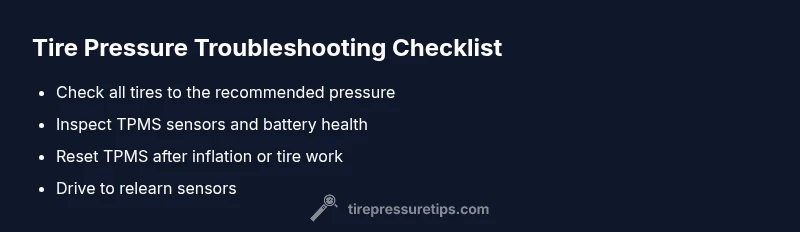
What to Do If the Tire Pressure Light Won’t Go Off
An urgent, step-by-step troubleshooting guide for a tire pressure light that won't turn off. Learn at-home checks, TPMS reset techniques, diagnostic paths, and when to seek professional help.


The most likely cause is a sensor fault or underinflation. Start by inflating all tires to the recommended PSI and recheck. If the light stays on, reset the TPMS and drive briefly to relearn. If it doesn’t extinguish, scan for fault codes with a TPMS tool or seek professional diagnosis for sensor or ECU issues.
Understanding the Tire Pressure Light and TPMS
The tire pressure warning light is part of the Tire Pressure Monitoring System (TPMS). It signals that one or more tires are not at the vehicle manufacturer's recommended pressure or that a sensor is reporting a fault. According to Tire Pressure Tips, many drivers misinterpret the light as simply a reminder to check air pressure, but its real purpose is to ensure safety and optimal tire wear. Temperature changes, seasonal shifts, and tire rotations can all trigger momentary fluctuations. If you recently filled a tire and the light remains, there is likely an underlying issue beyond a simple underinflation. A persistent light warrants a systematic approach: verify pressures, check sensor health, and perform a proper TPMS relearn when required.
Keep in mind that TPMS issues can stem from sensor batteries, valve stems, or the central module. The Tire Pressure Tips team emphasizes that a calm, methodical check usually resolves most cases without unnecessary parts swaps. Always compare tire pressures to the door placard or owner’s manual, and remember that the light is a safety feature, not a nuisance.
If you drive with underinflated tires for long periods, you increase the risk of blowouts, reduced fuel efficiency, and uneven tire wear. The goal is not just to turn off the light but to ensure accurate, reliable readings that reflect actual tire conditions. In short: respect the TPMS signal, and treat the light as actionable information rather than an annoyance.
Quick Home Checks You Can Do Right Now
Before diving into tools or professional service, perform a careful at-home check. Start with all four main tires—and don’t forget the spare if your vehicle uses a full-size spare with TPMS.
- Use a reliable tire gauge (digital gauges give the most consistent readings) and record each tire’s pressure. Compare against the vehicle’s recommended PSI on the door placard or in the owner’s manual.
- Inspect tire valve caps and stems for damage, corrosion, or leaks. A missing or faulty valve cap can fool the system into triggering a warning.
- Look for obvious punctures, bulges, or nails embedded in the tread. A slow leak can keep the light on even after you top off air.
- After inflating to spec, reset the TPMS if your car supports a manual relearn procedure and take a short test drive to allow the system to relearn.
This stepwise approach is aligned with guidance from the Tire Pressure Tips team, which notes that most warnings resolve after accurate inflation and a proper reset. If the light returns, there may be a sensor or battery fault requiring further action.
Safety takeaway: never ignore a loss of pressure while inspecting or driving. If you hear unusual thumps or feel the vehicle handling oddly, pull over safely and reassess.
Diagnostic Flow: When to Reset, Relearn, and When to Seek Help
A rigorous diagnostic flow helps determine whether the issue is simple or systemic. Begin with the symptom: a warning light that won’t extinguish after inflating to spec. From there, consider common causes and the appropriate fixes.
- Symptom: Tire pressure light remains on after inflating all tires to the recommended range.
- Cause: TPMS sensor battery is dead or sensor failure — likelihood: high.
- Fix: Inspect or replace the faulty sensor; consider battery replacement in older wheels — difficulty: medium.
- Symptom: One tire stays low or slowly leaks air.
- Cause: Slow leak due to puncture or damaged valve stem — likelihood: high.
- Fix: Repair puncture or replace tire; reseat valve stem — difficulty: medium.
- Symptom: Light resets but comes back after a drive.
- Cause: Incorrect reset, or systemic TPMS fault in the ECU — likelihood: medium.
- Fix: Follow the manufacturer’s relearn procedure precisely; if needed, use a scan tool to read fault codes — difficulty: easy to medium.
- If after these steps the light still persists, it’s time to seek professional diagnosis for sensor health, ECU status, or a potential wheel sensor replacement. The Tire Pressure Tips team highlights that persistent warnings often point to TPMS hardware rather than air pressure issues.
A careful diagnostic path prevents unnecessary replacements and ensures you address the root cause rather than the symptom.
Note: always check for temporary environmental factors—extreme temperatures, recent tire changes, or sensor service events can trigger the light even when tires are properly inflated.
Step-by-Step Fix: Inflate, Reset, Relearn, and Diagnose (Detailed Guide)
If you’re ready for a structured fix, follow these steps in order. Each step includes practical tips and a quick safety note. If the light doesn’t respond to early steps, skip ahead to professional testing rather than forcing a sensor replacement.
- Check tire pressures using a reliable gauge and compare to the vehicle’s recommended PSI. Ensure all tires are within ±1–2 PSI of spec. Tip: use a one-page chart to record readings for quick reference.
- Inflate tires to the recommended pressure on the placard, and recheck each tire to verify accuracy. Tip: if you don’t know the exact spec, contact a service center or reference your owner’s manual.
- Inspect for leaks around the tread, sidewalls, valves, and wheel rims. Look for nails or punctures; check the valve stems for cracks or corrosion. Tip: ensure the valve core is snug but not over-tightened.
- If your vehicle supports it, initiate the TPMS relearn/reset procedure via the instrument cluster or touch screen. Follow the exact sequence from the owner’s manual. Tip: some cars require a key cycle or a specific button hold.
- Drive the vehicle for a short distance to allow the TPMS to relearn the new pressures. Tip: maintain a steady speed and avoid aggressive driving during relearn.
- If the light remains, use a TPMS diagnostic tool to pull fault codes from the system. Note: some codes require professional interpretation.
- Assess sensor health: a dead or malfunctioning sensor can trigger the light even when pressures are correct. Tip: wheel sensors can fail due to corrosion, damage, or battery depletion.
- If all else fails, schedule a professional TPMS inspection; sensor replacement or ECU calibration may be necessary. Tip: bring your tire history and any recent tire work records to the appointment.
Estimated total time: 30–40 minutes, plus any time needed for professional service. Safety reminder: never attempt to drive with a visibly damaged tire or a persistent warning that suggests a possible leak.
TIPS & WARNINGS
- Pro tip: Use a digital tire pressure gauge for the most accurate readings. Keep a small gauge in the glove box for quick checks.
- Warning: If you notice tread separation, bulges, or a rapid loss of air, stop driving and seek immediate service. A compromised tire can fail, causing a blowout.
- Note: Temperature changes affect tire pressure. If you’ve recently experienced a cold spell, recheck pressures after the tires have cooled for at least 3 hours.
- Pro tip: After tire changes or rotations, always perform a TPMS relearn so the system correctly recognizes new sensor positions.
- Warning: Do not replace sensors or batteries without confirming the root cause. A sensor replacement may be unnecessary if the issue is a simple reset or a slow leak.
KEY TAKEAWAYS
- Inflate to spec and recheck; most issues resolve with proper inflation.
- Reset and relearn the TPMS after adjustments or tire work to ensure accurate readings.
- If the light persists, diagnose for sensor or ECU faults rather than assuming all tires are underinflated.
- Regular maintenance reduces TPMS warnings and extends tire life.
Steps
Estimated time: 30-40 minutes
- 1
Check tire pressures with a gauge
Use a reliable gauge to measure each tire’s pressure and compare to the vehicle’s recommended PSI on the placard. Record readings for reference.
Tip: Always calibrate your gauge before use to ensure accuracy. - 2
Inflate to recommended pressure
Add air to tires until they reach the recommended PSI. Double-check all tires and recheck after a few minutes of resting.
Tip: Avoid overinflating; if you’re unsure, stop and reassess using the placard as your guide. - 3
Inspect for leaks and damage
Look for nails, cuts, or punctures in the tread and sidewalls. Check valve stems for leaks or corrosion and ensure the valve caps are intact.
Tip: A soapy-water spray can reveal slow leaks at valve stems and rims. - 4
Reset TPMS after inflation
Follow the vehicle’s relearn procedure in the owner’s manual or on the dashboard menu to reset TPMS.
Tip: Some models require ignition on with engine off, others need a button press or menu navigation. - 5
Drive to relearn sensors
Drive the car for a short distance at normal speeds to allow the TPMS to relearn the new pressures.
Tip: Keep driving steady—avoid aggressive acceleration or braking during relearn. - 6
Check for persistent warnings
If the light remains, use a TPMS scanner to pull fault codes from the system and identify a specific sensor or module issue.
Tip: Document any fault codes for the service visit. - 7
Assess sensor health
A dead battery or faulty sensor often requires replacement. Inspect each wheel sensor if you have access to a scanner.
Tip: In some cases, rotating tires can move sensors and trigger recalibration; note if the light changes after rotation. - 8
Seek professional help if unresolved
If the light still won’t go off after all checks, schedule a professional TPMS inspection. Sensor or ECU calibration may be needed.
Tip: Bring tire service history and any recent tire work records to the appointment.
Diagnosis: Tire pressure light won't go off after inflating tires
Possible Causes
- highTPMS sensor battery dead or sensor failure
- highTire pressure still below/above the recommended range
- mediumIncorrect TPMS reset or relearn procedure not completed
- lowLeaking valve stem or damaged sensor
Fixes
- easyInflate tires to the recommended pressure and recheck with a gauge
- easyReset TPMS and perform vehicle relearn per the owner's manual
- mediumInspect sensors and replace batteries or sensors as needed
- mediumScan for diagnostic trouble codes with a TPMS tool and address faults
Frequently Asked Questions
Why won't the tire pressure light go off after I've inflated the tires?
Inflation alone may not restore the system. A TPMS relearn or sensor fault can keep the light on even when pressures are correct. Check for a slow leak, perform a reset, and if needed use a diagnostic tool to read fault codes.
Inflation isn't always enough. You may need to relearn the TPMS or check for a faulty sensor; a quick diagnostic can reveal the exact fault.
Is it safe to drive with a TPMS warning?
If the warning is due to actual underinflation, driving can be unsafe. If it’s a TPMS fault, the tires may be fine but service is recommended to confirm sensor health.
If a tire is underinflated, don't drive long distances. If it’s a sensor issue, schedule service to prevent misreadings.
Can I reset TPMS without a tool?
Some vehicles support a manual reset via the dash menu, while others require a dedicated TPMS tool. Always consult your owner's manual for the correct procedure.
Some cars let you reset through the dash, others need a TPMS tool. Check the manual.
How long does it take for TPMS to relearn after inflation?
Most vehicles relearn within a short drive after performing the reset, but timing can vary by model. If the light remains after a test drive, expect a diagnostic check.
A quick drive after reset usually does it, but timing varies by model.
Will replacing a tire automatically reset TPMS?
Not automatically. After replacing a tire, you should perform a TPMS relearn so the new tire’s sensor is correctly recognized.
No, replacement doesn’t reset TPMS automatically. Relearn is often required.
What if the light comes back after sensor replacement?
If the light returns, there may be a miscalibrated sensor, damaged wiring, or a faulty ECU. Re-scan for codes and verify all connections.
If it comes back after replacement, there may be a broader issue—get codes read and check connections.
Watch Video
What to Remember
- Inflate tires to spec and recheck before assuming issues
- Reset TPMS after inflation or tire work
- If the light stays on, diagnose sensor/ECU health with a tool
- Professional help is recommended for persistent warnings