Tire Pressure Won't Turn Off: Rapid Troubleshooting
Urgent guide to diagnose and fix a tire pressure warning light that won’t turn off. Practical steps, safety tips, and when to call a pro from Tire Pressure Tips.


According to Tire Pressure Tips, if your tire pressure warning won’t turn off after inflating to the correct level, the TPMS reset or sensor fault is likely. Inflate to spec, then reset the system per your vehicle manual. If the light persists, a slow leak or sensor issue may be involved.
What the phrase means and urgency
If you see a tire pressure warning light that won’t turn off after you inflate to the recommended level, you’re not imagining a simple math problem. The TPMS can stay on for several reasons, and ignoring it can lead to uneven tire wear, reduced fuel efficiency, or sudden underinflation while driving. According to Tire Pressure Tips, understanding when the light is telling you to act—and when it’s a system fault—helps you stay safe on the road. Begin by confirming all four (and the spare, if your vehicle uses a monitored spare) are at the manufacturer’s recommended pressures for your load and season. Then, check whether your vehicle requires a manual TPMS relearn or a simple drive cycle to reset after inflating. If the light remains on, you’re dealing with a potentially sticky sensor, a slow leak, or a reset lapse that needs deliberate attention.
Common causes of a stubborn TPMS light
Several issues can keep the TPMS light on even after you’ve inflated the tires. The most common culprit is a slow leak in one tire caused by a nail, cracked bead, or damaged valve stem. A second frequent cause is a TPMS sensor fault or a weak battery inside the sensor; these sensors can fail or lose battery life over time. Third, some vehicles require an explicit reset or relearn after a tire change or rotation; failing to complete this step can leave the light illuminated. Finally, there are occasional glitches in the TPMS computer or wiring harness that mimic a fault. While rare, it indicates the need for diagnostic testing if other checks don’t resolve the issue. The Tire Pressure Tips team notes that symptoms can overlap, so a methodical approach helps.
Quick-home checks you can perform safely
Begin with basic, safe steps to avoid unnecessary repairs. Use a reliable tire pressure gauge and verify each tire’s pressure against the door jamb sticker or owner’s manual. Ensure the tires aren’t overinflated for speed-rated loads. Inspect for obvious punctures, nails, or sidewall damage. Check valve stems for cracks and ensure the valve caps are present and tight. If you have a monitored spare, verify its pressure too. Finally, drive the car for a few miles at a moderate speed to see if the system relearns automatically; not all vehicles require manual relearning.
How to reset TPMS across different vehicles
Reset procedures vary by make and model, so consult the owner’s manual for the exact relearn method. In many modern cars, you can relearn by performing a drive cycle: inflate to spec, drive 10-15 minutes above 30 mph, then a few starts and stops. Some vehicles offer a dedicated TPMS relearn option in the settings menu; others require a tool to reset at a service shop. If you notice a sensor fault, resetting won’t fix a bad sensor—the part may need replacement. Tire Pressure Tips recommends following the official relearn sequence precisely to avoid triggering false warnings.
When to call a professional and safety considerations
Persistent TPMS warnings deserve professional assessment, especially after you’ve ruled out obvious leaks. A technician can test individual sensors with a scan tool, check the battery condition, and verify proper wheel sensor alignment. Do not ignore the warning if you notice sluggish handling, vibration, or unusual tire wear. Safety depends on maintaining correct tire pressure, so seek help promptly to prevent blowouts or rim damage. If you’re unsure about performing any reset, contact a licensed technician.
Preventive steps to avoid future TPMS issues
Establish a simple maintenance routine: check tires monthly and before long trips, and recheck after temperature changes. Keep tires inflated to factory spec across seasons, and use the TPMS reset when you rotate or replace wheels. Document the relearn dates and battery life estimates for sensors if your vehicle allows it. Regularly inspect valve stems and wheel rims, and replace damaged components promptly. A proactive approach reduces surprises on the road.
Next steps if light returns after fixes
Even with careful checks, you may encounter a stubborn TPMS twice. If the light returns after performing an official relearn, schedule a diagnostic with a tire or dealership service center. Request a TPMS sensor health test and, if required, sensor replacement. Keep a record of your tire pressures and replacement history to aid future troubleshooting. Remember: resolving TPMS faults protects you and others on the road.
Steps
Estimated time: 60-90 minutes
- 1
Verify tire pressures at exact spec
Use a high-quality gauge and compare each tire’s pressure to the vehicle’s recommended level. Note any variance and adjust gradually. Ensure the spare (if monitored) is also at spec.
Tip: Record the four pressures and the date for future reference. - 2
Check for signs of leaks or damage
Inspect tires for nails, punctures, cracks, and bead leaks. Examine valve stems for cracks and ensure caps are tight. If a leak is suspected, mark the tire and monitor its pressure every few hours.
Tip: Use soapy water on the tread and sidewalls to reveal slow leaks. - 3
Inspect the TPMS sensors and batteries
Look for any obvious sensor damage or corrosion around valve stems. If the light stayed on despite correct inflation, a sensor battery or sensor fault is plausible.
Tip: Sensors can fail over time; don’t rule out battery failure. - 4
Perform a proper TPMS relearn/reset
Follow your vehicle’s manual: some models relearn via a drive cycle, others via a menu option or scan tool. Complete the exact steps and drive as instructed.
Tip: If your vehicle requires a reset tool, use a professional service for accuracy. - 5
Test drive and recheck
Drive a short route to allow the system to relearn or reset. Recheck tire pressures afterward to confirm stability.
Tip: Avoid sudden braking or aggressive driving during relearn attempts. - 6
Escalate if the light persists
If the warning remains after all checks, schedule a professional diagnostic. Persistent TPMS issues may indicate a faulty module or sensor cluster.
Tip: Request a TPMS sensor health test and potential replacement.
Diagnosis: TPMS warning light stays on after inflating tires to recommended pressures
Possible Causes
- highSlow leak in one tire (nail, bead leak, valve stem damage)
- mediumTPMS sensor fault or dead battery
- highReset/relearn not performed after inflation or tire change
- lowTPMS sensor mounting or wiring issue
Fixes
- easyRecheck all tires with a precise gauge and inflate to the exact spec per the door jamb sticker
- easyPerform a proper TPMS relearn/reset according to the owner's manual or service instructions
- easyInspect tires for slow leaks using soapy water or a professional leak-detection tool
- mediumIf sensor or battery fault is suspected, have the sensors tested and replaced by a professional
Frequently Asked Questions
Why won't the tire pressure warning light turn off after inflating?
This often means the TPMS needs a reset, there’s a slow tire leak, or a sensor fault. Recheck pressures and perform a proper relearn before assuming hardware failure.
Most times it’s a reset or leak issue, not a lost cause. Recheck and relearn, then if it still stays on, a sensor problem is possible.
Do I always need to reset TPMS after inflating?
Not always. Many systems reset automatically after a drive cycle, but some require manual relearn after tire changes or rotations.
Often automatic after a drive, but check your manual for your model.
Can a TPMS sensor battery die?
Yes. Each sensor has a battery, and failure can trigger a constant warning. If suspected, sensors should be tested or replaced by a professional.
Sensors can fail; battery life is a factor, so testing is recommended.
Is it safe to drive with a TPMS light on?
Driving with a TPMS light on isn’t inherently dangerous if tire pressures remain within safe ranges, but it’s a warning to resolve promptly to prevent underinflation risks.
It’s a warning—address it soon to stay safe.
Will rotating tires affect the TPMS?
Yes. Rotation can require a relearn on many vehicles. Check the manual and perform relearn if needed.
Rotation can trigger a relearn—follow the manual.
What should I do if the light stays on after all fixes?
Schedule a diagnostic with a tire or dealership service center to test sensors, module, and wheel electronics.
If it stays on, get a professional check for sensors or the TPMS module.
What to Remember
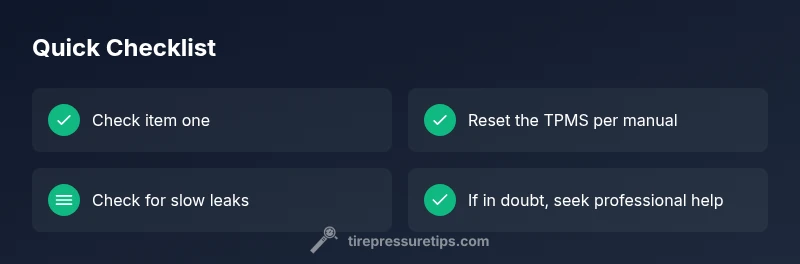
- Check all tires to spec before resetting TPMS
- Perform a proper relearn according to the manual
- Isolate leaks and inspect sensors before replacement
- Consult a professional if the light returns after fixes