Tire Pressure Engine Light Troubleshooting Guide
Urgent guide to diagnose and fix the tire pressure engine light (TPMS warning). Learn practical checks for TPMS, tire pressure, and when to seek professional help from Tire Pressure Tips.


When the tire pressure engine light comes on, the most likely cause is low tire pressure or a faulty TPMS sensor. Start with a cold tire pressure check using a reliable gauge, then inspect for leaks and confirm the TPMS sensors are synced after any tire work. If the light persists, seek professional diagnosis.
What the tire pressure engine light means
The tire pressure engine light is part of your vehicle's TPMS. According to Tire Pressure Tips, the most common trigger is underinflation, but sensor faults can also illuminate the warning. When one or more tires drop below the manufacturer's recommended pressure, the TPMS signals the ECU and the warning lights up. Even tires that look fine can be out of spec if temperature changes or loading alter the expected readings. Direct TPMS sensors provide tire-by-tire data, while indirect TPMS uses wheel-speed data to infer pressure changes. Temperature shifts can trigger readings; cold weather makes readings drop, and the light may come on after a long drive if the tires heat up and pressure spikes. Understanding these factors helps you respond quickly and safely.
Immediate safety steps when the light appears
If the tire pressure engine light comes on, safety comes first. If you're on the road, safely pull over to a wide, level area and slow down. Check all tires with a cold, accurate gauge and inflate to the manufacturer-recommended pressure from the door placard. Don’t rely on the dash readout alone. If any tire reads significantly below spec, adjust promptly and recheck after a short drive. Remember that underinflated tires run hotter and wear faster, increasing the risk of a blowout. If you notice obvious tire damage or the TPMS seems flaky, avoid driving long distances and seek professional help. The Tire Pressure Tips team emphasizes that DIY checks are valuable, but a professional diagnosis is often necessary for precise TPMS troubleshooting.
TPMS vs. traditional tire pressure readings: what to know
TPMS alerts can reflect true underinflation or sensor faults. Direct TPMS provides a tire-by-tire warning, while indirect TPMS relies on ABS and wheel-speed data to infer pressure loss. If you recently replaced tires or adjusted wheel sizes, TPMS may require reprogramming or resetting. A reset is sometimes simple and can be done by the vehicle owner after inflating to spec; in other cases, a scan tool at a shop is needed. Tire Pressure Tips notes that a persistent light after inflating to spec could indicate a dying sensor battery or a faulty receiver in the vehicle. Always verify by inspecting for slow leaks and ensuring valve stems are intact.
How to measure tire pressure accurately, especially in cold weather
Measuring when tires are cold yields the most accurate reading. Park on a level surface and wait several hours after driving, or measure the tires before you drive in the day. Use a digital or high-quality gauge, then compare each tire to the recommended psi on the door placard. In cold weather, pressures can drop by about 1 psi per 10°F; plan for a recheck after warming up. Inflate to the recommended cold pressure, drive a short distance, then recheck to confirm the TPMS will reflect accurate values. Small misreads can trigger the tire pressure engine light, so precision matters.
Common causes and quick checks you can perform today
Real-world causes for the tire pressure engine light include actual underinflation, slow leaks from nails or punctures, and TPMS sensor battery failures or wiring issues. Start by inflating each tire to the specified level and rechecking. If the light returns, look for slow leaks with soapy water around valve stems and bead seats. If you suspect a sensor issue, follow the vehicle’s manual for a TPMS reset or reprogramming. If the problem persists, a professional diagnostic may be necessary to identify sensor or ECU faults. Don’t forget the spare tire; some vehicles monitor it as well and a neglected spare can trigger warnings.
When to seek professional help and long-term prevention tips
If inflating and resetting the TPMS doesn’t resolve the warning, schedule a professional inspection. A technician can check TPMS batteries, valve stems, and sensor connections, perform a sensor reprogram or replacement, and scan for ECU or receiver faults. For long-term prevention, maintain correct tire pressures, rotate tires per manufacturer guidelines, and inspect tires for wear and damage regularly. Consider periodic TPMS service every few years, even if the light is not on, to ensure system reliability. The Tire Pressure Tips team recommends combining tire pressure checks with seasonal maintenance to avoid recurring warnings and unsafe driving conditions.
Preventive steps to keep TPMS and tire pressure healthy (quick checklist)
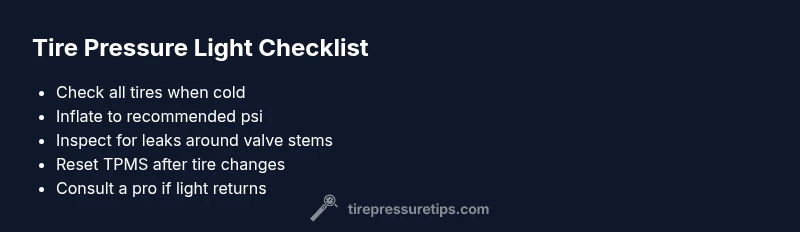
- Check tire pressures monthly and after temperature swings.
- Inspect valve stems and bead seals for leaks.
- Rotate tires as recommended to keep sensor readings consistent.
- If you replace tires, have TPMS reprogrammed or reset.
- Schedule professional TPMS servicing before long trips or extreme weather.
Steps
Estimated time: 30-45 minutes
- 1
Check tires when cold
Park on a level surface and ensure tires are cold before measuring. Use a precise gauge to record each tire's pressure. Compare to the vehicle's recommended psi on the door placard and note any significant deviations.
Tip: A cold check avoids temperature effects skewing the reading. - 2
Inflate to the recommended pressure
Inflate each tire to the specified cold pressure. Avoid overinflating, which can cause uneven wear and a rough ride. After inflation, recheck to confirm the readings match the target range.
Tip: Check the spare tire too if your vehicle monitors it. - 3
Assess TPMS behavior
Observe whether the light goes out after inflating and driving briefly. A light that clears may indicate normal readings; a persistently lit light points to sensor or battery issues.
Tip: Note whether the indicator briefly cycles off and back on. - 4
Look for leaks and sensor issues
Inspect tires for signs of slow leaks, cracks, or nails. Check valve stems and bead seats for leaks with soapy water. If suspected, address leaks before driving long distances.
Tip: Even small leaks can trigger TPMS warnings over time. - 5
Reset or reprogram TPMS if needed
Follow your owner's manual to reset TPMS after topping up pressures or replacing tires. If the system requires dealer tools, visit a qualified shop for reprogramming.
Tip: Some cars require a simple sequence; others need a scan tool. - 6
When in doubt, seek professional help
If the light persists after inflation and a reset, schedule a professional TPMS diagnostic. A trained technician can check sensor batteries, antenna connections, and ECU readings to prevent unsafe driving.
Tip: Do not ignore a recurring TPMS warning. - 7
Document maintenance and prevention
Keep a simple log of tire pressures, resets, and servicing. Regular checks help you catch issues early and reduce false alarms.
Tip: Seasonal checks align with weather-driven pressure changes.
Diagnosis: Tire pressure engine light is on or TPMS warning active
Possible Causes
- highActual underinflation in one or more tires
- mediumTPMS sensor battery or transmitter fault
- lowTPMS reset required after tire changes or rotation
Fixes
- easyCheck all tire pressures with a reliable gauge and inflate to the spec when cold
- mediumInspect TPMS sensors/batteries and replace or service as needed
- easyReset TPMS or reprogram sensors following the owner's manual or dealer tools
Frequently Asked Questions
What does the tire pressure engine light actually mean?
The tire pressure engine light indicates a TPMS or tire pressure issue. It can signal true underinflation, a slow leak, or a faulty sensor. Always verify with a cold pressure check before deciding on next steps.
The TPMS light usually means a tire pressure or TPMS problem. Check all tires cold to confirm the issue before deciding on repairs.
How do I check tire pressure correctly?
Use a reliable gauge and compare readings to the vehicle’s recommended psi on the door placard. Check tires when cold and recheck after adjustments to ensure accuracy.
Use a good gauge, read when cold, and compare to the door sticker. Recheck after adjustments.
Can I reset TPMS myself?
Some cars allow a simple TPMS reset after inflating tires; others require dealer tools. Always follow the owner's manual for the correct procedure.
Some cars let you reset TPMS at home after inflation; others need a tool from a shop.
Will driving with a TPMS warning cause damage?
Driving with underinflated tires can cause accelerated wear and overheating, potentially damaging tires. If the light stays on, get the tires checked promptly.
Yes, driving on underinflated tires can damage tires; check them soon after warning.
How does temperature affect TPMS readings?
Temperature changes can lower tire pressure, triggering TPMS warnings. Recheck pressures after a temperature shift to confirm stability.
Temp changes affect readings; recheck after temperature shifts.
When should TPMS sensors be replaced?
Sensor life varies, but a consistently failing TPMS sensor or battery usually requires replacement. A professional can confirm sensor health with diagnostic tools.
If a sensor keeps failing, replace it with professional help.
Watch Video
What to Remember
- Check tires when cold before driving.
- TPMS alerts may reflect sensor faults as well as real underinflation.
- Reset TPMS after tire changes or inflations as needed.
- Seek professional help if the warning recurs.