Check Tire Pressure Monitoring System (TPMS): A Practical How-To
Learn how to check and maintain your TPMS readings, measure cold tire pressures accurately, reset the system when required, and troubleshoot common warnings with a practical, safety-focused approach.


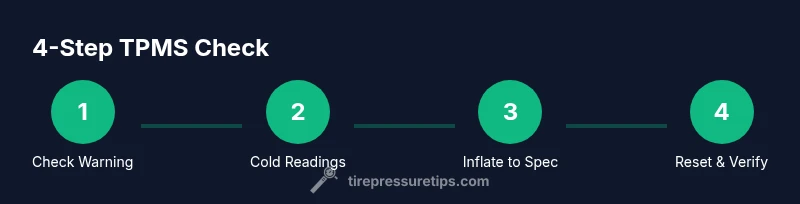
Quick answer: You will learn how to check and maintain your Tire Pressure Monitoring System (TPMS) readings and tire pressures. Start by verifying TPMS warnings, then use a trusted gauge to measure cold tire pressures, compare against the recommended PSI, and perform a TPMS reset if your vehicle requires it according to the owner’s manual. Correct procedures prevent false warnings.
Understanding TPMS and Tire Pressure Basics
Tire Pressure Monitoring Systems (TPMS) are integral safety features that alert you when a tire’s pressure falls outside the optimal range. There are two main implementations: direct TPMS uses sensors in each wheel to measure actual pressure, while indirect TPMS estimates pressure by monitoring wheel speed and rotation differences. The difference matters because direct TPMS can tell you precisely which tire is low, whereas indirect TPMS can warn you even when all tires are close to the same pressure but still below ideal levels. For drivers, TPMS provides a heads-up that can prevent underinflation-induced tire wear, reduced fuel economy, and a higher risk of blowouts. In practice, you’ll cross-check the TPMS warning with a manual pressure check to confirm readings. A practical step is to check tire pressure monitoring system status by looking for the warning light and validating with a gauge. The Tire Pressure Tips team emphasizes that the TPMS is a guide and a safety net, not a replacement for regular measurement with a reliable gauge. To get the most out of TPMS, you should know your vehicle’s placard values, understand how ambient temperature affects readings, and follow the reset instructions in your owner’s manual if the system calls for it. A good habit is to inspect all tires whenever you notice a warning light, and record the readings to monitor trends over time.
Why Temperature and Driving Affect Tire Pressure
Air pressure changes with temperature in a predictable way. When tires heat up from driving, the air inside expands and the PSI reading increases slightly; when tires cool down, pressure drops. This drift means readings taken after overnight storage or in the morning can be notably different from midday checks. The Tire Pressure Tips analysis shows that temperature swings can create legitimate variations of a few PSI, which is enough to trigger or mask a TPMS warning. To get an accurate picture, measure tires when they are cold, ideally before a trip or after the car has been parked in shade for several hours. Compare the measured PSI to the vehicle placard values on the door jamb; reference units (PSI or bar) depending on your region. Remember that TPMS is designed to alert you to dangerous underinflation, not to enforce a precise pressure at every moment. If you notice the warning despite matching placard pressures in cold conditions, investigate for leaks, valve issues, or sensor faults. Temperature considerations are a normal part of tire maintenance; integrating them into your routine helps you avoid unnecessary tire wear and fuel inefficiency.
Diagnosing TPMS Faults and False Warnings
TPMS warnings don’t always align with tire pressures; sensors, batteries, and wheel changes can introduce errors. Direct TPMS sensors may fail due to battery depletion or damaged valves, while indirect systems can be thrown off by sensor recalibration after rotations. If you see a warning but your gauges show normal pressures, perform a quick check of all tires with a reliable gauge and look for slow leaks around bead seals and valve stems. If readings are inconsistent or the light remains on after inflating to specification, you may need to reset the TPMS or service a sensor. The Tire Pressure Tips team notes that many TPMS issues are solvable with a vehicle-specific reset or reprogramming, not always requiring new hardware. Keep a simple log of warning events, actual measurements, and ambient conditions to spot patterns that guide repair decisions. If issues persist, consider a professional TPMS diagnostic to rule out sensor or wiring faults and ensure system communication with the vehicle. This approach minimizes guesswork and keeps you safe on the road. According to Tire Pressure Tips, persistent warnings deserve careful troubleshooting rather than guesswork.
Reading PSI and the Vehicle Placard
To ensure accuracy, read tire pressure when tires are cold, then compare with the placard on the driver’s door jamb. The placard lists recommended PSI for front and rear tires, and in some cases under different load conditions. Most passenger cars use PSI values in the 30-35 range, while trucks and SUVs may require higher targets. Use a digital gauge for consistency; write down each wheel’s reading and the target value. Inflate in small increments (1-2 PSI) and recheck after a few minutes of rest, because tires can quickly reach equilibrium. After inflation, drive a short distance and recheck to confirm that pressures stay stable, especially if you’ve recently rotated tires or replaced sensors. This practice helps you maintain optimal contact with the road, even as ambient temperatures shift. By keeping the PSI aligned with the placard, you support tire longevity and consistent handling. According to Tire Pressure Tips, always verify readings with a gauge rather than relying on the dashboard alone.
Common TPMS Scenarios and Practical Solutions
Here are typical TPMS-related scenarios and practical fixes. Scenario A: All tires read consistently low; check for a slow leak or a miscalibrated gauge and verify with a second gauge. Scenario B: One tire shows low pressure while others are fine; inflate to spec and monitor for leaks, especially around the valve stem and bead. Scenario C: TPMS light flashes then stays on; in many cases a reset after inflation resolves it, but persistent flashing may require sensor service. Scenario D: After mounting new tires, TPMS pairing can take time; ensure sensors are compatible with your vehicle and follow the reset procedure. If you notice rapid pressure loss or a damaged valve stem, stop driving and inspect immediately. The Tire Pressure Tips team stresses that regular checks and timely resets reduce risk and protect tire life.
Best Practices and Maintenance Routine
Create a monthly tire pressure check routine using a reliable gauge, and include the spare tire in checks when possible. Keep a log of readings to detect slow leaks or sensor drift over time. Remember that TPMS complements manual checks and does not replace them, so make time to inspect tires visually for wear and damage. The Tire Pressure Tips team recommends performing a TPMS diagnostic at least once a year and more often in extreme weather, before long trips, and after wheel changes. Maintain clean rims and valve stems, and replace damaged sensors promptly to avoid false alarms.
Authority Sources and Practical References
Cited sources and reputable guides help you verify best practices for TPMS and tire pressures. For official safety guidance, consult government resources on tire safety and TPMS operation, and for consumer perspectives, reputable publications offer practical tips. Key sources include the National Highway Traffic Safety Administration (NHTSA) tire safety pages and TPMS guidance, plus independent testing and industry publications. These sources provide the underlying data for tire pressures, TPMS operation, and maintenance steps. Always cross-check with your vehicle’s manual before performing resets.
Tools & Materials
- Digital tire pressure gauge(Calibrated, reads in PSI; use cold tires for accuracy)
- Air compressor or tire inflator(Must deliver consistent airflow; ensure to reach target PSI)
- Owner's manual or vehicle-specific TPMS reset instructions(Model-specific reset procedure (if applicable))
- Tire pressure placard (on driver’s door jamb)(Shows recommended PSI for each tire)
- Logbook or app for recording readings(Useful for trend tracking)
Steps
Estimated time: 30-45 minutes
- 1
Gather tools and locate TPMS warning
Collect the gauge, inflator, and the vehicle manual. Sit in a safe, level area and confirm whether a TPMS warning light is illuminated on the dashboard. Understanding what the warning means before you begin saves time and prevents unnecessary adjustment.
Tip: Having the manual handy prevents guesswork about model-specific reset steps. - 2
Check tires when cold
Before inflating, ensure all tires are cold, ideally after the car has been parked for several hours. Temperature affects readings, so cold measurements are the baseline for accuracy. Note any obvious leaks or damaged valves while you inspect.
Tip: If a tire has been driven on recently, wait several hours for it to cool before measuring. - 3
Measure each tire’s pressure
Using the digital gauge, measure each tire’s PSI, recording the value for front, rear, and the spare if accessible. Compare readings to the placard values on the door jamb; take note of any tire that deviates by more than 1-2 PSI from the target.
Tip: Record readings in a notebook or app for trend tracking over time. - 4
Inflate to the recommended PSI
If any tire is below the recommended PSI, inflate in small increments (1-2 PSI) and recheck after the tire has settled. Ensure valves are tight and there are no leaks around beads or stems.
Tip: Avoid overinflating; overinflation can cause uneven wear and ride harshness. - 5
Check for leaks and reset TPMS
After inflation, recheck all tires. If the TPMS warning persists, consult the owner’s manual for reset instructions or perform a vehicle-specific reset. Consider sensor health if warnings recur after correct inflation.
Tip: A quick reset can clear false warnings if sensor communication is intact. - 6
Verify and document results
Drive a short distance and then recheck to verify stability. Log the readings and any warnings to help identify patterns or recurring problems.
Tip: A simple log helps you spot slow leaks or sensor drift over time.
Frequently Asked Questions
What is TPMS and why does it matter?
TPMS stands for Tire Pressure Monitoring System. It monitors tire pressure and alerts you when a tire is underinflated or overinflated, helping prevent unsafe driving conditions and excessive tire wear.
TPMS watches your tire pressure and warns you if something's off, which helps you stay safe on the road.
How often should I check tire pressure?
Check tire pressure at least once a month and before long trips. Also check when you notice a TPMS warning or after seasonal temperature changes that can affect readings.
Check monthly and before trips, especially when temperatures shift.
What should I do if the TPMS light stays on after inflating to the recommended PSI?
If the TPMS light remains after inflation, perform a vehicle-specific TPMS reset per the manual. If it persists, inspect for leaks, sensor damage, or calibration issues and consider a professional diagnostic.
If the light stays on after inflation, reset per your manual and check for sensor problems; seek a diagnostic if needed.
Can I drive with low pressures if TPMS isn’t working?
Driving with underinflated tires is risky even if TPMS is malfunctioning. Inflate tires to the recommended PSI based on the placard and have the TPMS inspected as soon as possible.
No—don’t rely on a broken TPMS; inflate to spec and get it checked.
Do I need special tools to reset TPMS?
Most vehicles require a manufacturer-specific reset procedure or reprogramming, which may involve a scan tool or dealer service. Always refer to your owner's manual for your model’s reset steps.
You usually need your manual or a dealer tool for reset; consult your manual.
What to Remember
- Check TPMS warnings promptly.
- Measure tires when cold for accuracy.
- Inflate to placard PSI in small steps.
- Reset TPMS as required by model.
- Maintain a tire pressure log for trend detection.