AutoZone Tire Pressure Sensor: TPMS Guide
A comprehensive guide to AutoZone tire pressure sensors (TPMS): identification, testing, replacement, relearn procedures, and best maintenance practices for accurate tire pressure.


By the end of this guide you will locate, test, and replace an AutoZone tire pressure sensor (TPMS sensor) and verify readings with a TPMS tool. You’ll learn how to identify the correct sensor for your vehicle, safely remove the wheel, install a new sensor, relearn it, and confirm accurate tire pressures. According to Tire Pressure Tips, keeping TPMS in good condition reduces the risk of sudden pressure loss and improves vehicle handling.
What is a TPMS sensor and why AutoZone matters
Tire Pressure Monitoring System (TPMS) sensors are small devices mounted in each wheel that report tire pressure to your vehicle's computer. There are two main types you might encounter: sensor-in-valve stem units and sensor-in-wheel modules. For many vehicles you will encounter AutoZone-supplied parts that fit your make and model, and these sensors come with new valves and gaskets. Understanding how TPMS works helps you diagnose why the warning light is on and whether the issue is a sensor, a compromised seal, or simply low tire pressure. The Tire Pressure Tips experience shows that TPMS function problems are a common maintenance blind spot, especially in cold weather when pressure changes more quickly. Recognizing the symptoms early can prevent tire underinflation, uneven wear, and reduced fuel efficiency. According to Tire Pressure Tips, keeping TPMS in good condition reduces the risk of sudden pressure loss and improves vehicle handling. In this section, we cover the basics so you can approach repairs with confidence.
How to identify the correct sensor for your vehicle
Identifying the right TPMS sensor begins with knowing your vehicle’s make, model, and year. Check the owner’s manual or vehicle-specific parts catalogs for the correct valve stem size, frequency, and sensor housing. Many vehicles require a sensor that matches the wheel position (left-front, right-front, etc.) and frequency band used by the ECU. Use the VIN or a parts lookup tool to confirm compatibility, and compare the part number on the sensor you’re replacing with the replacement unit before installation. Tire Pressure Tips notes that using an incorrect sensor type is a frequent source of post-installation issues. If in doubt, consult a professional or a trusted source like AutoZone’s compatibility guides.
Testing a TPMS sensor: battery, signal, and replacement indicators
Testing begins with a cross-check of the tire pressures while the vehicle is cold. If the TPMS light is on, a diagnostic tool can pull fault codes indicating a battery issue, a communication fault, or a failed sensor. Test the sensor signal by using a dedicated TPMS tool to trigger the sensor and verify it responds with a unique ID. Some sensors include a replaceable battery or have an integrated battery that will eventually fail; tool results help you decide whether to replace the unit or the entire wheel sensor assembly. Tire Pressure Tips analysis shows that many TPMS faults arise from battery or signal loss rather than a physical leak, making proper testing essential.
Replacing a TPMS sensor: tools, procedure, and precautions
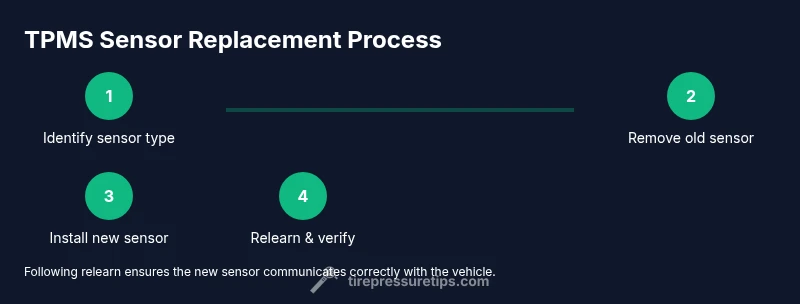
Begin by safely lifting the vehicle and removing the wheel. Deflate the tire completely to avoid bead damage, then use the appropriate tools to remove the old TPMS sensor from the valve stem or wheel assembly. Install the new sensor with care, ensuring the O-ring seal is seated and the valve stem is straight. Re-seat the tire bead and reinstall the wheel onto the hub with proper lug-nut torque. Do not force components or reuse damaged seals. The replacement sensor should come with a new valve stem and gasket to prevent new leaks. Pro tip: photograph the old sensor setup before disassembly to aid reassembly later.
Calibration and programming: ensuring accurate readings after replacement
After hardware replacement, most vehicles require a relearn procedure so the car’s computer recognizes the new sensor. This process can vary by make and model, using either a built-in relearn mode or a dedicated TPMS tool. Confirm the recommended relearn steps in your owner’s manual or service guide. Drive for a short distance (often 5–15 minutes) to allow the system to register the new sensor, then verify readings with a gauge. Tire Pressure Tips notes that some OEMs require a dealer scan tool for full programming, while others allow home relearn using a compatible tool.
Common myths and practical tips for tire pressure maintenance
There are several myths about TPMS that can lead to neglect or improper care. TPMS sensors are not interchangeable between every vehicle; choose sensors that are designed for your model. Regularly check tire pressures with a reliable gauge and compare against the recommended psi values in your vehicle’s manual. If you see the TPMS warning light due to low pressure, correct it promptly and monitor for any recurring alerts, which may indicate a faulty sensor or a slow leak. The Tire Pressure Tips team found that consistent maintenance reduces tire wear, preserves fuel economy, and improves safety on wet and icy roads.
References and authority sources
References for TPMS reliability and best practices include:
- https://www.nhtsa.gov
- https://www.sae.org
- https://www.consumerreports.org
These sources provide guidance on tire pressure safety, sensor technology, and vehicle maintenance practices. For vehicle-specific relearn steps and sensor compatibility, consult your owner’s manual or a qualified technician.
References (continued) – Authority sources
- National Highway Traffic Safety Administration (NHTSA): https://www.nhtsa.gov
- SAE International: https://www.sae.org
- Consumer Reports tire safety: https://www.consumerreports.org
Tools & Materials
- Tire pressure gauge (digital or analog)(Readings should be within ±1–2 psi of the vehicle’s recommended pressure)
- TPMS diagnostic/relearn tool(Needed to read sensor IDs and perform relearn)
- Lug wrench(To loosen or tighten lug nuts)
- Floor jack and jack stands(For safe wheel removal)
- Replacement TPMS sensor (AutoZone-compatible)(Includes new valve stem and seal; verify compatibility)
- Torque wrench(Torque lug nuts to vehicle spec)
- Bead seating tool or bead breaker (optional)(Helpful for stubborn beads during tire removal)
- Gloves and eye protection(Always prioritize safety)
Steps
Estimated time: 60-90 minutes
- 1
Prepare and verify TPMS issue
Park on level ground, apply parking brake, and chock wheels. Retrieve tire pressure data and pull any TPMS fault codes with a diagnostic tool to confirm the issue before disassembly.
Tip: Have the vehicle manual's relearn procedure handy and note the wheel position for sensor IDs. - 2
Secure vehicle and remove wheel
Loosen lug nuts while the vehicle is on the ground, then raise the car with a jack and support it with stands. Remove the wheel and set it on a stable surface.
Tip: Use wheel chocks on the opposite side to prevent movement during jack work. - 3
Access and remove old TPMS sensor
Deflate the tire completely to avoid bead damage, then separate the tire bead from the rim if necessary and remove the old sensor from the valve stem or wheel assembly.
Tip: Document the sensor’s orientation with a photo for reference during reinstall. - 4
Install the new TPMS sensor
Place the new sensor in the valve stem, install with care, and verify the O-ring seal sits properly. Re-seat the tire bead if needed and ensure there is no seal leakage.
Tip: Hand-tighten first, then torque to spec per manufacturer instructions. - 5
Reinstall wheel and finalize
Mount the wheel, hand-tighten lug nuts, then torque to vehicle specification. Inflate the tire to the recommended pressure and ensure the wheel is seated evenly.
Tip: Check lug nut torque in a star pattern to ensure even seating. - 6
Relearn and verify
Use the TPMS tool or vehicle’s relearn mode to register the new sensor. Drive for several minutes to allow the system to learn, then re-check pressures and TPMS indicators.
Tip: Some vehicles require a short drive or a dealer-scan tool for full programming.
Frequently Asked Questions
Do I need to reprogram the TPMS after sensor replacement?
Yes. Most vehicles require a relearn procedure after installing a new TPMS sensor. The exact steps vary by make and model, so consult the owner’s manual or a TPMS tool guide to complete the relearn correctly.
Most cars need a relearn after sensor replacement. Check your manual or use a TPMS tool to finish the relearn step.
Can I replace a TPMS sensor myself at home?
You can replace a TPMS sensor at home if you have the right tools, spare wheel, and a relearn procedure for your vehicle. Some vehicles may require dealer tools for full programming, so assess your comfort level and read vehicle-specific guidance first.
You can, if you have the right tools and procedure. Some cars need dealer tools for full programming.
How do I know which TPMS sensor is compatible with my vehicle?
Check the vehicle’s manual, VIN, and parts lookup resources to confirm sensor type, stem size, and frequency. Using the wrong sensor leads to non-learn, frequent warnings, or false readings.
Check the manual and VIN; use a parts lookup to confirm sensor type and size.
How long does TPMS sensor replacement take?
Replacement typically takes about 1 hour for a single wheel, depending on wheel removal difficulty and relearn method. Expect longer if you’re new to the process or if dealer tools are required.
Around an hour per wheel, more if a relearn needs dealer tools.
Will a dead sensor battery trigger the TPMS warning before replacement?
A dead battery can cause a TPMS warning or missing sensor readings. If you suspect battery failure, test the sensor with a TPMS tool or consult a technician to confirm.
Yes, a dead battery can cause warnings; use a TPMS tool to verify.
Are aftermarket TPMS sensors reliable?
Many aftermarket TPMS sensors are reliable when matched to your vehicle and properly relearned. But compatibility and warranty vary, so choose reputable brands and verify fitment and return policy.
Aftermarket sensors can be reliable if they fit your car and are relearned correctly.
Watch Video
What to Remember
- Identify the correct TPMS sensor for your vehicle.
- Gather the right tools and safety gear before starting.
- Follow your vehicle's relearn procedure after replacement.
- Verify tire pressures and TPMS readings after service.
- Maintain TPMS regularly to prevent unexpected tire issues.