Tire Pressure Sensors: A Comprehensive How-To Guide
Learn how tire pressure sensors and TPMS work, how to test and maintain accurate readings, and practical steps to keep your tires safe and efficient.


By the end of this guide you will understand tire pressure sensors, how TPMS detects pressure changes, and how to test and maintain sensor accuracy. You’ll learn the difference between direct and indirect TPMS, common failure modes, and step-by-step checks you can perform with basic tools. This quick answer also highlights how to interpret warning lights and when to service sensors.
What Are Tire Pressure Sensors and TPMS?
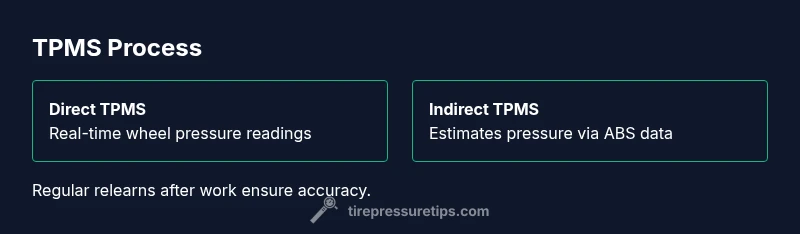
Tire pressure sensors are devices designed to monitor the air pressure inside your tires and, in many cases, relay that information to a vehicle's Tire Pressure Monitoring System (TPMS). There are two main families: direct TPMS sensors that mount in the valve stem or wheel and report exact pressures, and indirect TPMS estimates that use wheel-speed sensors to infer pressure changes. Direct sensors come with small lithium batteries that typically last several years, while indirect systems rely on ABS data and correlations rather than a physical pressure reading. Understanding which system your vehicle uses is essential for diagnosing warnings and planning maintenance. According to Tire Pressure Tips, accurate readings start with knowing whether you have direct or indirect TPMS, as this determines your testing approach and the needed tools. Many drivers underestimate how sensor placement, valve stems, and even seasonal temperature shifts can influence readings, underscoring why periodic checks are a smart habit for safety and fuel efficiency.
In practice, tire pressure sensors help prevent underinflation, which reduces fuel economy and increases tire wear. They also help avoid overinflation, which can cause uneven tread wear and poor handling. The Tire Pressure Tips team notes that sensor accuracy depends on proper installation, correct relearn procedures after tire service, and regular verification with a calibrated gauge. When you see a TPMS warning light, the cause could be a sensor problem, an actual pressure issue, or a simple relearn requirement after tire rotation or replacement. The goal is to interpret warnings correctly and address root causes rather than chase symptoms.
Direct vs Indirect TPMS: Pros, Cons, and When They Matter
Direct TPMS sensors provide precise, wheel-specific pressure data and immediate alerts when any tire drops below the target. They continue to function even if a tire is rotated, swapped, or replaced, as long as sensors are correctly relearned. Indirect TPMS, by contrast, uses ABS wheel-speed data to detect anomalies in tire behavior. It does not measure actual pressure; instead, it infers changes from differences in rotational speed and calibration across the drivetrain. Indirect systems tend to be less expensive and may require less maintenance, but they can be less reliable in detecting gradual leaks or small pressure changes. The choice between direct and indirect TPMS matters when considering vehicle type, driving conditions, and maintenance habits. For many drivers, a direct TPMS provides reassurance, while indirect systems may suffice for occasional use or budget-conscious scenarios. Tire Pressure Tips highlights that understanding your system helps you pick the right testing approach and maintenance routine. Consider how often you drive in extreme temperatures, as cold weather can cause pressure losses that may trigger warnings even when a tire is still within safe limits.
Whether you have direct or indirect TPMS, regular checks with a reliable gauge, correct relearn procedures after service, and awareness of how warnings present themselves are essential steps in tire maintenance. The goal is to keep tires within the manufacturer’s recommended range and to avoid the common pitfall of relying solely on TPMS lights without confirming actual pressures. This approach aligns with Tire Pressure Tips guidance to practice proactive checks rather than reactive fixes.
How to Read and Understand Your TPMS Alerts
TPMS alerts come in several forms: a visual warning light on the dashboard, a fail-safe display message, or an audible chime that accompanies the warning. A tire pressure reading that falls outside the recommended range is typically signaled by a TPMS warning. In direct TPMS systems, you may be able to retrieve exact pressures from the vehicle’s information display, while indirect TPMS relies on patterns in wheel-speed data to infer low pressure. The first step is to verify actual tire pressures with a reliable gauge when any warning appears. If readings are within the recommended range, the warning might be due to a sensor fault, a stale relearn, or sensor battery issues. If readings are off, adjust pressure to manufacturer-specified levels and recheck after the tire has cooled, following the vehicle manufacturer’s instructions. Tire Pressure Tips cautions that some warnings require a relearn after tire changes or after the replacement of sensors, so consult the manual for vehicle-specific steps.
Interpreting TPMS readings requires a systematic approach: confirm the actual pressure, compare with the recommended value, consider temperature effects, check for leaks at the valve stem, and verify sensor health with a professional if warnings persist. A simple, methodical process can save time and prevent unsafe driving conditions.
How to Check Tire Pressure Correctly: Tools & Techniques
Checking tire pressure correctly starts with the right tools: a reliable tire pressure gauge, an air compressor or inflator, and your vehicle’s owner manual for manufacturer-specified pressures. Begin with cold tires because hot tires can skew readings. Remove the valve cap, place the gauge on the valve stem, and note the reading. Compare it to the recommended cold pressure printed on the sticker inside the door or in the owner’s manual. If your reading is low, fill the tire gradually in short bursts, then recheck to avoid over-inflation. After adjusting, reattach the valve cap securely and ensure the TPMS warning light behaves as expected. For vehicles with direct TPMS, you may need to drive a short distance or perform a relearn to update the vehicle’s memory with new sensor data. The Tire Pressure Tips team emphasizes using a calibrated gauge and following a consistent testing routine to ensure readings are accurate and comparable across sessions.
When checking, take notes about each tire’s pressure and temperature, date, and any anomalies observed. If you notice persistent underinflation or rapid pressure loss, inspect for leaks, damaged stems, or tire damage, and consider professional inspection. Remember that pressure targets can vary with load, speed, and temperature, so always refer to the vehicle’s official guidance for the best results.
Calibrating and Relearn Procedures for TPMS
Relearn procedures align the vehicle’s TPMS memory with the current sensor IDs after tire service, rotation, or sensor replacement. The exact steps vary by make and model, but common methods include driving at a moderate speed for a specified distance, using the infotainment system to perform a relearn, or connecting an OBD-II scanner with TPMS capabilities. The key is to ensure the vehicle recognizes each sensor and associates it with the correct wheel position. If the vehicle requires a relearn after service, skip steps that assume a static memory and follow the OEM-recommended sequence precisely. Tire Pressure Tips advises keeping the owner’s manual handy and performing relearn steps after any tire work to prevent nuisance warnings and ensure accurate readings across all wheels.
For many modern vehicles, a relearn is easiest when the tires are at or near the target pressures and the car’s ignition is in the correct position. Some vehicles require a specific sequence for the starter, the sensors, and the door controls. If you’re unsure, a quick call to a dealer or a tire shop with TPMS experience can save time and prevent missteps. Regular relearns can extend sensor life and improve TPMS reliability over the long term.
When to Replace TPMS Sensors: Signs and Timing
Sensors wear out, especially in areas with rough roads or frequent tire changes. Common signs of failing sensors include intermittent warnings, inconsistent readings between tires, dead sensor batteries, or sensors that fail to report accurate pressure. If you recently replaced tires, rims, or stem hardware and the TPMS continues to display warnings, a sensor replacement or battery service may be necessary. Direct TPMS sensors have a finite life, typically several years, and may need replacement long before the tire itself wears out. Indirect TPMS relies more on software calibration, but a persistent warning or recalibration issues still warrant a professional inspection. Tire Pressure Tips notes that proactive replacement during typical service intervals can prevent unexpected failures on the road and minimize downtime.
Budget and timing play a role in decisions about sensor replacement. If you drive frequently in extreme temperatures or heavy traffic, sensor health is especially crucial for consistent readings. A qualified technician can verify sensor integrity, assess wiring connections, and recommend a replacement strategy that fits your vehicle and budget.
Cost and Maintenance: What to Expect
Maintenance costs for tire pressure sensors vary by vehicle and sensor type. Direct TPMS sensors generally involve the cost of sensor units and relearn service, while indirect TPMS may primarily require software calibration. Regular maintenance focuses on ensuring that sensors remain properly installed, battery life is healthy, and readings reflect reality. Costs may include sensor replacements, valve stems, recalibration fees, and potential tire dismounting for access. While exact prices vary, planning ahead for service during routine tire changes helps spread costs and minimizes downtime. Tire Pressure Tips emphasizes that proactive maintenance—checking pressures, performing relearns when needed, and using high-quality gauges—reduces the likelihood of expensive sensor failures or misdiagnoses, protecting both safety and vehicle performance.
Common Myths About Tire Pressure Sensors
Myth: TPMS sensors always indicate actual tire pressure. Truth: Some systems infer pressure in indirect TPMS, while direct TPMS provides real-time readings. Myth: Relearn is never required after tire changes. Truth: many vehicles require a relearn to update sensor IDs after tire changes or sensor replacement. Myth: TPMS is a substitute for manual pressure checks. Truth: TPMS assists but does not replace the need to verify gas pressure with a gauge because sensor data can be affected by temperature and sensor age. Myth: Replacing tires automatically resets TPMS. Truth: relearns are often required and must be performed according to the vehicle’s procedure. Tire Pressure Tips reminds readers that a solid maintenance routine includes manual checks and proper relearns as part of tire care.
Best Practices for Year-Round Tire Pressure Management
Maintain consistent pressure checks across seasons, using a calibrated gauge and verifying cold tire readings. Establish a routine: check before long trips, after significant temperature changes, and whenever you rotate tires. Keep a log of readings and relearn events for quick diagnostics. When in doubt, seek professional assistance to verify sensor health, ensure correct relearn, and confirm that the tire inflation system is functioning as intended. The Tire Pressure Tips team emphasizes that reliability comes from a disciplined approach to checks, relearns, and professional service when needed.
Throughout the year, remember that TPMS is a safety aid, not a substitute for direct pressure measurement. A sound habit of manual checks combined with proper sensor maintenance yields safer, more efficient driving and longer tire life.
Tools & Materials
- Tire pressure gauge (digital or analog)(Use to measure tire pressure accurately; verify gauge accuracy periodically)
- Air compressor or tire inflator(Needed to adjust to the recommended cold pressure values)
- OBD-II scanner with TPMS relearn capability(Required for some vehicle models to relearn sensors after replacement)
- Owner's manual / vehicle manual(Refer to model-specific TPMS procedures and recommended pressure ranges)
- Clean rag(Use to wipe valve stems and prevent contamination when measuring)
Steps
Estimated time: 60-90 minutes
- 1
Gather tools and confirm vehicle requirements
Collect a calibrated tire gauge, air compressor, and the vehicle manual. Verify whether your model uses direct or indirect TPMS, and locate the recommended cold tire pressures sticker. This step ensures you have all the right tools and the correct targets before you begin.
Tip: Having the manual on hand reduces guesswork during relearn steps. - 2
Identify TPMS type and sensor locations
Determine if your vehicle uses direct TPMS sensors in each wheel or relies on an indirect system. Inspect the wheel area for sensor hardware or a valve stem with a sensor cap. Knowing the type guides how you perform checks and relearn actions.
Tip: If you’re unsure, check the manufacturer’s guide or contact a tire professional for accuracy. - 3
Measure current tire pressures when cold
Remove valve caps and take readings with the tire gauge on all four tires. Compare against the manufacturer’s recommended cold pressure, typically displayed on the door jamb sticker. Record any gaps and note which tires require adjustment.
Tip: Measure after the vehicle has been stationary for at least 3 hours or before driving; hot tires give false readings. - 4
Adjust pressures to the recommended levels
If readings are low, add air in small increments and recheck frequently. Avoid over-inflating; use the gauge to ensure each tire meets the target pressure. Recheck after the tires cool to finalize the correct setting.
Tip: Always double-check the pressures on cold tires to ensure accuracy. - 5
Relearn or calibrate TPMS if required
If the TPMS requires relearn, follow the vehicle’s procedure using the infotainment system or an OBD-II tool. This step updates the system with the current sensor IDs and wheel positions. Driving a short distance after relearn helps the system stabilize.
Tip: Refer to the owner’s manual for the exact sequence; procedures vary by model. - 6
Verify readings and document results
With all tires at spec, verify the TPMS readings and ensure the warning lights no longer activate. Log the final pressures, sensor status, and relearn confirmation for future reference. If a warning persists, inspect for leaks or sensor faults.
Tip: Keep a simple log; it speeds future inspections and helps identify sensor drift.
Frequently Asked Questions
What exactly are tire pressure sensors and TPMS?
Tire pressure sensors monitor air pressure and transmit data to TPMS. Direct sensors provide real-time, wheel-specific readings, while indirect TPMS estimates pressure indirectly using wheel-speed data. Both aim to prevent unsafe inflation levels.
Tire pressure sensors monitor air pressure and send data to TPMS. Direct sensors give exact readings; indirect TPMS estimates pressure using wheel speed.
Do TPMS warnings always mean I have a pressure issue?
Usually a real pressure issue, but warnings can also indicate sensor faults or relearn needs after tire service. Verify with manual checks before assuming a tire is unsafe.
Warnings usually mean pressure is off, but sensors or relearns can trigger warnings too. Check with a gauge to confirm.
Can low TPMS battery affect warnings?
Yes, a weak battery in a direct TPMS sensor can cause inaccurate readings or warning lights. If you suspect battery wear, a sensor replacement might be required.
A weak sensor battery can cause false warnings or wrong readings; replacement may be needed.
How often should I check tire pressure manually?
Check monthly and before long trips, especially after temperature changes. Manual checks ensure accuracy beyond what TPMS reports.
Check once a month and before long trips to ensure accuracy beyond the TPMS readings.
What is the difference between direct and indirect TPMS?
Direct TPMS uses wheel-mounted sensors for actual pressures, while indirect TPMS infers pressure from ABS data. Direct is usually more precise, but both serve to warn you.
Direct TPMS reads actual pressure; indirect relies on wheel-speed data to infer pressure.
Will replacing tires trigger a TPMS relearn?
Often yes. Relearn aligns the system with new sensors or positions. Follow the vehicle's procedure or have a professional perform it.
Yes, changing tires often requires relearn so the system recognizes new sensor IDs.
Watch Video
What to Remember
- Check tires when cold for accurate readings
- Know whether you have direct or indirect TPMS
- Perform relearn when required to keep readings current
- Keep a maintenance log for TPMS events and tire pressure