How to Reset a Tire Pressure Monitoring System (TPMS)
Learn how to reset a tire pressure monitoring system (TPMS) after inflating, rotating, or replacing tires. This step-by-step guide covers direct and indirect TPMS, drive cycles, and safety tips for reliable recalibration.


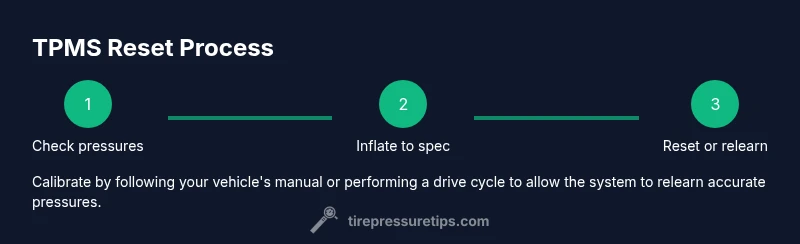
Goal: learn how to reset a tire pressure monitoring system after inflating or rotating tires. Start by confirming the manufacturer’s recommended pressures on the door jamb sticker. Inflate to spec, then perform the vehicle-specific reset: use the TPMS menu or reset button, or complete a short drive cycle to recalibrate. This guide covers both direct and indirect systems.
Understanding TPMS resets: direct vs indirect
Tire Pressure Monitoring Systems (TPMS) keep your tires at the correct pressure and alert you when a tire is under- or over-inflated. There are two main types: direct TPMS, which uses sensors inside each wheel, and indirect TPMS, which relies on wheel-speed data to infer pressure. After inflating tires, replacing sensors, or rotating tires, the system may need recalibration to reflect the new pressures. According to Tire Pressure Tips, a proper reset ensures the sensors read accurate PSI, reduces nuisance alerts, and can improve fuel efficiency and tire wear. Always consult your vehicle's manual for model-specific steps, since resets can vary by make and year.
When to reset your TPMS
A reset is typically required after inflating tires to the correct pressures, rotating tires, or replacing sensor components. If you install new sensors or replace a tire, the system may need a relearn. Some vehicles automatically relearn after a drive cycle; others require a manual reset through the instrument cluster or a dedicated TPMS button. If the warning light stays on after inflating to spec, a reset attempt is warranted and may indicate a leak or a faulty sensor.
Signs you may need a reset after service
- TPMS warning light remains on after you have inflated to the recommended PSI.
- The light blinks during startup or after a long drive.
- You recently rotated tires, replaced a wheel, or added sealant.
- Temperature swings or altitude changes caused pressure fluctuations. The Tire Pressure Tips team notes that recalibration can take a short drive cycle to settle.
What you’ll need before starting
Before you begin, gather the essentials: a reliable tire pressure gauge, a source of air for inflation (an air compressor or service station), the vehicle's owner's manual, and a way to record your readings. Ensure you’re working on a cold tire for accurate PSI readings. Having your door jamb sticker handy helps confirm the target pressures for each tire. Also, ensure wheels are on a flat surface and the parking brake is engaged. As Tire Pressure Tips emphasizes, having these items on hand reduces surprises.
Vehicle-specific reset methods: manual vs drive cycle
Reset methods differ by vehicle. Some cars provide a dedicated TPMS reset button or a menu option in the instrument cluster; others require a relearn through a drive cycle with defined speeds. The general steps are to inflate to spec, access the reset function in the vehicle settings or press the reset button, then perform a drive cycle (often at 30–50 mph for several minutes). If your car’s manual lists a different procedure, follow that exact sequence. The goal is to teach the system the current PSI values and ensure accurate alerts.
Practical steps you can take right now
Begin by parking on a level surface, with the engine off and the parking brake engaged. Use a quality tire pressure gauge to verify each tire’s current PSI, then adjust to the recommended pressures from the door jamb sticker. After inflation, locate your TPMS reset option—either a physical button or a software menu—and follow the vehicle’s instructions. If a reset isn’t available, a short drive at steady speeds can often trigger a relearn.
Safety considerations and common mistakes
Always inflate tires when cold and never exceed the maximum pressure molded on the tire sidewall. Do not rely solely on the TPMS light; inspect tires for leaks or damage if the light behaves abnormally. A faulty sensor or corroded valve stem can cause persistent warnings. The Tire Pressure Tips team cautions that attempting resets while tires are hot or overinflated can compromise safety and tire life.
Maintaining TPMS health to prevent future resets
Regularly check tire pressures at least once a month and after temperature changes or long trips. Keep sensors clean and ensure wheel rims are free from damage. If you rotate tires, remember to recalibrate and recheck after a warm-up period. Planning ahead with routine maintenance helps reduce unexpected TPMS alerts and extends tire life.
Tools & Materials
- Tire pressure gauge(Digital or analog; accuracy to ±1 psi)
- Air compressor or access to inflation at station(Ensure consistent pressure delivery)
- Vehicle owner's manual(For model-specific TPMS reset steps)
- Door jamb sticker or printed PSI chart(Confirm target pressures by tire position)
- Notebook or app for recording pressures(Helpful for tracking changes)
- Wheel chocks(Use on level ground or when inflating)
Steps
Estimated time: 20-40 minutes
- 1
Park on a level surface and prepare
Park the vehicle, apply the parking brake, and chock the wheels to prevent movement. Gather your tools and locate the TPMS reset option in your vehicle manual or menu. This initial setup minimizes distractions and ensures safe inflation work.
Tip: Verify you’re working with cold tires for accurate readings. - 2
Check current tire pressures
Take a baseline reading on all tires with a trusted gauge. Record each value and compare to the door jamb sticker. This helps you know exactly how much you need to adjust each tire.
Tip: Write down readings to track changes across tires. - 3
Inflate to target PSI
Inflate each tire to the recommended PSI from the sticker, including the spare if applicable. Recheck after inflation to confirm consistency, and avoid rounding to the nearest whole number if the target is a precise value.
Tip: Use a digital gauge for higher precision and recheck after a short rest. - 4
Access the TPMS reset option
Find the TPMS reset control—this may be a physical button, a gauge cluster setting, or a sub-menu. If your vehicle doesn’t offer a manual reset, move to the drive-cycle method described in your manual.
Tip: If unsure, consult the owner’s manual or dealer for the exact method. - 5
Initiate reset or relearn
Use the reset function or perform the required drive cycle steps to relearn the current tire pressures. Expect a few minutes of driving as the system recalibrates.
Tip: Drive steadily and avoid abrupt accelerations during relearn. - 6
Verify the TPMS status
After the relearn, observe the TPMS indicator. It should turn off or stop flashing within minutes of driving. If it stays on, recheck tire pressures and inspect for leaks.
Tip: If the light remains, there could be a sensor fault or leak. - 7
Document results and monitor
Record the final PSI and the time you completed the reset. Monitor tire pressure over the next 24–48 hours to catch any slow leaks or temperature-driven changes.
Tip: Temperature changes can affect PSI; recheck when temperatures shift.
Frequently Asked Questions
What is TPMS reset and why is it needed?
TPMS reset recalibrates the system to reflect current tire pressures after inflation, rotation, or sensor changes. Without resetting or relearning, the system may show inaccurate alerts or keep the warning light on.
TPMS reset recalibrates the system to current pressures, helping avoid false alerts and ensuring accurate readings.
How do I know if my TPMS is direct or indirect?
Direct TPMS uses sensors mounted in each wheel, sending PSI data. Indirect TPMS uses wheel-speed data to estimate pressure. The presence of wheel sensors often indicates direct TPMS.
Look for wheel-mounted sensors; if unsure, check the vehicle manual or ask a technician.
Is it okay to reset TPMS after every tire service?
Yes, resetting after tire service or rotation helps ensure the system reads the correct pressures. Some vehicles relearn automatically, while others require a manual reset.
Reset after service to ensure accuracy; some cars relearn automatically, others require a manual step.
What if the TPMS light stays on after reset?
If the light remains on, recheck all tire pressures and inspect for leaks or a faulty sensor. Persistent warnings may require sensor replacement or professional diagnostics.
If it stays on, double-check pressures and look for leaks; you may need professional help.
Can I reset TPMS without driving?
Some vehicles provide a manual reset without a drive cycle, but many require a short drive to relearn. Always follow the manual for your specific model.
Some models need a drive to relearn; others have a quick reset—check your manual.
Are there safety hazards when resetting TPMS?
Work on cold tires, avoid overinflation, and check for leaks. Faulty sensors or damaged valves can cause false alerts and should be inspected.
Always ensure tires are cold and check for leaks; faulty sensors should be checked by a pro.
Watch Video
What to Remember
- Know your target pressures before starting.
- Use the correct reset method for your vehicle.
- Inflate to spec and verify all tires are within range.
- Drive as needed to complete the relearn process.
- Recheck pressures after the reset to confirm stability.