Tire Pressure Reset Button: A Step-by-Step Guide
Learn how to locate, reset, and calibrate TPMS using the tire pressure reset button. Practical steps, safety tips, and maintenance guidance for drivers navigating tire pressure systems.


Learn how to locate and use the tire pressure reset button (TPMS reset) to recalibrate sensors after inflating or rotating tires. You’ll verify each tire’s pressure against the manufacturer’s target PSI, adjust as needed, and complete the reset through the vehicle’s TPMS menu if required. The steps apply to most modern vehicles.
What a Tire Pressure Reset Button Does and Why It Matters
The tire pressure reset button is part of the broader Tire Pressure Monitoring System (TPMS) calibration process. When you adjust tire pressures—whether after a new set of tires, seasonal changes, or a simple top-off—the TPMS needs a chance to relearn the new conditions. The reset action tells the system to re-evaluate sensor data against current pressures, so the dashboard light behavior aligns with reality. According to Tire Pressure Tips, understanding how this recalibration works helps drivers avoid false warnings and maintain optimal tire performance. The TPMS isn’t just about the light; it’s about ensuring accurate monitoring to protect tire wear, fuel efficiency, and safety. In practice, the reset step is often simple but can vary by make and model. A correct reset reduces nuisance alerts and improves the reliability of TPMS readings.
How TPMS Reset Differs by System and Model
TPMS reset methods are not identical across every vehicle. Some cars have a dedicated reset button, while others rely on a menu option within the vehicle’s settings or on-board computer interface. Lighter, older systems may recalibrate automatically after a short drive once pressures stabilize; newer systems often require a manual reset to re-sync sensors. The difference here is not just where the button sits, but how the system learns sensor data—via a hardware button or a software-driven calibration. For drivers, this means always consulting the owner’s manual for model-specific steps, because following the wrong procedure can leave the TPMS light stubbornly on or the sensors misread. Tire Pressure Tips notes that model-specific guidance is the safest route to avoid sensor damage or miscalibration.
When You Should Reset TPMS After Pressure Changes
Resetting TPMS is typically recommended after inflating or deflating tires to the manufacturer’s target PSI, after rotating tires, or after replacing sensors or tires. If you notice a TPMS warning light after topping off or changing pressures, a reset can help avoid continued nuisance alerts. However, not every change requires a reset. In some vehicles, a reset is only necessary after a sensor replacement or if the light fails to extinguish after a proper recheck of pressures. In those cases, driving for a short period may trigger a natural learning cycle, but if the light stays on, a formal reset ensures the sensor data aligns with the new setup. The Tire Pressure Tips team emphasizes verifying the target PSI for each tire and using a method appropriate to your vehicle.
Tools and Prerequisites Before You Start
Before you begin, gather the essentials to measure and adjust tire pressures and to perform a TPMS reset if needed. You’ll want a reliable tire pressure gauge (preferably digital for accuracy), a portable inflator or access to an air pump, and your vehicle’s owner’s manual for model-specific reset steps. A notebook or smartphone to log readings can help track changes over time. If your vehicle uses a hard reset tool or a dedicated TPMS device, have it on hand. While many resets don’t require specialized equipment, having these tools on hand reduces the risk of miscalibration and saves time during the process. Consistency is key when rechecking pressures across all tires.
Step-by-Step Overview: What to Expect
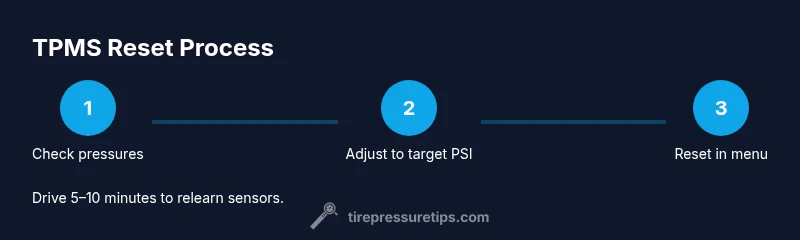
In most cases, the TPMS reset process follows a clear sequence: check current tire pressures with a gauge, adjust each tire to the vehicle’s target PSI, and initiate the reset via the dash/menu or a dedicated button. After triggering the reset, you’ll typically drive briefly to allow sensors to relearn. The exact steps vary by model, so refer to the owner’s manual for precise instructions. It’s important to ensure tires are cold when taking baseline readings to avoid inflated numbers caused by recent driving or heat buildup. The overview here is designed to prepare you for the detailed step-by-step instructions that follow in your car’s specific system.
The Official Reset Process for Common Brands (General Guidelines)
Most brands group TPMS reset into two pathways: a dedicated reset button (often located under the left side of the dashboard or near the steering column) or a menu-driven option within the vehicle’s settings. The general progression is to access TPMS or tire settings, select Reset/Calibrate, confirm, and then drive for several minutes to relearn. Some vehicles will require holding the reset button for a few seconds, while others will display prompts on the instrument cluster. Always confirm the exact steps with your owner’s manual, as attempting a reset with the wrong sequence can leave the light on or mis-sense tire pressure.
Common Mistakes That Trigger False TPMS Readings
Rushing through inflations, neglecting to measure cold tires, or using the wrong target PSI can cause the TPMS to misread sensors. A stuck or dirty sensor can also lead to inaccurate readings. If the reset is performed without ensuring all tires are at the correct cold PSI, the system may re-learn incorrect values. Additionally, driving immediately after a reset can prevent proper sensor learning, as rapid temperature changes affect pressure. Tire Pressure Tips warns that consistent practices—check cold PSI, align with manufacturer targets, and follow model-specific reset steps—minimize false alerts.
Aftercare: Verifying Sensor Accuracy Over Time
After completing a TPMS reset, it’s wise to monitor tire pressures for the next few days to confirm consistency. Check pressures in the mornings when tires are cold and compare against the manufacturer’s target psi for each position. If you notice recurring fluctuations or the TPMS warning reappears, that could indicate a damaged sensor, slow leaks, or a need for sensor replacement. Regularly scheduling tire checks and ensuring proper rotation intervals can extend sensor life and keep TPMS readings reliable, reducing the risk of driving on underinflated tires.
Handling a Persistent TPMS Warning After a Reset
If the TPMS light remains on after a reset, the issue could be a sensor failure, a leak, or a calibration mismatch. In some cases, a stubborn warning can be resolved by repeating the reset procedure, ensuring all tires are correctly inflated to the target PSI. If the warning persists, you should consult a tire service professional or your dealership, especially if you suspect a damaged sensor, a faulty valve stem, or a compromised wheel rim. Addressing sensor issues promptly minimizes safety risk and helps maintain optimal tire performance.
Real-World Scenarios: Inflating, Rotating, Replacing Tires
Consider several practical scenarios. After inflating tires for a long road trip, a reset may be needed to re-learn the new configuration. After rotating tires, some vehicles need a reset to ensure each position’s sensor is calibrated to the new arrangement. When replacing tires, especially with different sizes or brands, a reset is almost always required to ensure the TPMS reflects the new setup. In all cases, verify that the target PSI corresponds to the current tires and the vehicle’s recommended values. These steps minimize false alerts and maximize tire safety and performance.
Quick Reference Checklist for TPMS Reset
- Confirm cold tire pressures match the vehicle’s target PSI for all tires.
- Use the correct reset method per your make/model (button or menu).
- After reset, drive 5–10 minutes to allow sensors to relearn.
- Recheck pressures and ensure TPMS light is off.
- Schedule sensor inspection if warnings persist after a reset.
Tools & Materials
- Tire pressure gauge(Digital preferred for accuracy; check all tires cold.)
- Air pump or inflator(Capable of precise PSI adjustments to target values.)
- Owner's manual(Model-specific TPMS reset steps.)
- Notebook or smartphone(Log readings and dates for trend tracking.)
- Optional TPMS reset tool(Some vehicles use dealer-specific devices.)
Steps
Estimated time: 20-40 minutes
- 1
Check current tire pressures
Use your gauge to measure each tire when cold. Record each value and compare against the manufacturer’s target PSI printed on the door placard or in the manual.
Tip: Accurate baseline pressures prevent miscalibration later. - 2
Adjust pressures to target PSI
If any tire is low or high, use an air pump to bring it to the specified target. Re-check after inflation to confirm stability.
Tip: Don’t exceed the maximum PSI listed on the tire sidewall. - 3
Prepare for TPMS reset
Ensure all tires are within 1-2 psi of the target and note any sensors that seem faulty or inconsistent.
Tip: A single faulty sensor can cause persistent warning lights. - 4
Initiate reset via vehicle system
Access the TPMS menu or press the reset button according to your owner’s manual. Confirm the reset when prompted.
Tip: Follow the exact prompts; some cars require holding a button for several seconds. - 5
Drive to relearn sensors
Drive for 5–15 minutes at highway speeds or follow the manual’s instructions to allow sensors to relearn.
Tip: Cold start readings are more reliable for verification. - 6
Verify reset outcome
Check the dashboard for the TPMS light behavior. Recheck tire pressures to ensure stability.
Tip: If the light remains, reattempt reset or inspect sensors.
Frequently Asked Questions
Do you always need to reset TPMS after inflating tires?
Not always. Some vehicles auto-relearn after a drive, but many models require a manual reset to ensure sensors reflect the current setup. Always consult the owner’s manual for model-specific guidance.
Some cars auto-relearn after a drive, but many require a manual reset. Check your manual to be sure.
Where is the TPMS reset button usually located?
The reset button location varies by model. It may be a dedicated button on the dash, a menu option in the settings, or a combination of procedures. Your manual will indicate the exact location.
It depends on the model—look in the dash, under settings, or in the manual for the exact spot.
What if my TPMS light stays on after reset?
If the light remains, recheck all tire pressures, inspect sensors for damage, and consider sensor replacement if readings are inconsistent. Persistent warnings may require professional diagnostics.
If it stays on, recheck pressures and inspect sensors; persistent warnings may need a professional check.
Is TPMS reset the same as calibrating sensors?
Reset and calibration are related but not identical. Reset tells the system to relearn, while calibration ensures the sensors are reporting correctly to the system. Check your manual for the exact terminology.
Reset tells the system to relearn; calibration ensures sensors report correctly. Check your manual for terminology.
Can a dirty sensor or slow leak affect TPMS readings?
Yes. Dirt, corrosion, or a slow leak can cause inaccurate readings. Clean or replace sensors as needed and recheck after a reset.
Dirty sensors or leaks can skew readings. Clean or replace sensors as needed and reset again.
Do all cars require manual TPMS reset?
No. Some cars auto-relearn after a drive; others require manual steps. Always verify with your vehicle’s manual based on your make and model.
Not all cars need manual reset; many auto-relearn after driving, but check your manual to be sure.
Watch Video
What to Remember
- Check all tires cold before resetting
- Use manufacturer target PSI for each tire
- Follow model-specific TPMS reset steps
- If warning persists, inspect sensors or seek service
- Record pressures to track changes over time