How to Reset Tire Pressure On Your Vehicle: A Practical Guide
Learn how to reset tire pressure on your vehicle after inflating tires and resetting TPMS. Step-by-step instructions, safety tips, and troubleshooting to keep tires properly inflated and sensors calibrated.


By the end of this guide, you’ll know how to reset tire pressure on your vehicle and TPMS after inflating tires. You’ll confirm the correct cold-psi values from the manufacturer, use a reliable gauge, inflate to spec, and perform a TPMS reset if your car requires it. This routine helps maintain safety and fuel efficiency.
How TPMS works and why a reset might be needed
Tire Pressure Monitoring Systems (TPMS) monitor each tire's air pressure and alert you when a tire is underinflated or overinflated. Direct TPMS uses tire-mounted sensors, while indirect TPMS relies on wheel-speed data. When you inflate or replace tires, the system may lose its reference value and require a reset to recalibrate. According to Tire Pressure Tips, a reset is often necessary after inflating to the recommended cold psi so the sensors can relearn the new pressures. A reset helps prevent nuisance lights and ensures you maintain optimal grip, braking performance, and fuel efficiency. In many vehicles, the reset is a simple button press or a quick drive, but some models require a dealer tool or an in-menu setting. Always start by confirming the manufacturer’s spec for cold tire pressures; these values are your target for this procedure.
How TPMS interacts with cold vs. hot pressures
Tire pressures rise as tires heat up from driving. TPMS readings reflect the pressure inside a hot tire, but manufacturer specs are typically written for cold tires. This mismatch can trigger false alerts if you reset while tires are warm. The recommended practice is to measure when tires are cold, inflate to the specified cold-psi, and then allow the system to relearn through normal driving. Tire Pressure Tips emphasizes consistency: use the same gauge, measure after a proper cool-down, and follow model-specific steps for resetting TPMS.
Tools, gauges, and reference pressures
Before you begin, gather the right tools and confirm the correct pressure values from your owner's manual or door placard. You will typically need a digital tire pressure gauge, an air compressor or inflator, and knowledge of your vehicle’s recommended cold-psi. A high-quality gauge reduces error; digital gauges can show precise readings. Keep a notebook or app to log readings. Reference pressures vary by tire size, load, and season; check the placard for the exact numbers for your vehicle. If you have run-flat tires or a staggered setup, the front and rear pressures may differ; verify each tire’s spec.
Pre-checks: safety, temperature, and cold pressures
Work in a flat, shaded area away from traffic. Allow tires to cool for at least three hours after driving before taking readings to avoid inflated values. If tires have been hot after a trip, readings can be higher; wait and measure when cold. Remove valve caps, inspect the valve stems for damage, and ensure the gauge is clean. Using the same point on the tire and the same gauge improves consistency. Document the current pressures to compare with the target values, and keep the results handy for reference during TPMS resets.
Step-by-step overview (follow the numbered steps in the STEP-BY-STEP block for precise actions)
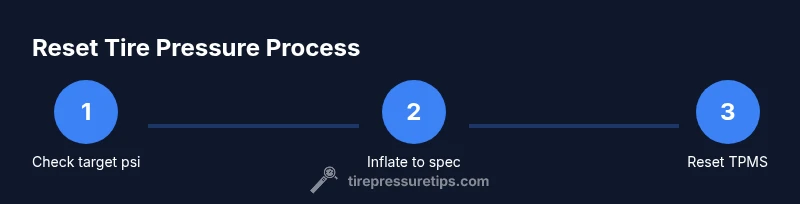
This section outlines the logical flow you’ll apply in the formal step-by-step instructions. First, confirm the target cold pressures for each tire, then measure, inflate, and verify. Finally, reset the TPMS if your vehicle requires a manual relearn, and test-drive to complete the process. Some cars relearn automatically after a short drive, while others need a dedicated reset sequence in the dashboard menu or a physical button.
Troubleshooting common issues after reset
If the TPMS light stays on after a reset, double-check all tire pressures again, ensuring they are cold and at the manufacturer spec. Look for slow leaks around valve stems, punctures, or bead seating, and recheck after re-inflation. If readings keep fluctuating, there may be a damaged sensor or a faulty gauge. In such cases, consult your vehicle manual for service intervals or seek assistance from a tire professional.
Tools & Materials
- Digital tire pressure gauge(Preferred for accuracy; avoid gauges with inconsistent readings.)
- Air compressor or tire inflator(Must be capable of delivering stable psi; compatible with car tires.)
- Owner's manual / door placard(Provides the exact cold-psi values for your vehicle.)
- Valve caps and brush(Keep caps on when finished; use brush to clean valve stems.)
- Notebook or digital log(Record initial and final readings for reference.)
- Safety gear (gloves, glasses)(Protect hands from sharp edges and debris.)
Steps
Estimated time: 30-45 minutes
- 1
Gather tools and verify targets
Collect a digital gauge, inflator, and your vehicle’s cold-psi values from the placard or manual. Confirm you’re working in a safe, flat area away from traffic. This ensures readings are accurate and the reset will relearn correctly.
Tip: Use the same gauge throughout the process to avoid measurement variance. - 2
Check current tire pressures
With tires cold, remove valve caps and attach the gauge to each valve stem. Record the readings for all four tires so you can compare against the target values after inflation.
Tip: Check one tire at a time and listen for audible leaks at the valve stem. - 3
Inflate to the recommended psi
Inflate each tire to its specified cold-psi value. If one tire leaks, repair before continuing. Recheck the inflated tires with the gauge to confirm accuracy.
Tip: Avoid over-inflating beyond the recommended psi; underinflation is also unsafe. - 4
Re-check pressures
Once all tires reach their targets, re-measure to confirm consistency. If a tire reads high, release a small amount of air and recheck until you hit the spec.
Tip: Measure after adjustments; allow a brief pause for the gauge to stabilize. - 5
Reset the TPMS if required
Some vehicles require a manual TPMS relearn or reset via the vehicle’s menu or a dedicated button. If your manual specifies a reset, follow those steps exactly.
Tip: If the reset procedure isn’t obvious, consult the owner’s manual or dealer. - 6
Test drive and verify
Drive 5–10 miles at moderate speeds to allow the TPMS to relearn. Recheck tire pressures after a cold-down period to ensure the values remain within spec.
Tip: Keep a log of the final readings for your records.
Frequently Asked Questions
What does resetting tire pressure actually do?
Resetting tire pressure realigns the TPMS with the current tire pressures so the warning light only appears when a tire is truly out of spec. It helps prevent nuisance alerts and ensures readings reflect the new pressures after inflation.
Resetting TPMS adjusts the system to the new tire pressures so you’re not warned unnecessarily after inflating.
Do I always need to reset TPMS after inflating tires?
Not every vehicle requires a manual reset; many relearn automatically after driving. Check your owner’s manual for model-specific steps. If in doubt, perform the quick relearn procedure described by the manufacturer.
Some cars relearn automatically; check your manual for your model’s steps.
How can I find the recommended tire pressure for my vehicle?
Look at the door placard on the driver’s side, the owner’s manual, or the tire information label on the trunk or fuel filler door. These sources list the cold-psi values for front and rear tires.
Check the door placard or manual for your exact cold-psi values.
What should I do if TPMS light stays on after resetting?
If the light remains after a reset, verify all tires are at spec and check for slow leaks. If readings still don’t align, the sensor or receiver may be faulty and require inspection by a tire professional.
If it stays on after reset, recheck all tires and consider sensor issues with a professional.
Can temperature affect tire pressure readings?
Yes. Temperature fluctuations can change tire pressure, sometimes by several psi. Recheck pressures after significant temperature changes and consider warming or cooling effects when interpreting readings.
Temperature changes can skew readings; recheck after shifts in temperature.
Watch Video
What to Remember
- Measure tire pressures when cold for accuracy.
- Inflate to the manufacturer’s recommended psi.
- Use a reliable gauge and be consistent.
- Reset TPMS only if required by your vehicle model.
- Verify final pressures after a short drive.