Reset Tire Pressure: Practical Step-by-Step Guide
A comprehensive, step-by-step guide to reset tire pressure safely, recalibrate TPMS, and maintain optimal inflation for better fuel economy, handling, and tire life.


This guide will help you reset tire pressure accurately and recalibrate TPMS when needed. You’ll learn how to measure cold tires, compare with vehicle specs, adjust air using a gauge and compressor, and verify results. The steps avoid guesswork and emphasize safety, precision, and maintaining optimal inflation for better fuel efficiency and tire longevity.
Why resetting tire pressure matters
Maintaining the correct tire pressure is foundational to safe driving, fuel efficiency, and tire longevity. Resetting tire pressure after weather changes, temporary overloading, or rotating tires ensures your car’s handling remains predictable and tread wears evenly. According to Tire Pressure Tips, using the vehicle’s recommended pressure from the door jamb sticker and verifying with a reliable gauge helps prevent underinflation and overinflation mistakes that degrade performance over time. Underinflated tires reduce grip, increase heat buildup, and wear the center tread, while overinflated tires can cause a harsher ride and uneven wear on the edges. The reset process also helps TPMS sensors deliver accurate warnings, preventing nuisance alerts or missed warnings. For best results, perform this check when tires are cold, before driving longer distances, and after any ride that heated the tires, such as a highway trip or steep hill climb. This upfront step pays dividends on wet or snowy roads by keeping contact patch consistent and improving braking performance.
The difference between static pressure and TPMS readings
Two measurement ideas often confuse drivers: static (gauge) pressure when tires are cold, and the live values shown by the TPMS once the vehicle is in motion or after driving. Static measurements reflect the air in the tire at rest, which is why professionals insist on checking tires cold. TPMS readings incorporate sensor data and temperature, and they may lag behind changes or display a warning only after several minutes of driving. Resetting tire pressure correctly requires balancing both metrics: set the cold static pressure to the spec, then drive as recommended to allow the TPMS to recalibrate. According to Tire Pressure Tips analysis, many drivers reset air to the spec but still rely on TPMS for accuracy; understanding the difference helps you avoid chasing false alarms and makes maintenance more predictable.
Choosing the right tools for the job
To reset tire pressure effectively, assemble a simple set of tools and a quiet space. A reliable tire pressure gauge (digital or analog) is essential for precise readings. An air compressor or a gas-station fill station with a built-in gauge helps you adjust pressures quickly and accurately. Your vehicle’s door jamb sticker or owner’s manual provides the exact target pressures for each tire. Finally, a notebook or smartphone to record measurements can prevent repeat checks and keep you on track. If you’re inflating in cold weather, consider a small thermometer to log ambient conditions that could influence readings. With the right tools in hand, the actual reset becomes a straightforward, repeatable task.
Step-by-step overview: cold tires and baseline readings
This section lays the groundwork for accurate inflation. Start with cold tires—park on a level surface and wait at least three hours after driving, or check first thing in the morning. Record the current pressures for each tire, noting any that are underinflated or overinflated. Compare these readings against your vehicle’s recommended values found on the door jamb sticker or in the owner's manual. If any tire differs significantly from the target, you’ll adjust that tire first. This step builds a reliable baseline so subsequent adjustments are precise and verifiable.
Step 1: Check cold pressures
Begin with the tires cold, engine off, and the vehicle on a level surface. Remove the valve caps and wipe away any dirt or moisture that could affect the seal. Use your gauge to obtain an accurate reading for each tire. If a tire reads below the recommended spec, you’ll plan to add air in the next step; if it’s above, you’ll release air gradually. Recording each value helps you track progress and protects against inflating to the wrong level.
Step 2: Locate the recommended pressures
Find the exact tire pressures recommended by the manufacturer. Most vehicles list front and rear pressures on a sticker inside the driver's door jamb, but some models also provide tire pressure specs in the owner’s manual. Note that this spec is the recommended operating pressure, not the maximum pressure printed on the tire sidewall. Use these figures as your target for both front and rear tires, and keep in mind that pressures may differ by load or road conditions. If you’re unsure, consult the manual or contact the manufacturer for confirmation.
Step 3: Inflate or deflate to target pressure
With your gauge and air source ready, adjust each tire in small increments. If a tire is underinflated, add air and recheck after stabilization; if it’s overinflated, release air in small amounts and recheck. Avoid adding a lot of air at once—small adjustments reduce the risk of overshooting the target. After you reach the target per tire, replace the valve caps securely. If you’re inflating near the maximum allowable pressure, ensure you’re not exceeding the sticker value and consider deflating slightly if you’re carrying a heavy load.
Step 4: Recheck and TPMS reset
After inflating to the target, recheck all tires with a gauge to confirm consistency across all wheels. Some TPMS systems require a manual reset in the vehicle’s settings, while others recalibrate automatically after driving a short distance. If your car uses a reset procedure, follow the steps in the owner’s manual or vehicle infotainment system to complete the TPMS reset. In many cases, driving 10–20 minutes at highway speeds helps the system relearn the new pressures and clears the warning lights.
Step 5: Final verification and safety checks
With all tires at the correct pressure and the TPMS recalibrated, perform a final walkaround. Check for signs of leaking valves or damaged stems, and ensure the valve caps are tight. Measure again if you suspect any readings drifted after the reset, especially in extreme ambient temperatures. If a tire repeatedly leaks air, seek professional assistance to diagnose a puncture or damaged wheel.
Step 6: Troubleshooting and common pitfalls
Misreading gauges or inflating to the wrong value are common mistakes. Always verify pressures when tires are cold and use the vehicle’s recommended numbers rather than the maximum tire pressure listed on the sidewall. Don’t rely solely on TPMS warnings to determine when to inflate; use a gauge and your manual. Overinflation can cause a harsher ride and uneven wear, while underinflation increases rolling resistance and reduces fuel economy. Always keep a record of your readings for future reference.
Tools & Materials
- Tire pressure gauge (digital or analog)(Choose a gauge with a clear readout and a good seal to the valve stem.)
- Air compressor or gas-station fill station(Ensure it can deliver accurate pressures and has a built-in gauge.)
- Owner's manual and door jamb sticker(Use these as the definitive source for target pressures.)
- Notebook or digital log(Record readings and target pressures for future reference.)
- Valve cap wrench or small tool(Helpful for removing valve caps and ensuring a good seal.)
Steps
Estimated time: 20-45 minutes
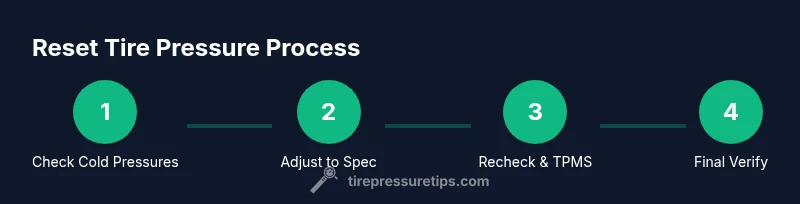
- 1
Check cold pressures
Park on a level surface, engine off, and tires cold. Remove valve caps and calibrate your gauge for each tire. Record the baseline readings and compare them with the manufacturer’s recommended values.
Tip: Always use cold tires for the most accurate reading; hot tires can give falsely high numbers. - 2
Locate the recommended pressures
Find the exact targets from the door jamb sticker or the owner's manual. Note any difference between front and rear tires and account for load conditions if required.
Tip: Do not use the maximum pressure printed on the sidewall as your target value. - 3
Inflate or deflate to target
Add air in small increments or release air in small amounts until each tire reaches its target pressure. Recheck after each adjustment to avoid overshoot.
Tip: Inflate gradually and recheck frequently to prevent overinflation. - 4
Recheck and reset TPMS
Recheck all tires with the gauge. If your vehicle requires a TPMS reset, follow the owner’s manual steps or use the onboard menu. A short drive after reset often helps recalibration.
Tip: If there’s no explicit TPMS reset, driving 10–20 minutes usually allows relearning. - 5
Final verification
Do a final measurement of all tires. Confirm stability after a light drive and re-torque valve caps. Document readings for future reference.
Tip: Always recheck after weather changes; temperature fluctuations affect tire pressure.
Frequently Asked Questions
Do I always need to reset TPMS after inflating tires?
Not automatically in all vehicles. Some TPMS systems recalibrate automatically after driving, while others require a manual reset. Check your owner's manual to confirm the exact procedure for your model.
Some cars auto re-learn after driving; others need a manual reset per the manual.
What if I can’t reach the recommended pressure?
If you can’t reach the target, inspect tires for leaks and confirm the gauge is accurate. If leaks are present, repair or replace the tire as needed before driving long distances.
Check for leaks and verify your gauge; repair or replace if needed.
Can I reset tire pressure without special tools?
You can reset basic tire pressures with a standard gauge and air source. Some TPMS resets require the vehicle’s built-in controls; refer to the manual for model-specific steps.
Basic resets can be done with a gauge and air; some cars need the built-in reset.
How often should I check tire pressure?
Check at least once a month and before long trips or when carrying extra load. Temperature changes throughout the year also warrant reassessment.
Check monthly and before long trips, especially when loading the car more than usual.
Is resetting tire pressure the same as recalibrating TPMS?
Resetting tire pressure aligns the physical air pressure with the target. Recalibrating TPMS ensures the sensor readings match the new pressures, which may require a manual reset or a drive to relearn.
Resetting sets the air; recalibrating TPMS lets the sensors learn the new pressure.
What should I do if TPMS light stays on after reset?
If the TPMS light remains on after inflation and reset, inspect for punctures, damaged sensors, or a weak battery in the sensor. If unresolved, seek professional service.
Check for leaks or bad sensors; if unresolved, consult a professional.
Watch Video
What to Remember
- Check tires cold before inflating to spec
- Use the door jamb sticker for target pressures
- Reset TPMS only after aligning with the manual
- Recheck after calibration to ensure accuracy