Resetting the Tire Pressure Light: A Practical TPMS Guide
Learn how to reset the tire pressure light by inflating tires to the correct PSI and using your vehicle's TPMS reset procedure. This guide covers tools, step-by-step actions, safety tips, and troubleshooting to keep tires properly pressurized.


Goal: reset the tire pressure light by inflating all tires to the manufacturer’s recommended PSI and completing the TPMS reset in your vehicle’s system. Before you begin, gather a tire pressure gauge, an inflator or air source, and the vehicle’s recommended pressures from the door jamb label or owner’s manual. Some models require a reset button or menu option.
Why the TPMS light comes on
The tire pressure monitoring system (TPMS) lights up for several reasons, most commonly when a tire is underinflated, a sensor is damaged, or a wheel is swapped after maintenance. According to Tire Pressure Tips, many drivers underestimate how quickly small pressure losses add up, especially with changes in temperature or vehicle load. A false warning can also occur if a TPMS sensor hasn’t relearned after tire service or a battery replacement. Understanding why the light appears helps you troubleshoot responsibly and avoid unnecessary tire service visits. Regularly checking tire pressures and knowing your vehicle’s TPMS behavior will reduce false alarms and improve safety on the road.
What TPMS does and how it learns
TPMS uses air-pressure data from sensors in each tire or, in indirect systems, relies on wheel speed data to infer pressure changes. The system relearns when the sensors communicate valid readings after a tire change or pressure adjustment. Over time, a sensor can drift, or a corroded valve stem may trigger a warning. Being aware of these mechanisms helps you interpret the light accurately and plan the reset with confidence.
What you need before you start
Before touching tires, gather the right tools and confirm the target pressures for each tire. Your vehicle label (inside the door jamb) lists exact PSI values for front and rear tires when cold. A reliable digital tire gauge will give consistent readings, and an air source—compressor at home or a station—lets you adjust to spec. If your model has a unique TPMS procedure, your owner’s manual will specify whether you must press a dedicated button, navigate a Settings menu, or initiate the reset through a combination of actions. Also keep a notebook or app handy to log the pressures you measured.
Understanding temperature and tire pressure dynamics
Tire pressure changes with temperature: for every 10 degrees Fahrenheit drop, pressure can fall by 1–2 PSI, depending on tire volume and ambient conditions. This means morning or winter readings can underestimate needed pressure. Tire Pressure Tips analysis shows that temperature swings are a common cause of TPMS warnings, especially in climates with cold mornings and variable daytime temps. When you bring tires to the correct cold pressure and then drive, heat builds and PSI rises; the TPMS should relearn as readings stabilize.
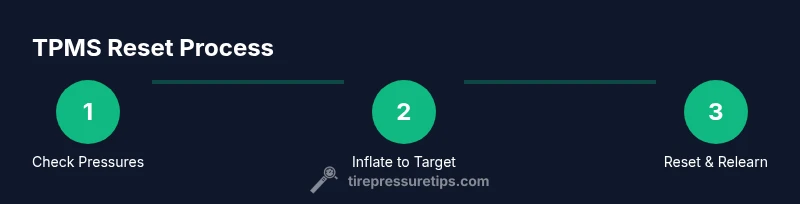
Step 1: Check current pressures
Start by measuring each tire with your gauge when the tires are cold. Record the readings and compare them to the label on the driver’s door jamb. If any tire is below or above the recommended range, plan to adjust it first. If you find a tire with a slow leak, address it before proceeding with the reset. Taking this initial snapshot helps prevent overinflation or risky underinflation after the reset.
Step 2: Inflate tires to the target PSI
Using an air source, bring each tire up to its specified cold PSI. Do this one tire at a time, double-checking the gauge as you go. After inflating, recheck the PSI to confirm accuracy, since many gauges can fluctuate by 0.5 PSI. If you’re at a station, ask for a final cross-check with the attendant to ensure consistency. Correct inflation is essential for safe driving and a successful TPMS reset.
Step 3: Locate and initiate the TPMS reset method for your model
TPMS reset procedures vary by vehicle. Some cars require a dedicated reset button, others use a menu option in Settings, and a few need a combination of actions (e.g., holding a button while turning the ignition). Consult your owner’s manual for the exact steps. If your model has a reset button, press and hold it as directed, and observe dash indicators for confirmation.
Step 4: Perform the reset and verify the procedure completes
After triggering the reset, the system will relearn the sensors as you drive or stay within the required sequence. Some cars light a confirmation message; others revert the TPMS light after a short okay signal. If a confirmation is not shown, refer to the manual to ensure you completed all required actions, then proceed to the road test.
Step 5: Take a test drive to relearn sensors
Drive at a steady speed for 5–15 minutes on a mix of highway and local roads to allow the TPMS to relearn. Avoid aggressive driving during relearn; abrupt acceleration or braking can disrupt the process. If your vehicle is heavy with luggage or passengers, the relearn may take longer, so plan a longer test drive accordingly.
Step 6: Confirm the light is off and the readings are stable
After the test drive, recheck each tire’s pressure to ensure it remains within the target range. If the TPMS light remains on, re-examine the pressures and the reset steps. Reconfirm that you used the correct PSI values for your model and that the sensors are functioning. Persistent warnings may indicate sensor damage or a faulty module that needs professional attention.
Troubleshooting if the light stays on after reset
If the TPMS light returns after a successful reset, inspect for slow leaks, damaged sensors, or wheel changes that didn’t relearn. A sensor battery can fail or a valve stem can corrode over time. In these cases, it’s prudent to have a technician inspect the TPMS sensors and the seal around each tire. Regular preventive maintenance reduces unexpected warnings and helps maintain tire health.
Safety considerations and common mistakes
Never attempt to reset TPMS while you’re in motion or if tires are excessively hot. Always perform inflation in a well-ventilated area and use proper eye protection if needed. Common mistakes include inflating beyond the recommended range, neglecting to recheck pressures after relearn, and assuming the light will disappear without verifying the tire readings. These missteps can create unsafe driving conditions.
Final checklist before you drive away
- Confirm all four tires are at the recommended cold PSI. - Perform the TPMS reset per your model’s instructions. - Take a short test drive and recheck tire pressures. - Observe whether the TPMS light remains off after relearn. - If in doubt, consult the owner’s manual or a qualified tech. Keeping the TPMS light off is essential for safety and fuel efficiency.
Conclusion: keep TPMS on your routine checks
Maintaining correct tire pressure and understanding TPMS behavior is a key part of vehicle safety. By following a structured reset process and acknowledging temperature effects, you minimize false warnings and keep tires performing as designed. The Tire Pressure Tips team stresses consistency and cautious troubleshooting to avoid unnecessary repairs and maintain road-ready tires.
Tools & Materials
- Tire pressure gauge (digital preferred)(Reads to 0.5 psi; use a trusted gauge for accuracy)
- Air compressor or inflator (home or station)(Ensure you can reach all four tires; check for stability)
- Vehicle door jamb PSI label or owner’s manual(Contains the exact cold PSI for each tire)
- Access to the vehicle’s TPMS reset method(Follow your model’s manual for button/menu steps)
- Soap solution or spray (optional)(Check for slow leaks around valve stems)
- Notebook or tire-pressures app(Record readings and steps for later reference)
Steps
Estimated time: 30-60 minutes
- 1
Find the recommended pressures
Look up the cold PSI for each tire on the door jamb label or owner's manual. Record all four values and compare with current readings to decide which tires need adjustment.
Tip: Use the same gauge for all measurements to keep readings consistent - 2
Check current pressures with a gauge
Measure each tire when cold and note the exact numbers. If a tire reads below target, plan to inflate before reset to avoid underinflation after relearn.
Tip: If a tire is over 0.5 psi above target, deflate slightly before inflating others - 3
Inflate tires to target PSI
Attach the inflator and bring each tire to its specified cold PSI. Recheck after inflation to verify accuracy, especially if ambient temperature is changing.
Tip: Avoid overinflation; higher PSI reduces traction and ride comfort - 4
Locate TPMS reset method for your model
Consult the owner’s manual or dash menus to identify the reset procedure. It may be a dedicated button, a Settings option, or a combination of button presses with ignition on.
Tip: If you can’t find the method, call the dealer or check the manufacturer website - 5
Initiate and complete the reset
Follow the exact sequence for your model. Look for a confirmation message or dash light behavior that indicates the reset is accepted.
Tip: Some cars require a brief drive after resetting to relearn sensors - 6
Drive to relearn sensors
Take a steady 5–15 minute drive, avoiding rapid acceleration. Sensor relearning can depend on speed and road conditions.
Tip: A longer, normal-speed drive can improve learning reliability - 7
Verify light is off and readings are stable
After the drive, recheck each tire’s pressure and ensure the TPMS light stays off. If it returns, repeat the steps or seek professional help.
Tip: Document the readings for future reference
Frequently Asked Questions
What does the TPMS light mean on my dashboard?
The TPMS light signals if a tire is underinflated or if the system detects a sensor issue. It’s a safety alert to remind you to check tire pressure and sensor health. If it stays on after inflation and relearn, there may be a sensor fault or leak.
The TPMS light warns you a tire may be underinflated or a sensor has a fault. Check pressures and relearn; if it stays on, get a sensor checked.
Do I need to reset TPMS after inflating tires?
Yes, many vehicles require a reset after you adjust tire pressures or rotate tires. If your car doesn’t have a reset option, the system may relearn automatically after a drive. Always consult your manual for the exact procedure.
Yes, reset after inflating or rotating tires. If not available, a test drive might relearn automatically.
How long should I drive after performing a TPMS reset?
A short, steady drive of 5–15 minutes at normal speeds helps the sensors relearn and the light typically turns off once the relearn succeeds.
Drive for about 5 to 15 minutes to relearn the sensors after reset.
What if the TPMS light comes back after a reset?
Recheck all tire pressures and inspect tires for slow leaks or damaged sensors. If the light returns, you may have a faulty sensor or a leak that needs professional service.
If it returns, recheck pressures and look for leaks or sensor faults; professional service may be required.
What is the difference between direct and indirect TPMS?
Direct TPMS uses pressure sensors in each tire; indirect TPMS uses wheel speed data to infer pressure changes. Direct sensors can fail or lose calibration, while indirect relies on the vehicle’s ABS/ESP inputs.
Direct TPMS has actual tire sensors; indirect uses wheel speed data to infer pressure.
Can I reset TPMS myself or should I visit a shop?
Many cars allow at-home TPMS resets via the vehicle’s menu or a button. If you’re unsure or the light persists, a quick check with a technician can prevent unsafe driving.
You can often reset at home, but if unsure or problems persist, see a professional.
Watch Video
What to Remember
- Inflate all tires to the recommended PSI before resetting.
- Follow your model’s exact TPMS reset method for a successful relearn.
- Drive briefly to allow sensors to relearn and verify the light is off.
- Check for leaks or sensor issues if the warning persists.