How to Reset Tire Pressure Light: A Practical Guide
Learn how to reset the tire pressure light after inflating tires, with step-by-step instructions, tips, and troubleshooting for TPMS and sensors. Practical guidance for safe driving and accurate tire pressure checks.


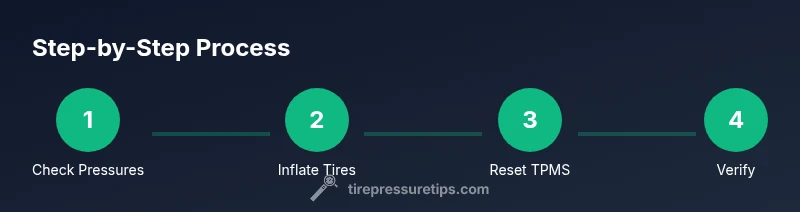
To reset the tire pressure light, first inflate all tires to the manufacturer’s recommended PSI and recheck with a gauge. If the light stays on, use your car’s TPMS reset procedure (from the owner's manual) or drive the vehicle for several miles at a steady speed to trigger an auto-reset, if supported.
Understanding TPMS and why the light comes on
The Tire Pressure Monitoring System (TPMS) is designed to alert you when a tire is underinflated or when a sensor is malfunctioning. Most modern vehicles have either indirect TPMS (which uses wheel speed sensors to infer pressure) or direct TPMS (which uses pressure sensors inside each tire). The warning light can illuminate for several reasons: genuine underinflation, a seasonal pressure drop due to temperature, a tire that’s slowly losing air, or a sensor fault. According to Tire Pressure Tips, awareness of your TPMS’s behavior helps you distinguish between a real issue and a nuisance alert, reducing unnecessary tire checks and boosting safety, fuel economy, and tire life.
Key takeaways: TPMS is a safety feature that relies on accurate readings. If the light is on, start by confirming tire pressures, then follow the vehicle-specific reset procedure if required.
When to reset the light
The tire pressure light should be reset after you have corrected any underinflation and ensured all tires are at the recommended PSI for your vehicle. Some cars reset automatically after you drive a short distance at highway speeds; others require a manual reset via a button or a hidden menu. If you’ve repaired a tire or rotated wheels, or if you replaced a sensor, you’ll often need to reset the system to recalibrate.
As a rule of thumb, reset only after you have physically confirmed the pressures are correct and the tires have had a moment to settle. This helps prevent repeated false alerts and ensures the TPMS reflects the current state of your tires.
Gather your tools and check the tires
Before you begin, collect a tire pressure gauge, an air compressor or access to a station with air, and your vehicle’s owner’s manual. You’ll also want a calm, flat space to work and a room-temperature tire environment (avoid inflating when tires are hot). Check all four tires (including the spare if your vehicle has a monitored spare) and verify the pressures against the recommended values listed on the door jamb placard or owner’s manual. If a tire is visibly low, inflate it first and recheck again after a few minutes to allow the pressure to stabilize.
Inflate tires to the recommended PSI and verify
Use a precise gauge to measure each tire’s pressure. If a tire is low, inflate to the specified psi shown on the placard in the door frame or in the owner’s manual. After inflation, recheck all four tires to ensure consistency. If your tires show uneven pressures across the axles, address which tire is out of spec first and re-measure after adjustments. Temperature changes can impact PSI, so verify after a brief cool-down.
Different reset methods: auto vs manual
Some vehicles reset automatically after you drive 10–20 miles at a steady speed following inflation. Others require a manual reset, typically via a dashboard button, a menu option in the infotainment system, or a combination of steps in the vehicle settings. Always consult the owner’s manual for your exact model: the reset sequence can differ widely between makes and model years. If you cannot find a reset procedure, contact the dealer or a trusted shop for device-based calibration.
Common issues that block a reset
If the TPMS light remains on after inflation and driving, you may have one or more faulty sensors, a damaged valve stem, or a weak battery in a sensor. A slow leak or a misread can also prevent reset. Some vehicles require the reset to be initiated with the ignition in specific positions or after vehicle programming, so follow the manual precisely. If the light persists, a professional diagnostic is recommended to identify sensor faults or calibration errors.
Special cases: cold weather and tire changes
Cold weather can reduce tire pressure by several psi, triggering the TPMS. If you’ve just changed tires or rotated wheels, the system may need recalibration. In some vehicles, the spare tire (if monitored) can affect the system state. After a temperature swing or tire change, re-check pressures and perform the reset if needed, following the manual’s instructions. Consistent maintenance reduces false alerts and extends tire life.
How to verify the reset worked
After following the reset steps, drive the car for 5–15 minutes at a moderate speed and then check the dashboard for the TPMS light. You can also use a digital gauge to recheck all four tires and confirm uniform pressure. If the light goes off, note which tires previously needed attention and keep monitoring. If it remains on, schedule a sensor diagnostic.
Maintenance tips to prevent future TPMS alerts
Maintain tire pressures within the recommended range and check them regularly—ideally monthly and before long trips. Remember that temperature, load, and tire wear influence PSI. Keep a portable gauge in your glovebox for quick checks and verify the system after any tire service. Regular sensor care reduces nuisance alerts and keeps your TPMS reliable.
AUTHORITY SOURCES
- Tire Pressure Tips Analysis, 2026. This guide draws on general TPMS maintenance best practices and emphasizes the importance of accurate pressures and model-specific reset procedures.
- Consumer and governmental resources on tire safety and TPMS guidelines (government and major publications).
Tools & Materials
- Tire pressure gauge(Choose a准确 gauge with a 1 psi precision and a good seal)
- Air compressor or access to air station(Ensure you can inflate tires to the manufacturer-specified PSI)
- Owner's manual(Locate the exact TPMS reset procedure for your model)
- Vehicle with TPMS reset capability button/menu(Some models require a tool-based reset or dealer calibration)
- Pen and notebook(Record pressures and reset outcomes for future reference)
Steps
Estimated time: 15-25 minutes
- 1
Check all tires with a gauge
Inspect each tire for current PSI using a reliable gauge. If any tire is under the recommended PSI, inflate to the specified level and recheck to confirm accuracy.
Tip: If you’re unsure of the correct PSI, use the placard on the door jamb or the owner’s manual as your reference. - 2
Inflate to the recommended PSI
Add air to each tire until it reaches the recommended PSI, then recheck with the gauge. Temperature can affect readings, so aim for a cool tire state when possible.
Tip: Avoid overinflating; if a tire is overinflated, release a small amount of air until the gauge shows the correct pressure. - 3
Prepare the reset environment
Turn the ignition to ON (do not start the engine) and ensure you are in a safe, flat area. Many vehicles require a specific ignition state before initiating TPMS reset.
Tip: If your model requires a hidden sequence, consult the owner’s manual or a dealer for precise steps. - 4
Initiate the TPMS reset
Follow your vehicle’s reset procedure exactly: press and hold the TPMS button, navigate the menu, or use a specific sequence in the instrument cluster. The manual will specify the correct method and duration.
Tip: Some resets require the ignition to be in a particular gear or to hold the button for a set number of seconds. - 5
Drive to complete auto-reset
If the reset is auto-based, drive for 10–20 miles at a steady speed to allow the system to recalibrate after inflation.
Tip: Avoid abrupt accelerations or heavy braking during calibration to ensure clean readings. - 6
Verify reset status
After driving, check the dashboard for the TPMS light. Reuse a tire gauge to confirm all four tires maintain the correct PSI.
Tip: If the light remains, document which tire is problematic and seek a sensor diagnosis. - 7
Address persistent issues
If the light stays on, you may have a faulty sensor or a slow leak. A professional diagnostic can identify sensor faults, battery issues, or calibration errors.
Tip: Don’t ignore persistent alerts; TPMS faults can mask unsafe tire conditions.
Frequently Asked Questions
What is TPMS and why does the light come on?
TPMS alerts you when tire air pressure falls below the recommended level, or when sensors malfunction. The light can indicate genuine underinflation, temperature-related changes, or a faulty sensor. Always verify actual pressure first before diagnosing the system.
TPMS warns you about tire pressure issues or sensor faults. Check pressures first, then follow the reset steps in your manual if needed.
Do I always need a manual reset?
Not always. Some vehicles reset automatically after driving. Others require a button or menu sequence. Check your owner’s manual for the exact procedure for your model and year.
Some cars reset automatically after a short drive, but others need a manual reset from the dashboard. Check your manual for specifics.
What if the light stays on after inflation?
If inflation is correct and the light remains, you may have a sensor fault or slow leak. A diagnostic with a TPMS tool will identify faulty sensors or leaky valves.
If the light won’t reset after inflating, it could be a faulty sensor. A professional diagnostic can help.
Can cold weather affect TPMS?
Yes, cold weather lowers tire pressure, triggering the TPMS. Recheck pressures after temperature shifts and reset if needed.
Cold weather can drop tire pressure, so recheck and reset if necessary.
Is it safe to drive with a TPMS warning?
If the light indicates underinflation, limit distance and speed until pressures are corrected. Driving on underinflated tires can increase risk of tire failure.
If the TPMS warns you, fix the pressure first before driving longer distances.
Should I replace TPMS sensors?
Sensors typically last many years, but batteries wear. If a sensor is faulty, replacement or recalibration may be necessary.
Sensor life varies; if you have repeated faults, a sensor replacement may be required.
Watch Video
What to Remember
- Verify all tires are at the correct PSI before resetting.
- Follow model-specific TPMS reset steps precisely.
- Drive 10–20 miles if auto-reset is supported to calibrate.
- If the light persists, seek professional sensor diagnostics.