How to Service Tire Pressure Monitoring System
A practical, expert-tested guide to service TPMS components, perform relearns, and maintain accurate tire pressures for safety and efficiency in 2026.


This guide shows you how to service tire pressure monitoring system components, diagnose common faults, and perform a safe TPMS relearn. You'll learn what tools you need, how to inspect sensors and valves, and how to verify readings after service. By following these steps, you can restore accurate tire pressure monitoring and improve overall vehicle safety. According to Tire Pressure Tips, regular TPMS maintenance helps prevent underinflation and prolongs tire life.
Understanding TPMS basics
The tire pressure monitoring system (TPMS) is designed to keep you aware of your tire pressures by sending data from wheel-mounted sensors to the vehicle computer. There are two primary configurations: direct TPMS uses pressure sensors installed inside each wheel, while indirect TPMS relies on ABS wheel-speed data to infer pressure differences. Direct TPMS provides real numerical readings and can trigger warnings when a tire falls below the factory threshold. Indirect TPMS does not sense pressure directly but detects pressure changes through wheel speed variations and vehicle dynamics. Regardless of type, a proper servicing approach requires knowing your car’s relearn rules: some brands require a sensor-specific relearn, while others let you complete the process with a scan tool or built-in vehicle sequence. Regular checks help prevent underinflation, improve fuel economy, and minimize tire wear. The Tire Pressure Tips team emphasizes understanding your vehicle’s TPMS layout and relearn requirements before initiating any work.
Safety and accuracy prerequisites
Safety and accuracy go hand in hand when servicing TPMS. Start on a flat, level surface and engage the parking brake. Ensure tires are cold before checking pressures or removing wheels, as hot tires can give misleading readings. Wear eye protection and use wheel chocks to prevent movement while you work. If you plan to remove wheels, disconnect the battery only if the vehicle’s manual allows it, and never rely on a single method for sensor access. Keep notes of sensor IDs and locations prior to any removal. Finally, ensure all gauges and scanners you use are calibrated and functioning correctly to avoid skewed data that could lead to unsafe pressure levels. “According to Tire Pressure Tips Team,” consistent, careful procedures protect both you and your vehicle.
Tools and materials you'll need (overview)
Gathering the right tools before you start saves time and reduces risk. You’ll want a calibrated digital tire pressure gauge for accurate readings, a TPMS relearn tool compatible with your vehicle, and an OBD-II scanner with TPMS capability to read sensor IDs and codes. A reliable tire inflator or compressor (with a gauge) helps bring tires to target pressures during the process. Optional items include replacement TPMS sensors or valve stems if you diagnose a hardware fault, a spare valve core kit, and basic hand tools for wheel inspection. Having a clean workspace and good lighting makes it easier to inspect sensor housings and valve stems for corrosion or damage. Proper planning minimizes surprises and keeps you in control of the service.
Step-by-step overview
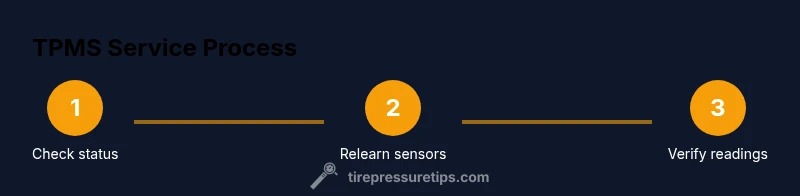
This section provides a high-level view of the service flow so you know what to expect before diving into the detailed steps. Start with safety and area preparation, then verify tire pressures and sensor health using appropriate diagnostic tools. If any sensor shows signs of wear or damage, switch to a replacement sensor or valve stem and update the relearn data accordingly. After re-seating and inflating tires to the recommended pressures, initiate the relearn procedure per the vehicle’s manual or the scan tool’s guidance. Finally, confirm all five or six tires are recognized and readings are stable through a test drive. Documentation of sensor IDs and service actions helps future maintenance and reduces repeat visits to the shop.
Tools & Materials
- Digital tire pressure gauge(Calibrated to measure PSI; accuracy within +/-1 psi)
- TPMS relearn tool (vehicle-specific)(Used to trigger relearn sequence when allowed by vehicle)
- OBD-II scanner with TPMS support(Reads sensor IDs and fault codes)
- Replacement TPMS sensors or valve stems(Only if sensor failure is diagnosed)
- Tire inflator with gauge(For returning tires to target pressure during procedure)
- Small valve core and pliers(Useful for valve stem inspection/repair)
Steps
Estimated time: 60-120 minutes
- 1
Prep and safety checks
Set up a flat, well-lit workspace. Chock wheels, apply parking brake, and ensure tires are cold before handling. Gather your tools and confirm vehicle relearn requirements in the owner’s manual.
Tip: Always wear eye protection and never work under a raised vehicle without proper supports. - 2
Identify TPMS components
Use the OBD-II scanner to identify sensor IDs and inspect sensor housings for damage. Check wheel valves for corrosion or cracks.
Tip: Record sensor IDs and locations before removal. - 3
Check current pressures and condition
Measure each tire with a calibrated gauge. Compare readings to vehicle sticker and note any outliers or leaks.
Tip: Press cold tires to baseline values for accuracy. - 4
Inspect for leaks and damage
Examine wheel rims, TPMS sensors, and valve stems for cracks, corrosion, or damaged seals. Address any obvious issues before proceeding.
Tip: Replace a faulty valve stem or damaged sensor rather than attempting makeshift fixes. - 5
Prepare tires and wheels for relearn
If the sensor housing was disturbed, ensure the tire bead is seated properly. Inflate to target pressure and verify no leaks.
Tip: Keep a small amount of soapy water ready to detect leaks. - 6
Trigger the relearn procedure
Follow your vehicle manufacturer’s relearn method using the scan tool or the vehicle’s built-in sequence. This often involves driving or static steps.
Tip: Some cars require the ignition on and wheels rotated at specific speeds. - 7
Clear fault codes (if needed)
Use the scanner to clear TPMS fault codes after corrections. Do not clear codes if the fault persists.
Tip: If sensors fail, codes reappear after relearn. - 8
Verify sensor recognition
Rescan to confirm all tires are identified and readings are within expected ranges. Note any outliers.
Tip: Ensure before and after readings are consistent across all tires. - 9
Relearn after wheel rotation or repair
If you rotate tires or replace wheels, perform relearn as required by the manual or tool.
Tip: Document the order and locations of sensors for later reference. - 10
Document the maintenance
Record pressures, sensor IDs, and the date of service. Note any parts replaced.
Tip: Keep a service log for future maintenance. - 11
Test drive and final check
Take a short test drive to allow TPMS to stabilize readings. Re-check pressures when cold and reset if necessary.
Tip: If the warning light remains, reassess the sensor or battery. - 12
Program new sensors (if needed)
If a sensor was replaced, program it to the vehicle and verify through the tool.
Tip: Only program new sensors with compatible hardware and vehicle data.
Frequently Asked Questions
What is a TPMS and why service it?
TPMS stands for tire pressure monitoring system. It monitors air pressure in each tire and alerts you when pressure is too low. Regular servicing ensures readings stay accurate and helps prevent unsafe driving conditions.
TPMS watches tire air pressure and alerts you if it's low. Regular service keeps readings accurate and helps you stay safe on the road.
Can I relearn TPMS myself?
Many vehicles support DIY relearn using a scan tool or built-in sequence. Some cars require dealership tools for a proper relearn. Always refer to the owner's manual for the correct procedure.
Many cars let you relearn TPMS at home with a tool, but some need dealer tools. Check the manual.
How long do TPMS sensors last?
Direct TPMS sensors are battery-powered and have a finite life, typically several years, depending on driving conditions and battery quality. If a sensor fails or drifts, replacement is often more reliable than repair.
Direct TPMS sensors have limited life and can fail; replace faulty sensors rather than trying to repair them.
What are common signs TPMS needs service?
Warning lights, erratic readings, frequent false alarms, or sensors not activating during relearn indicate a need for service.
Warning lights or erratic readings usually mean TPMS needs service.
How much does TPMS service cost?
Costs vary by vehicle and region; professional TPMS service can involve sensor replacement or relearn tooling. Check with local shops for a range.
Costs vary; ask for a parts-and-labor estimate from your shop.
Direct vs indirect TPMS differences?
Direct TPMS uses wheel-mounted sensors; indirect TPMS relies on ABS data to infer pressure differences. Relearn requirements differ by method.
Direct uses sensors in wheels; indirect uses ABS data to infer pressure.
Watch Video
What to Remember
- Regular TPMS checks prevent underinflation.
- Follow the exact relearn method for your vehicle.
- Use calibrated tools for accurate readings.
- Document sensor IDs and service actions.
- Recheck pressures after a test drive.