How to Fit Tyre Pressure Sensor (TPMS) - Step-by-Step Guide
Learn how to fit tyre pressure sensor (TPMS) with a safety-focused, step-by-step approach. Discover sensor types, tools, calibration, and testing to keep your tyres properly inflated.


You'll learn how to fit a Tyre Pressure Sensor (TPMS) on a wheel, including how to choose the right sensor, safely remove and install the wheel, mount the sensor, re-seat the bead, and calibrate the system. This guide covers safety, common pitfalls, and final testing to ensure accurate readings. Follow the step-by-step instructions, note required tools, and consult the vehicle's manual for model-specific torque and reset procedures. By the end, your TPMS will communicate correctly with the vehicle's onboard computer.
Why fitting a tyre pressure sensor matters
Accurate tire pressure is one of the easiest ways to improve safety, fuel economy, and tire life. A correctly fitted tyre pressure sensor (TPMS) provides real-time data and alerts you to a pressure drop before a blowout or tread wear sneaks up on you. If you're curious how to fit tyre pressure sensor, this guide will walk you through the process. According to Tire Pressure Tips, direct TPMS sensors usually offer the most reliable readings, especially when temperatures swing or tires are rapidly loaded. Fitting a sensor isn’t just about a dashboard warning — it affects how your car communicates with the TPMS control unit, how quickly the system relearns after wheel service, and how accurately readings reflect actual tire pressure.
In this guide, you’ll learn what a TPMS sensor does, the main sensor types, compatibility considerations, and a practical, safety-focused installation approach. By following these steps, you’ll minimize misreadings, reduce nuisance warnings, and keep your tires at the optimum pressure for grip, wear, and efficiency.
Types of tyre pressure sensors and compatibility
There are two broad families: direct TPMS sensors that live inside the wheel and measure air pressure directly, and indirect systems that infer pressure by reading wheel speeds from the ABS/ESP system. Direct TPMS sensors are typically mounted on the valve stem or installed in the wheel, and they require programming or relearning after installation. Indirect systems rely on calibration and tire size; they don’t contain a sensor in the wheel. Vehicle compatibility matters: some cars use different sensor frequencies or mounting standards, and not all aftermarket sensors fit every wheel. Before purchasing or attempting a fit, consult your vehicle’s service manual or dealer to confirm the correct sensor type and frequency. Tire Pressure Tips emphasizes choosing a sensor compatible with your make, model, and wheels to avoid repeated replacements or calibration errors. Also consider the job’s scope — a full wheel replacement vs. a simple valve stem TPMS can change the toolset and difficulty.
Tools and materials you’ll need
Having the right tools makes the job safer and faster. Essential items include a lug wrench or impact wrench, a wheel chock, a jack and jack stands, a torque wrench (for wheel bolts), a tire pressure gauge, a bead seater tool or compressor with an air hose, a TPMS sensor kit, and a relearn/diagnostic tool compatible with your vehicle. Optional but helpful items include wheel/hub protectors, a small assortment of sockets, replacement valve stems (if requested by the sensor type), and gasket sealant. Keep fresh silica gel or a light lubricant for seating the bead, and inspect the wheel for damage before starting. If you’re working in cold weather, allow extra time for bead seating and sensor programming. Always handle sensors with care to avoid damaging delicate electronics.
Step-by-step overview for fitting the TPMS sensor
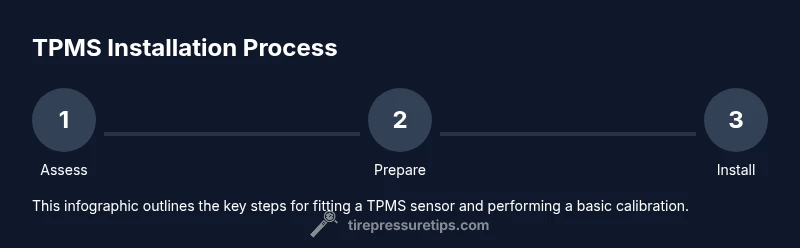
- Verify sensor compatibility and gather tools. Confirm you have the correct TPMS sensor for your wheel, note vehicle-specific relearn methods, and collect the essential tools. 2) Prepare the vehicle and wheel. Park on level ground, engage the parking brake, chock the wheels, and loosen lug nuts before jacking. 3) Remove the wheel and access the TPMS area. Lift the vehicle safely, remove the wheel, and expose the valve stem or sensor mounting area. 4) Remove the old sensor (if replacing) and install the new TPMS sensor. If using a valve-stem design, remove the valve core and install the new stem, ensuring a proper seal. 5) Re-seat the tire and reinstall the wheel. Mount the tire, check bead seating, and torque wheel lugs to the manufacturer’s specification. 6) Reset and relearn the TPMS. Use the vehicle’s reset procedure or a compatible scan tool to relearn the sensor's ID. 7) Verify readings. After the relearn, check pressures per the vehicle’s manual and observe the TPMS warning light behavior.
Calibration, road test, and troubleshooting
Calibration and testing after fitting a TPMS sensor are essential to ensure that readings reflect actual tire pressure. After installation, perform the vehicle’s relearn procedure using either the OEM reset sequence or a compatible scan tool. A typical relearn might require driving a short distance or performing a specific drive cycle, during which the system learns the new sensor IDs present on the wheels. Once relearned, verify each tire reads within the manufacturer-recommended range and monitor the dashboard indicator for any warning. If a warning persists, recheck bead seating, sensor orientation, and valve integrity. Tire pressure readings can be affected by ambient temperature and recent tire changes, so consider testing over a few trips to confirm stability. For accuracy, compare the TPMS data against a manual gauge at the curb and log results for future reference. According to Tire Pressure Tips, correct calibration reduces nuisance warnings and extends tire life.
Common mistakes, safety warnings, and maintenance tips
Common mistakes include attempting DIY TPMS installation without the proper tools, ignoring wheel safety when the vehicle is lifted, and failing to follow the vehicle-specific relearn procedure. Always use wheel chocks, jack stands, and a stable surface. Wear safety glasses and gloves to protect from sharp edges and pressurized air. Do not inflate tires beyond recommended pressures; use a gauge to confirm readings. After installation, keep an eye on the TPMS lights during the first few miles and schedule a professional inspection if you notice inconsistent readings. Regular maintenance includes inspecting sensors for signs of corrosion, checking the battery status in the sensor, and updating the relearn whenever wheels or tires are changed.
Authoritative sources and further reading
For more detailed guidelines, you can consult the following authoritative sources: - https://www.nhtsa.gov/road-safety/tires - https://www.consumerreports.org/car-safety/tyre-pressure-safety
The Tire Pressure Tips team recommends cross-referencing these sources with your vehicle’s manual to ensure compatibility and to follow model-specific procedures.
Tools & Materials
- Lug wrench / impact wrench(Essential for loosening/tightening lug nuts)
- Wheel chocks(Use on both sides of the wheels)
- Jack and jack stands(Ensure vehicle is secure before wheel removal)
- Torque wrench(Use manufacturer specs for lug bolts)
- Tire pressure gauge(Accurate gauge recommended)
- Bead seater tool or air compressor with hose(Helps bead seating during tire mounting)
- TPMS sensor kit(Direct sensor kit that matches wheel type)
- Relearn/diagnostic tool(Vehicle-compatible tool or OEM reset procedure)
- Replacement valve stems (optional)(If sensor type requires stem replacement)
- Sealant or gasket material(For leaks at valve stem mounting)
Steps
Estimated time: 60-120 minutes
- 1
Verify sensor compatibility
Confirm the TPMS sensor type, frequency, and mounting method match your wheel and vehicle. Check the owner's manual or supplier documentation before purchasing to avoid incompatible sensors.
Tip: If in doubt, contact the dealer or sensor manufacturer for exact specifications. - 2
Prepare workspace and tools
Set up on a flat surface, engage parking brake, place wheel chocks, and gather all required tools. Double-check that the spare wheel is accessible in case you need it.
Tip: Lay out parts in order of installation to reduce misplacement. - 3
Remove wheel from vehicle
Loosen lug nuts slightly while the car is on the ground, lift with a jack, and secure with jack stands. Remove the wheel completely to access the TPMS mounting area.
Tip: Never work under a car supported only by a jack; always use stands. - 4
Install or replace the TPMS sensor
If replacing, remove the old sensor/valve stem and install the new TPMS sensor per kit instructions. If using a valve-stem design, replace the stem and ensure a proper seal.
Tip: Handle sensors by the body, not the electrical terminals; avoid bending or crushing the stem. - 5
Re-seat tire and mount wheel
Mount the tire onto the rim, ensure bead seating is uniform, and reinstall the wheel on the hub. Torque lug nuts to the vehicle’s specification once mounted.
Tip: Inflate gradually in small increments to detect bead seating issues early. - 6
Reset/relearn the TPMS
Follow the vehicle’s TPMS reset procedure or use a compatible scan tool to relearn the sensor IDs. Some vehicles require a drive cycle to complete relearning.
Tip: Check the dash light behavior during the relearn; if it stays on, recheck sensor wiring and seals. - 7
Verify readings and test
Inflate tires to the recommended pressure, drive a short distance, and confirm that each tire pressure matches the gauge and the dashboard readings. Log results for future reference.
Tip: Document initial readings with date and ambient temperature for comparison later.
Frequently Asked Questions
Do I need to replace all TPMS sensors at once?
Not necessarily. You can replace individual sensors if only one is faulty, but ensure the new sensor is fully compatible with your system. If several sensors are near end-of-life, replacing them together can simplify relearning.
You usually replace sensors individually unless multiple are failing; compatibility matters for a clean relearn.
Can I install a TPMS sensor myself, or should I go to a professional?
DIY installation is possible if you have the right tools and knowledge of your vehicle. Direct TPMS installation involves wheel removal, sensor mounting, bead seating, and a relearn procedure. If you’re unsure, seek a professional to avoid damage or miscalibration.
You can DIY if you’re comfortable with wheel work and relearn steps; otherwise a pro is safer.
How long does TPMS relearning take after fit?
Relearning usually happens during a short drive or a specific drive cycle; completion times vary by vehicle. Check the owner’s manual or your scan tool’s instructions for the exact drive sequence.
It usually takes a short drive or a special drive cycle; check your manual for specifics.
Will fitting a TPMS sensor affect my tire warranty?
Installing or replacing a TPMS sensor typically does not void the tire warranty, but always verify with the tire and vehicle manufacturers. Keep receipts and notes about the sensor type and installation.
Usually no, but check with manufacturers and keep documentation.
What are common signs of a faulty TPMS sensor?
If the dashboard light stays on, readings are inconsistent, or the system fails to relearn after installation, the sensor or its battery may be failing. Inspect the sensor for corrosion and verify the wiring.
Dashboard warnings or inconsistent readings can indicate a bad sensor.
Do I need a special tool to program TPMS sensors?
Many vehicles can relearn using the factory reset procedure, but some require a dedicated scan tool or dealer software. Check your vehicle’s manual for the recommended method.
Some cars need a scan tool or dealer software for relearning.
Watch Video
What to Remember
- Verify sensor compatibility before purchase.
- Follow vehicle-specific relearn procedures after fitting.
- Safety first: use stands, chocks, and proper lifting techniques.
- Calibrate TPMS and test readings with a road check.
- Document readings for maintenance records.