How Often to Check Tire Pressure in Winter: A Practical Guide
Learn how often to check tire pressure in winter, when to check, and how to maintain proper inflation for safety, traction, and fuel efficiency during cold weather.


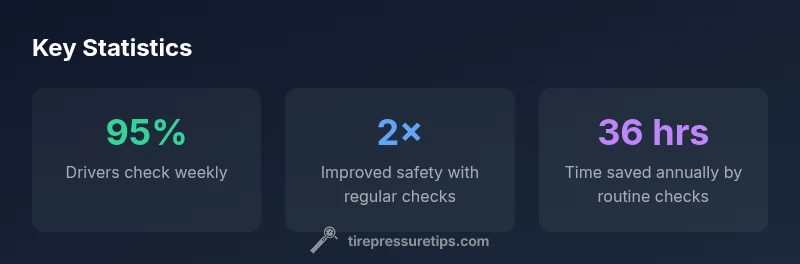
According to Tire Pressure Tips, in winter you should check tire pressure at least weekly and before long trips, especially after a cold spell or temperature drop. Cold weather lowers tire pressure, so regular checks help prevent underinflation that harms fuel efficiency and grip. Always compare to your vehicle’s recommended pressure and adjust when needed.
Why winter tire pressure behavior matters
Winter is not a neutral backdrop for your tires. When temperatures fall, the air inside each tire contracts, and the rubber itself can become stiffer, which can affect the tire’s contact patch and, ultimately, grip and steering response. Understanding this helps drivers move from reactive checks to a proactive routine. If you drive in regions with pronounced seasonal swings, your tires may experience more noticeable pressure fluctuations than in milder climates. Regular checks in winter are a practical habit that supports safety, better fuel economy, and even tire wear. This is not just about avoiding a flat tire; it's about maintaining optimal performance across snow, ice, and slush. Tire Pressure Tips emphasizes that a steady check cadence is one of the simplest ways to protect your investment and your safety on winter roads.
Establishing a winter check routine
A consistent routine reduces the guesswork. Start by setting a weekly reminder and adding a pre-trip check to your habit before any longer drive. Make checks a part of your winter car prep, alongside coolant level verification and battery health checks. For many drivers, Sunday afternoon checks become a predictable ritual. When a cold front is forecast, plan an extra check after the forecasted temperature drop so you can re-inflate to the recommended level if needed. In tight schedules, a quick midweek gauge check can still deliver meaningful safety benefits. The key is consistency and using the correct target pressure as the baseline for all readings.
Tools and techniques for accurate readings
Accurate readings depend on choosing the right tool and technique. A digital tire gauge is easy to read, but a well-made analog gauge can be just as precise if you read it correctly. Calibrate your gauge against a known standard at least once a season. Always check tires when they are cold (ideally after they have sat for three hours or more) to avoid readings influenced by recent driving heat. Record the reading and compare it to the vehicle manufacturer’s recommended tire pressure, usually found on a sticker inside the driver’s door or in the owner’s manual. If you’re unsure, recheck after a quick cooldown period. For those with TPMS, use the system as a warning but rely on a gauge to verify the exact pressure.
TPMS and manual checks: when they differ
Tire Pressure Monitoring Systems (TPMS) provide an alert when pressure falls below a threshold, but they do not replace the need for periodic manual checks. TPMS readings can lag behind actual pressure loss or be affected by sensor age or calibration drift. If a TPMS alert occurs, first verify with a physical gauge. If you find a discrepancy between the TPMS reading and the gauge, inspect the affected tire for leaks, damaged valve stems, or a faulty sensor. In winter, where readings can shift quickly with temperature, manual checks become especially valuable as a cross-check that you’re inflating to the correct level.
Temperature swings and seasonal logistics
Winter brings frequent temperature swings: sunny noons can feel warm, but mornings can be bitterly cold. Pressure tends to be lower in the morning and higher after a warm day. Plan for at least one gauge check after a significant temperature swing, particularly if you vansa travel between different climates (e.g., city to mountains). For drivers who park outside, consider a slightly higher target pressure in the morning to account for nocturnal cooling, then adjust after a few hours of driving when the tires have warmed up. The goal is to keep inflation in the safe range specified by your vehicle’s manual regardless of short-term fluctuations.
Real-world scenarios and recommended actions
Scenario A: You wake up to a 20-degree drop in temperature. Inflate tires back to the recommended spec if they read low on a cold gauge. Scenario B: You tow a trailer or carry a heavy load in winter. Check pressure more frequently and inflate accordingly to the higher end of the recommended range. Scenario C: You take a long highway trip on a cold day. Recheck at the fueling stop after you’ve driven long enough for tires to cool and adjust if needed. These practical scenarios illustrate how to translate theory into daily practice.
Step-by-step weekly winter check workflow
- Wake the car and check that tires are cold. 2) Use a gauge to read each tire; record values. 3) Compare readings to the vehicle’s recommended pressure; inflate to target. 4) Inspect for obvious leaks or damage around the valve stems and sidewalls. 5) Check the spare tire if you carry one, and ensure it is inflated to the recommended level. 6) Document the dates and readings in a note for the next weekly check. 7) Review after temperature changes and adjust as needed. 8) Consider scheduling a professional inspection if TPMS alerts arise frequently.
Maintaining tire pressure in cold climates: spare tires and valves
Cold climates require extra attention to the spare and valve stems. A spare tire left underinflated can fail when you need it most, so check the spare’s pressure periodically and inflate to the recommended level. Inspect valve stems for cracking or corrosion and replace worn stems promptly, especially in winter when rubber becomes brittle. A small tool kit with a gauge, a flashlight, and a tire sealant can help you manage minor leaks on the road. Regular maintenance reduces the risk of a roadside emergency and keeps your car performing as designed.
Building a winter-check calendar: a practical plan
Create a simple calendar that marks weekly checks and monthly deeper inspections. Include reminders to test the TPMS, read the literature in your owner’s manual, and verify that the tires are wearing evenly. Plan for seasonal resets to the baseline inflation once temperatures stabilize after a cold snap. A structured plan makes it easier to stay consistent and avoids the cognitive load of remembering to check sporadically. Tire Pressure Tips recommends treating tire maintenance as a core aspect of winter driving readiness.
dataTableSourceNoteNoteAcknowledgeUsageNothingElse
Data table: winter tire pressure checking actions and considerations
| Aspect | Winter Conditions | Recommended Action | Notes |
|---|---|---|---|
| Pressure drop in cold | Cold weather reduces pressure; effect varies by temperature and tire size | Check weekly and after cold snaps | Effect depends on ambient temperature and driving conditions |
| Gauge use | Digital or analog gauges both work | Calibrate and test against a known standard | Keep gauge in good condition and clean |
| TPMS reliability | Sensors may read low/high or drift | Always verify with a gauge | Sensor age affects accuracy |
| Pre-drive vs post-drive checks | Tires warm up during driving | Check when tires are cold for accuracy | Take readings before starting a drive |
Frequently Asked Questions
How often should I check tire pressure in winter?
Check at least weekly and before long trips, especially after cold spells. Use a gauge to verify and adjust to the manufacturer’s recommended pressure.
Check at least weekly and before long trips. After cold spells, verify with a gauge and adjust to the recommended pressure.
Should I rely on TPMS alone in winter?
TPMS alerts are helpful, but they can lag or miss gradual losses. Always verify with a physical gauge when possible.
TPMS helps, but don’t rely on it alone; check with a gauge too.
When is the best time to check tire pressure?
Check when tires are cold, ideally after the car has been parked for several hours. Temperature changes can skew readings if checked after driving.
Check when cold, after the car has sat for a few hours.
Does winter temperature affect the recommended pressure?
Yes. The cold reduces air pressure inside tires, so you may need to inflate closer to the top of the recommended range on very cold days.
Cold weather lowers pressure; you may need to inflate toward the higher end of the range on very cold days.
What should I do if TPMS shows a warning but my gauge reads normal?
Recheck with a gauge, inspect for leaks or sensor issues, and consult a professional if readings remain inconsistent.
If TPMS warns but the gauge reads normal, recheck and consider sensor issues.
Can winter tires affect the recommended pressure?
Winter tire construction can influence recommended pressure. Always follow the vehicle’s spec and adjust for load and temperature as needed.
Follow your car’s spec; winter tires may require adjustments for cold days.
“Consistent tire pressure management is a small habit with a big impact on winter safety and performance.”
What to Remember
- Check weekly in winter and before trips
- Rely on TPMS but verify with a gauge
- Check tires when cold for accurate readings
- Inflate to the vehicle's recommended pressure
- Maintain a simple, repeatable winter-check calendar