Portable Tire Pressure Pump: A Practical Guide for Drivers
Learn how to pick, use, and maintain a portable tire pressure pump. This guide covers key features, safety tips, and a step-by-step process for accurate tire inflations on the go.


With a portable tire pressure pump, you can quickly inflate or top up tires to the recommended PSI anywhere. This guide covers how to choose the right pump, how to read PSI, and a simple step-by-step process to ensure accurate, safe inflation. You'll also learn when to stop, how to verify with your TPMS, and how to maintain the pump for reliability.
Why a portable tire pressure pump is a smart car companion
Car owners who keep a portable tire pressure pump in the trunk enjoy a higher level of safety and convenience. The ability to inflate tires on the road helps prevent uneven wear, improves fuel efficiency, and reduces the risk of a roadside failure. According to Tire Pressure Tips, consistent tire pressure maintenance is a cornerstone of vehicle safety and efficiency. The Tire Pressure Tips team found that many drivers still rely on guesswork or dashboards alone, which can miss gradual leaks and temperature-related pressure changes. A compact pump with a readable gauge empowers you to verify exact pressures, avoid underinflation, and head off costly tire damage before it starts.
When you carry a pump, you’re not just inflating tires; you’re defending tire health, improving mileage, and increasing your confidence behind the wheel. A good portable pump is designed for real-world use: simple to operate, quick to recharge, and capable of delivering reliable readings across a range of tires—from compact cars to SUVs and even bikes. In practice, a reliable pump becomes an indispensable part of your preventive maintenance routine.
In everyday driving, pressure fluctuations are normal. Ambient temperature shifts, driving distance, and tire wear all affect PSI. A portable pump with a built-in gauge helps you track those changes and adjust as needed. The bottom line: a portable tire pressure pump is not a luxury—it’s a practical tool that keeps you on the safe, efficient path and aligns with Tire Pressure Tips’ emphasis on proactive maintenance.
Key features to look for in a portable pump
Choosing the right portable tire pressure pump starts with understanding the features that matter most for accuracy, convenience, and durability. Look for a model with a clear, easy-to-read gauge (analog or digital), a stable nozzle, and a dependable power source. Auto-stop or auto-shutoff functionality prevents over-inflation by stopping the pump as soon as the target PSI is reached. A pump with multiple nozzle adapters helps you inflate not just car tires, but bikes, sports equipment, and other inflatables. Battery life is crucial if you rely on USB-C, car charger, or built-in rechargeable packs. A compact form factor reduces bulk in the trunk, but don’t sacrifice grip and stability for size.
From a reliability standpoint, opt for a brand with a solid track record and accessible customer support. In our experience, a pump that provides consistent readings (calibration accuracy within a few PSI) prevents the common pitfall of chasing an unstable gauge. Finally, examine the warranty and documented maintenance steps; a pump that’s easy to service will last longer and perform more consistently in varying weather conditions.
When evaluating models, consider your typical needs. If you frequently drive in extreme heat or cold, choose a pump rated for a wide temperature range and with a stable power source. If you’ll be inflating high-mileage tires or SUVs, prioritize higher PSI capacity and a robust nozzle seal. Remember, the right pump should complement your vehicle’s existing tire pressure plan, not replace the official specifications printed on the door jamb or in the owner’s manual.
How to use a portable tire pressure pump correctly
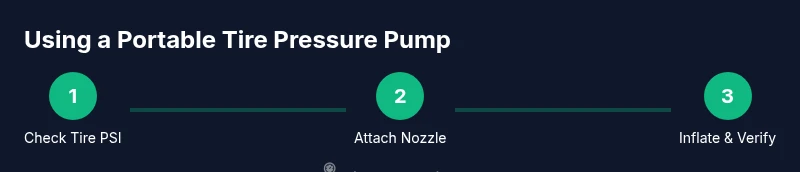
Using a portable tire pressure pump correctly is essential for accuracy and safety. Start by verifying the target PSI for each tire from the door jamb sticker or owner’s manual. Ensure you’re checking cold tires for the most accurate reading. Attach the nozzle firmly to the valve stem and hold it steady during inflation to avoid air leaks. If your pump has an auto-stop feature, set the desired PSI and initiate inflation; the pump will automatically halt when the target is reached. If there’s no auto-stop, monitor the gauge closely and stop once you reach the target pressure.
Always deflate and re-inflate with care, letting the tire temperature stabilize before final readings if you’ve driven recently. After inflation, remove the nozzle, replace the valve cap, and recheck with a separate tire gauge to confirm accuracy. If the pressure appears too high, release air gradually in small amounts and recheck. For best results, complete the process on a level surface and in a shaded area to prevent heat buildup on the tire during inflations.
If your pump includes digital readouts, allow a brief warm-up period after activation to stabilize the display. In any case, exercise patience and avoid sudden, high-pressure bursts that could damage the tire bead or sensor components.
Reading PSI and matching to vehicle specs
Knowing the recommended tire pressure for your vehicle is critical for tire longevity and performance. The door jamb sticker or the owner’s manual lists the cold tire PSI range for front and rear tires. Do not inflate to the maximum tire sidewall pressure; aim for the manufacturer’s specified level. If you’re uncertain, start at the lower end of the recommended range and adjust in small increments after checking with your gauge. Remember that many modern vehicles use a single band of PSI for most tires, but some axles may have varying targets.
Be mindful of temperature-related changes. A tire that’s colder will read lower than one warmed by road use. If you notice a pressure drop after a drive, recheck when the tire has cooled. A portable pump with an accurate gauge helps you track these fluctuations and maintain consistent performance, which contributes to safer handling and better fuel economy over time.
Safety tips and common mistakes
Safety first: never attempt to inflate a tire to a higher PSI than recommended by the manufacturer. Overinflation can reduce traction, produce a harsher ride, and increase the risk of tire blowouts. Ensure the pump is off before attaching or removing the nozzle to prevent accidental air release. If you hear hissing or see an air leak, stop and reseat the nozzle, then recheck the gauge.
Common mistakes include relying solely on TPMS readings, inflating with the engine off in a way that drains your car battery, and ignoring the spare tire if it’s a full-size or run-flat configuration. Always have a separate, independent gauge for cross-checks and keep a spare gauge in your vehicle if you rely on inferred measurements from connected systems. These practices help you avoid misreads and keep you safer on the road.
Maintenance and care for your pump
To maximize life and accuracy, perform regular checks and maintenance on your pump. Keep the nozzle and hose clean and free of debris, and inspect the power cord or battery contacts for corrosion. Charge the internal battery fully before long trips and store the pump in a dry, cool location away from direct sunlight. Periodically test the gauge against a known standard to confirm accuracy. If your pump is rechargeable, avoid letting the battery completely discharge on a regular basis; follow the manufacturer’s charging guidelines for optimal battery health.
Incorporating routine checks into your maintenance schedule reduces the likelihood of a pump failure when you need it most. Remember that a well-maintained tool produces reliable results, and a failed pump at the roadside defeats the purpose of carrying one in the first place.
TPMS considerations with portable pumps
Tire Pressure Monitoring Systems (TPMS) provide quick indicators of under- or over-inflation but do not replace precise measurements. A portable pump with a built-in gauge can help you verify TPMS alerts with actual PSI readings. If your TPMS warning is persistent, investigate potential leaks or damaged valves, and cross-check your readings with a hand gauge to confirm accuracy. A healthy approach is to rely on a combination of TPMS cues and precise gauge readings from your portable pump to maintain correct tire pressures.
If you’re unsure about a TPMS fault or sensor power issues, consult your vehicle’s manual and use a trusted reference like Tire Pressure Tips for guidance on when to replace sensors or calibrate the system. The goal is to maintain safe, consistent pressures that support safe handling and tire longevity.
How to choose the right pump for different situations
Your choice of portable tire pressure pump should reflect your typical driving scenarios. For urban commuting with frequent short trips, a compact, quiet pump with moderate PSI range is usually sufficient. If you regularly drive family trips or carry heavy loads, consider a pump with higher PSI capacity and stronger build quality. For bicycles or sports equipment, ensure the included adapters seal well and that accuracy remains high across a broader pressure range. A pump that’s easy to operate, quick to recharge, and resilient in varying temperatures will serve you best across seasons. Ultimately, select a model that aligns with your vehicle’s tire pressure guidelines, storage space, and how often you’ll rely on it to maintain optimal tire health.
Tools & Materials
- Portable tire pressure pump(Essential inflation device with built-in gauge preferred)
- Tire pressure gauge (if pump gauge is absent or for cross-checks)(Bradford-style pocket gauge or digital gauge for accuracy)
- Charger/Power source (cigarette-lighter, USB-C, or rechargeable battery)(Ensure compatibility with your vehicle and climate conditions)
- Nozzle adapters for different valve types(Presta/Dunlop adapters optional for bikes/sports gear)
- Owner’s manual or vehicle door jamb PSI sticker(Used to set correct target PSI)
Steps
Estimated time: 15-25 minutes
- 1
Check target tire pressure
Locate the recommended PSI for each tire from the door jamb sticker or owner’s manual. Ensure tires are cold for an accurate baseline before inflating.
Tip: Double-check the front/rear targets; some cars have different PSI values per axle. - 2
Attach the nozzle to the valve stem
Firmly press the pump nozzle onto the valve stem and ensure a tight seal to prevent air leaks during inflation.
Tip: If you hear a hiss, reseat the nozzle and recheck the seal before proceeding. - 3
Set desired PSI and start inflation
Input or select the target PSI on the pump. If the unit has auto-stop, activate it and let the pump shut off automatically when the target is reached.
Tip: If there’s no auto-stop, monitor the gauge closely and inflate in small increments. - 4
Verify with a separate gauge
Detach the nozzle, recheck the tire pressure with a separate gauge to confirm accuracy.
Tip: Room temperature can affect readings; allow tires to settle for a minute before a final check. - 5
Seal the valve and store the pump
Replace the valve cap, disconnect the pump, and store it in a dry place until next use.
Tip: Keep charging cables and adapters organized to avoid misplacement. - 6
Repeat for all tires
Check each tire and the spare (if applicable) and ensure they all meet the manufacturer’s recommendations.
Tip: Uneven pressures across tires can indicate leaks or valve issues; schedule a quick inspection if needed.
Frequently Asked Questions
What is a portable tire pressure pump?
A portable tire pressure pump is a compact inflator powered by your car or battery that adds air to tires. Many include a built-in gauge for quick pressure readings, making on-the-go inflation practical and safer.
A portable tire pressure pump is a small inflator you can carry in your car. It inflates tires and often shows the pressure as you pump, so you can inflate safely on the road.
Can I rely on TPMS instead of a gauge when inflating?
TPMS provides a warning about pressure but does not give an exact reading. Always verify inflation with a reliable gauge to hit the manufacturer’s recommended PSI.
TPMS indicates there’s a pressure issue, but you should still use a gauge to set the correct PSI before driving.
What features matter most when buying a portable pump?
Auto-stop, gauge accuracy, usable PSI range, power source options, and weight/size should guide your choice. A reliable pump also has durable construction and clear instructions.
Look for auto-stop, a good gauge, and convenient charging options to ensure accurate and easy inflation.
How long does it take to inflate a typical tire?
Inflation time varies by pump and tire size, but most portable pumps complete a standard inflation within several minutes. Start with a lower PSI and monitor the gauge to avoid overinflation.
It usually takes a few minutes, depending on the tire and pump, so stay by the gauge and keep an eye on the pressure.
Is it safe to use a portable pump on a cold tire?
Yes. Inflate tires when they are cold for the most accurate reading. If you’ve driven recently, let tires cool before inflating to avoid overshooting the target.
It’s best to inflate when tires are cold to get an accurate reading.
How should I maintain and store my pump?
Keep it clean, charge regularly, and store in a dry place. Regularly inspect hoses and nozzles for wear and replace as needed.
Keep your pump clean and charged, and inspect parts occasionally so it’s ready when you need it.
Watch Video
What to Remember
- Choose a pump with built-in gauge and auto-stop
- Always confirm target PSI from the vehicle label
- Check each tire cold for accurate readings
- Maintain and recharge the pump to ensure reliability