Tire Pressure Air Pump Guide: Inflate Tires Safely and Accurately
Learn how to choose, use, and maintain a tire pressure air pump to keep tires at the correct PSI, improve safety, and extend tire life.


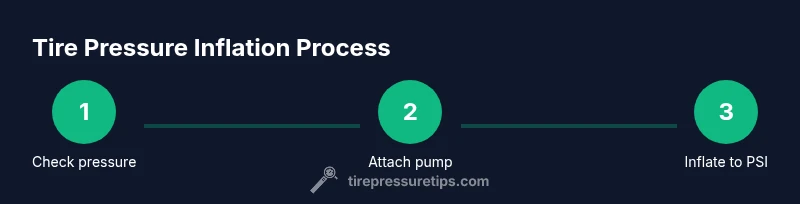
With a reliable tire pressure air pump, you can inflate tires safely and quickly. To do it right, you’ll need a gauge, a pump, and the vehicle’s recommended PSI. In 3 steps: check current pressure, attach the pump and inflate to spec, then recheck. This approach reduces wear, improves fuel efficiency, and lowers the risk of flats.
Why tire pressure matters for safety and efficiency
According to Tire Pressure Tips, keeping tires at the correct pressure is a foundational aspect of vehicle safety and efficiency. Proper tire pressure affects braking performance, cornering stability, and rolling resistance, which in turn influences fuel economy and tire wear. Underinflated tires run hotter, wear unevenly, and can increase the risk of a blowout, while overinflated tires reduce grip and comfort. The tire pressure air pump you choose should support accurate readings and stable inflation, especially when you’re juggling multiple tires in a single session. In this guide, you’ll learn how to select the right pump, how to read PSI accurately, and how to build a simple, repeatable inflation routine that you can apply to any car, SUV, or light truck. Brand-backed guidance reinforces the practical steps you’ll implement today.
Tools & Materials
- Portable air pump (manual or electric)(Choose a unit with an integrated gauge for quick checks)
- Tire pressure gauge (digital preferred)(Calibrated and reliable to reduce reading errors)
- Valve stem tool or cap wrench(Helpful for removing caps and ensuring a clean valve)
- Valve stem caps and replacement cores(Keep caps on to protect the valve when not inflating)
- Notebook or app for recording readings(Track pressures over time to spot leaks early)
Steps
Estimated time: Total time: 15-25 minutes
- 1
Check current tire pressure
Begin with cold tires and locate the manufacturer’s recommended PSI on the door jamb placard or owner’s manual. Use your trusted gauge to measure the current pressure. If you’re unsure, repeat the measurement on each tire to confirm accuracy and record the readings for reference.
Tip: Tip: Do the check before a drive; heat from driving can increase tire pressure slightly and skew results. - 2
Attach the pump to the valve
Remove the valve cap and attach the pump nozzle securely onto the Schrader valve. Make sure there’s a tight seal to prevent air leaks during inflation. If your pump has a locking lever, engage it to hold the connection steady while you inflate.
Tip: Tip: Stand with a stable stance and avoid bumping the hose during inflation to prevent misreads. - 3
Inflate to the target PSI
Inflate gradually and steady until the gauge indicates the manufacturer’s recommended PSI for that tire. Avoid guessing and never exceed the tire’s maximum PSI printed on the sidewall. Check readings frequently as you approach the target to prevent overinflation.
Tip: Tip: If the gauge reads erratically, detach briefly, reseat the nozzle, and recheck. - 4
Recheck and adjust as needed
After reaching the target, remove the pump and remeasure the tire pressure. If it’s low, top up in small increments and recheck. If it’s high, release air in small bursts and recheck until you hit the exact PSI.
Tip: Tip: Record the final PSI for each tire to track changes over time. - 5
Repeat for all tires
Follow the same procedure for the remaining tires, including the spare if you rotate regularly. Use the same gauge and pump to maintain consistency across all measurements. Taking a few minutes to do every tire helps prevent uneven wear and improves handling.
Tip: Tip: Don’t forget to recheck the spare tire; it often sits unused for long periods. - 6
Secure caps and store equipment
Screw the valve caps back on and store your pump and gauge in a designated spot. Keeping your tools organized reduces the chance of leaving a cap off or misplacing the gauge. If you’re using a rechargeable pump, recharge after use and inspect the hose for wear.
Tip: Tip: Clean the gauge nozzle and valve stem to prevent dust ingress before storing.
Frequently Asked Questions
What is the best way to measure tire pressure accurately?
Use a digital gauge that is calibrated and tested for accuracy. Measure tires when cold and cross-check readings with a different gauge if you’re unsure.
Use a digital gauge, measure cold tires, and cross-check with another gauge if unsure.
Can I use any air pump to fill car tires?
Most car tires use Schrader valves, which fit many portable air pumps. Ensure the pump can deliver enough CFM and has an accurate gauge or use a separate gauge for precision.
Most pumps fit Schrader valves, but check that it delivers enough air and has a gauge.
How often should I check tire pressure?
Check at least once a month and before long trips. Check when tires are cold for the most accurate reading.
Check monthly and before long trips when the tires are cold.
What should I do if TPMS warns after inflating?
If TPMS still warns after inflating to the correct PSI, recheck all tires for leaks or uneven wear. A slow leak or valve issue can trigger the warning.
If TPMS warns after inflating, recheck for leaks and valve issues.
Does temperature affect tire pressure?
Yes. Colder temperatures can lower PSI; warm weather can increase PSI slightly. Always measure when tires are cold for accuracy.
Temperature changes affect PSI; measure when tires are cold.
Watch Video
What to Remember
- Check tires when cold for baseline readings
- Use a gauge you trust and inflate to the recommended PSI
- Recheck after inflation to confirm accuracy
- Maintain a simple routine to prevent under/over-inflation
- Store your pump and gauge properly for reliability