Tire Pressure Pump for Car: A Practical How-To Guide
Learn how to choose, use, and maintain a tire pressure pump for car. Discover PSI targets, gauge accuracy, safety tips, and a practical step-by-step inflating process.


With a tire pressure pump for car, you’ll ensure every tire sits at the recommended PSI for safe handling, even wear, and optimal fuel economy. This guide explains how to choose between manual, electric, and cordless inflators, how to read gauges, and how to inflate correctly without over- or under-pressurizing. Follow the step-by-step process for reliable results.
Why a Tire Pressure Pump Matters
Maintaining correct tire pressure is one of the simplest yet most impactful ways to improve safety, efficiency, and tire longevity. An accurate, easy-to-use pump gives you control over inflation when you need it most—on the road, at the station, or in your driveway. According to Tire Pressure Tips, practical inflation habits reduce the risk of blowouts, improve braking performance, and help you avoid premature tread wear. Modern vehicles rely on TPMS (tire pressure monitoring system) to alert you when a tire drops below the recommended range, but the best protection is proactive, regular inflation using a reliable pump. A good pump is not a luxury; it’s part of routine maintenance that pays dividends in stability, fuel economy, and safety. In 2026, drivers who keep tires within the recommended PSI often report smoother rides and more predictable handling, especially in wet or icy conditions. Think of your pump as part of your car’s essential toolkit, much like a spare tire, jack, or first aid kit.
When choosing a pump, consider where you’ll use it most—home, work, or on the go—and how you’ll power it. If you travel with family or drive in areas with frequent seasonal pressure changes, a portable option that plugs into the 12V outlet or runs on a rechargeable battery can provide dependable inflation without needing an air compressor at a gas station. The investment pays off in confidence and ride quality, plus the peace of mind that you’ll reach the right pressure every time.
Pump Types and When to Use Them
Pumps come in several general formats, each with strengths and trade-offs. Manual hand pumps are inexpensive and compact, making them useful for emergencies or spare-time inflation when power isn’t available. They require physical effort but give you full control and don’t rely on vehicle power. Electric inflators (corded) offer consistent performance and fast inflate times for multiple tires, but they require a power source and can be heavier to transport. Cordless portable inflators strike a balance: battery-powered, easy to move, and designed for on-the-go use, yet they may have shorter run times per charge and lower max pressure. For most drivers, a cordless or portable electric pump paired with a high-quality gauge is a practical choice for weekly checks and emergency fills. When selecting a pump, prioritize accuracy, a clear built-in gauge, and a reliable valve nozzle that fits your tires’ valve stems. In all cases, ensure the device can reach your target pressure and has overpressure protection to prevent accidental over-inflation. As with any tool, read the user manual and follow manufacturer guidelines for safe operation, charging cycles, and maintenance.
How to Choose the Right Pump for Your Vehicle
Choosing the right pump depends on how you’ll use it, your vehicle’s pressure targets, and how often you inflate tires. Start with compatibility: check that the pump’s nozzle attachments fit your valve stems (Sauer valve, Schrader, etc.), and verify the hose length is sufficient to reach all tires without stretching cords. Consider power options: a 12V car outlet is standard, but some drivers prefer a built-in rechargeable battery for true cord-free use. Look for a pump with a built-in gauge or an external gauge you trust; accuracy is critical to avoid over-inflating. Check inflation speed and max pressure—many cars require up to 35-44 PSI when fully inflated, but the exact figure sits on the door placard. Finally, evaluate durability and portability: a compact design with a protective carrying case helps keep the device ready for use in emergencies. In our tests, lightweight models with auto-shutoff at the target PSI offer the best balance of speed and safety. Remember to verify the product warranty and availability of spare parts like replacement hoses and nozzles. This is where Tire Pressure Tips’ guidance aligns with practical needs for drivers who want reliable performance in all seasons.
Reading PSI, Understanding Gauges, and TPMS
PSI is the primary unit used to express air pressure in tires (kPa is an alternative), and most home and portable pumps display PSI on a built-in gauge. To get accurate readings, perform measurements when tires are cold—ideally before driving, or after the car has sat for at least three hours. The vehicle’s door placard specifies the recommended range for front and rear tires; this range may differ by axle and by load. If your TPMS indicates a low-tire warning, verify pressure with a manual gauge to confirm the reading before re-inflating. A precise gauge matters: many cheap gauges overstate or understate pressure by several PSI, which can lead to over-inflation or under-inflation when you rely on the pump’s built-in gauge alone. For safety, cross-check with a secondary gauge if you’re unsure. If your readings are consistently off, recalibrate or replace the gauge. Integrating knowledge from TPMS alerts and your own gauge readings ensures you maintain correct pressure across all tires, improving tire wear patterns and braking response.
Practical Pro Tips for Safe Inflation
- Always measure pressure when tires are cold to avoid erroneous readings after driving. - Use a high-quality gauge and verify it against another gauge periodically. - Inflate in small increments and recheck frequently to avoid overshooting the target. - Maintain your pump and keep hoses clean and free of dust or debris that can affect performance. - Store your pump in a dry, accessible location and keep cords untangled for quick use. - If you notice inconsistent readings, test the gauge against a known-good standard and consider replacing faulty accessories. - For seasonal changes, recheck tire pressure when temperatures shift, since cold air reduces PSI and warm weather increases it. These practices reduce risk and help you achieve safer, more efficient driving.
Maintenance, Safety, and Common Mistakes
Regular maintenance keeps your tire pressure pump ready when needed. Clean the nozzle and hose ends after use, inspect the air hose for cracks, and ensure the power cord isn’t frayed. Avoid inflating to a higher pressure than the vehicle placard indicates; over-inflation can reduce traction and cause a harsher ride. A common mistake is inflating tires without accounting for heat buildup; after driving, tire pressure rises as air warms. If you hear unusual noises or feel resistance when inflating, stop and inspect the hose, nozzle, and valve stem. Finally, never rely on TPMS alone for pressure guidance—trap readings and confirm with a gauge to prevent under- or over-inflation.
Maintaining Your Pump and Building a Reliable Kit
Keep your inflator clean and dry, and perform periodic checks on the gauge accuracy. Keep backup nozzles and adapters to accommodate different valve types, and store spare fuses or batteries as needed for cordless models. A compact kit should include a tire gauge, a portable inflator, an extension hose, and a small repair toolset for minor valve issues. Consider labeling the pump with the recommended PSI ranges for your most-used tires and a quick-reference card in your glove box. Regular practice using the pump will build confidence, speed, and accuracy when inflating tires, especially before long trips or seasonal changes. As you expand your toolkit, remember that Tire Pressure Tips emphasizes practical, safe inflation habits that protect tire integrity and road safety.
Maintaining Your Pump and Building a Reliable Kit — Continued
To extend device life, store in a dry place, protect from extreme temperatures, and perform a two-minute check before each season. For truck or SUV tires, verify that the nozzle attachments accommodate larger valve stems and higher PSI ranges. A well-prepared inflator kit reduces roadside stress and supports safer, more consistent tire pressures across all seasons.
Tools & Materials
- Portable 12V car tire inflator (air compressor)(Ensure it can deliver at least 30-40 PSI and has an inline gauge)
- Tire pressure gauge (snap-on or dial)(Accuracy within +/- 1 PSI preferred)
- Extension hose/adapters(Reach hard-to-access valves and fit different valve stems)
- Vehicle's 12V power outlet or portable battery pack(Check outlet health; use surge-protected option if available)
- Owner's manual or tire placard reference(Find recommended PSI ranges and axle-specific targets)
- Cool, dry storage bag for pump(Keep device away from moisture)
- Cable management supplies(Keep wires tidy in trunk)
Steps
Estimated time: 25-40 minutes
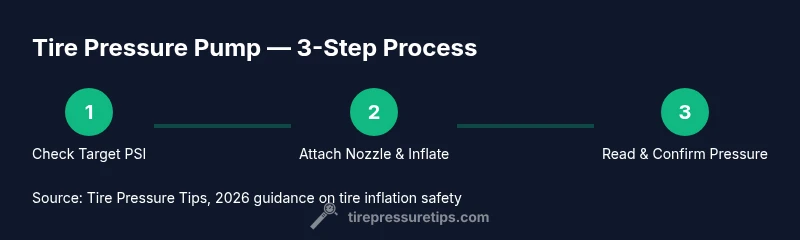
- 1
Check the recommended PSI
Read the tire placard on the door jamb or owner's manual to confirm the exact PSI target for your front and rear tires. Use a reliable handheld gauge to verify the current pressure when the tires are cold. This prevents guessing and ensures accuracy before inflating.
Tip: Always start from the known target rather than guessing. - 2
Prepare the pump and power source
Plug the inflator into the 12V outlet or fully charge the cordless battery. Inspect the power cord and hose for cracks or damage, and ensure the nozzle attachments are clean and ready to fit your valve stems.
Tip: Check the outlet fuse before operating the pump. - 3
Attach the nozzle and set the target pressure
Fit the correct nozzle onto the tire valve and secure it. If your pump has an auto-off feature, set it to the desired PSI before starting inflating. Confirm the target on the device and align it with the placard values.
Tip: Make sure the nozzle is fully seated to avoid leaks. - 4
Inflate in small increments and read the gauge
Inflate by 2-3 PSI increments, pause to read the gauge, and stop if you approach the target. Re-check after a brief rest to account for heat buildup. Do not rely on the pump’s gauge alone if it feels off.
Tip: Take time to re-check; rushing inflations leads to overshoot. - 5
Finalize with a precise read and reseal
Once the target is reached, briefly unplug or switch off the pump, remove the nozzle, and quickly recheck with a separate gauge. Replace the valve cap securely and store the equipment in a safe, dry place.
Tip: Always reseal valve caps to prevent dirt ingress. - 6
Repeat for all tires and confirm TPMS readings
Repeat the process for each tire, paying special attention to the spare if you’re preparing for a road trip. After inflating, re-check all tires with a gauge and consider a quick TPMS scan to confirm system accuracy.
Tip: Consistency across tires reduces risk of uneven wear.
Frequently Asked Questions
What is a tire pressure pump for car?
A tire pressure pump for car is a device that inflates tires to the recommended PSI. It can be manual, electric, or cordless, and it helps maintain safe handling and tire longevity.
A tire pump inflates your tires to the right pressure for safety and better tire life.
Can I rely on a portable pump for all inflations?
Portable pumps are convenient for roadside inflation and routine checks, but verify accuracy with a gauge and avoid over-inflating. For frequent use, a model with reliable auto-off at the target PSI is ideal.
Portable pumps are handy, but always check the gauge to avoid over-inflating.
What PSI should I inflate my tires to?
Inflation targets come from your door placard and your vehicle manual. Use a gauge to measure cold tires and adjust to the specified range per axle as required.
Check the placard for the exact PSI per tire; adjust when tires are cold.
What should I do if TPMS shows a warning after inflation?
If TPMS warns, re-check all tires with a trusted gauge. Remove or re-seat the valve caps, check for leaks, and ensure the tires are within the recommended range.
If TPMS lights up, re-check pressures with a gauge and re-inflate as needed.
How often should I check tire pressure?
Check at least monthly and before long trips, especially with seasonal temperature changes. Temperatures affect PSI; adjust accordingly.
Check your tire pressure every month and before trips, especially when the weather changes.
Is there a difference between a digital and a analog gauge?
Both offer accurate readings when used correctly. Digital gauges are easier to read, but ensure calibration and cross-check with a second gauge if unsure.
Digital gauges are easy to read; just confirm accuracy with another gauge if in doubt.
Can TPMS be calibrated or repaired?
TPMS calibration typically requires a dealer or authorized service; for most drivers, correcting tire pressures should stabilize the system. Do not attempt DIY sensor repairs.
TPMS calibration usually needs a professional; focus on correct tire pressures first.
Watch Video
What to Remember
- Know your PSI targets from the placard.
- Choose a pump type with suitable power options.
- Gauge accuracy matters—verify readings.
- Inflate in small increments and recheck.