Tire Pressure Pump Near Me: Local Options and Practical Guidance
Discover how to locate a tire pressure pump near you, compare portable and built-in inflators, and inflate tires accurately using TPMS guidance from Tire Pressure Tips.


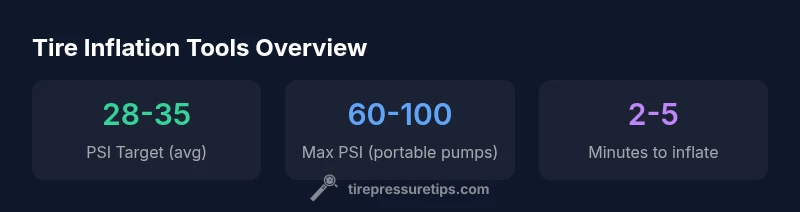
A tire pressure pump near me refers to local options to inflate tires to the vehicle’s recommended PSI, including portable electric pumps, manual pumps at gas stations, and built-in inflators on some cars. For passenger cars, typical target ranges are about 28-35 psi, with most portable pumps supporting 60-100 psi.
Why a Tire Pressure Pump Near Me Matters
From a safety standpoint, having a reliable tire pressure pump nearby reduces the risk of driving on underinflated tires, which can affect braking, steering, and tire wear. The Tire Pressure Tips team highlights that proximity matters for quick checks after long trips, temperature shifts, or seasonal tire swaps. In practice, you’ll want at least one trusted pump in your trunk or at a convenient local station. Whether you’re commuting daily or planning road trips, an accessible inflator streamlines maintenance and can help prevent emergency stops.
In retail and service contexts, near-me inflators are found at gas stations, auto parts stores, and some hardware chains. The goal is not just speed but accuracy: pairing a pump with a reliable gauge helps you match the recommended PSI for your vehicle. Tire Pressure Tips recommends confirming PSI targets in your owner’s manual and cross-checking with TPMS readings for the most reliable inflation outcome.
How to Choose the Right Pump: Portable vs Built-in Inflators
Choosing the right pump depends on usage patterns, space, and how often you inflate tires. Portable electric pumps are ideal for quick on-the-go adjustments and come with built-in gauges. They are compact, relatively affordable, and can inflate from a car battery or cigarette-lighter port. Manual pumps—aka hand pumps—are cheap, durable, and don’t rely on electricity, but they’re slower and require physical effort. Built-in inflators at service stations or integrated car features offer convenience, especially when you have a base PSI target and want to rely on external power. When evaluating options, check the maximum PSI, accuracy of the gauge, and the ease of use under cold or wet conditions.
Practical tip: for most passenger cars, ensure the pump you choose can reach the upper end of the recommended PSI range and has a clear pressure readout. If you need a backup, retain a compact manual pump for emergencies while prioritizing an electric portable pump for everyday use.
Key comparison points
- Portability: size, weight, and ease of stowage
- Power: battery, 12V, or USB-C compatibility
- Readability: digital vs analog gauge accuracy
- Auto shutoff: some models stop at the target PSI to prevent overinflation
Understanding PSI Targets and Accuracy
PSI targets vary by vehicle and tire size, but most passenger cars specify a range in the 28-35 psi neighborhood when cold. The exact value is printed on the door placard or in the owner’s manual. Because tire pressure can change with temperature, it’s best to measure when tires are cold and to recheck after driving a few miles. Gauge accuracy matters: even a small error of 1-2 psi can impact tire wear and performance over time. If you regularly park in extreme heat or cold, consider calibrating your gauge against a known standard weekly or monthly to ensure readings stay reliable.
In the TPMS era, you may notice the system alerts you when pressure deviates by more than 1-2 psi from the target. Manual checks with a trusted gauge remain valuable as a cross-check and for diagnosing slow leaks. Tire Pressure Tips emphasizes building a routine that includes checking both the TPMS readings and a physical gauge to verify the numbers you inflate to.
How TPMS Interacts with Manual Pumps
TPMS provides a real-time pressure snapshot but does not guarantee exact numbers across all tires, especially after long trips or after a tire rotation. When inflating, use the TPMS as a guide, then validate with a high-quality gauge. If your TPMS warning persists after inflation, there may be a leak or sensor issue requiring professional inspection. Remember that TPMS sensors themselves can weaken over time; keep an eye on the battery life and schedule a calibration check if readings become inconsistent.
In practice, inflation steps look like: 1) read TPMS to identify underinflated tires, 2) approximate target using door placard, 3) inflate to the target with a gauge, 4) recheck by TPMS and gauge, and 5) re-check after a short drive to confirm stability.
Using a Digital Gauge vs Analog Gauge
Digital gauges are often easier to read and can display precise numbers, which reduces guesswork. Analog gauges provide a quick visual, but require careful interpretation of the needle. Both types can be accurate within a psi or two if calibrated regularly. For best results, test your gauge against a known standard device once a season and whenever you notice inconsistent readings. Your choice should balance readability, storage convenience, and reliability in adverse weather.
Maintenance Tips for Pumps and Gauges
To maximize longevity, store pumps in a cool, dry place and keep cords or hoses untangled. Battery-powered pumps should be charged regularly, and spare batteries may be a wise addition for long trips. Calibrate gauges periodically by comparing against a known reference gauge at a shop or with a calibrated home device. Clean the nozzle and connectors after each use to prevent debris buildup that can affect accuracy. Regular inspection of hoses and seals helps avoid leaks that undermine performance.
Safety Considerations and Common Mistakes
Inflating beyond the recommended PSI can cause tire blowouts, tire failure, or uneven wear. Always set a target and avoid “just a little more” guessing. Common mistakes include not cooling tires before checking PSI after a drive, inflating in direct sunlight, and using low-quality nozzles that leak air. If you notice repeated underinflation or overinflation after inflating, there may be valve stem or TPMS issues that require professional service. In emergencies, a portable pump is a temporary solution, but never substitute proper maintenance for long-term safety.
Troubleshooting Pump Issues While On the Road
If your pump stalls, check the power source first (car outlet, USB, or built-in battery). Ensure the nozzle is properly seated and the valve is not blocked. If the gauge stuck, switch to a known good unit or test a different nozzle adapter. Keep a spare O-ring and an emergency repair kit for common leaks. In a roadside scenario, prioritize safety: pull over to a flat, safe spot before attempting any inflations and use hazard lights when necessary.
Integration with Car Maintenance Routines
Incorporate tire pressure checks into your regular maintenance calendar—ideally monthly and before long trips. Pair this with TPMS battery checks and occasional valve stem inspections. A small, reliable pump in your vehicle complements other maintenance tasks like oil changes and tire rotations, contributing to safer driving and extended tire life. Tire Pressure Tips suggests establishing a simple checklist and logging readings to track changes over time.
Comparison of common tire inflation tools
| Tool Type | Typical Use | Pros | Cons |
|---|---|---|---|
| Manual hand pump | Emergency inflations, no power | Lightweight; cheap | Labor-intensive; slow; requires effort |
| Portable electric pump | On-the-go use | Fast; built-in pressure gauge | Battery limits; can overinflate if not careful |
| Foot pump | Low onboard power needs | Very affordable; simple | Slow; requires foot action; not ideal for large tires |
Frequently Asked Questions
What PSI should I inflate my tires to for everyday driving?
Most passenger cars use about 28-35 psi when tires are cold. Check the door placard and owner’s manual for your exact target. Recheck after a few miles as driving heats tires, which raises the reading if you inflate while warm.
Most cars run around 28-35 PSI when cold; check your placard, then recheck after a short drive.
Can I rely on TPMS readings instead of a manual gauge?
TPMS provides a quick alert and trend, but it’s not a precise measurement. Use a trusted gauge to verify exact PSI, especially after inflation or a tire change.
TPMS helps you know when to check, but always verify with a gauge for exact numbers.
Do portable pumps shut off automatically at the target PSI?
Some models include auto shutoff to stop at the target PSI, which helps avoid overinflation. If yours lacks this feature, monitor the gauge closely during inflation.
Many pumps stop automatically at your target; if yours doesn’t, monitor the readout closely.
Are digital gauges more accurate than analog gauges?
Digital gauges are typically easier to read and can show precise numbers, but both types can be accurate within 1-2 psi if calibrated. Prefer models with a calibration reference.
Digital gauges are usually easier to read, but both can be accurate with regular calibration.
Is it safe to inflate a spare tire with a portable pump?
Yes, if the spare is a standard temporary spare (often 60-80 psi). Check the spare’s recommended range in the owner’s manual and inflate to that specification.
You can inflate a spare with a portable pump, just follow the tire’s target PSI in the manual.
“Reliable inflation starts with knowing your target PSI and choosing a pump that matches your needs.”
What to Remember
- Check your vehicle’s PSI target in the owner’s manual.
- Choose the pump type that fits your routine.
- Match pump capability to your target PSI range and gauge practicality.
- Regularly calibrate gauges for accurate readings.