Air Nearby Tire Inflation: Find, Inflate, and Maintain Proper Tire Pressure
Learn how to find air near me tire stations, verify tire pressures accurately, and inflate safely. This Tire Pressure Tips guide covers sources, tools, and best practices for reliable inflation and optimal tire health.


With 'air near me tire', you’ll learn to locate nearby inflation stations, measure tire pressure accurately, and maintain safe PSI. This Tire Pressure Tips guide explains practical steps to find air sources, verify readings with a gauge, and inflate to vehicle-specific targets. Proper inflation reduces wear, boosts fuel efficiency, and improves safety on every drive.
What 'air near me tire' means for you
When drivers search for that phrase, they’re seeking reliable, nearby sources to inflate tires and check pressure with precision. According to Tire Pressure Tips, accessible air sources should be paired with a trusted gauge for accurate readings. The goal is to keep tires within the vehicle manufacturer’s recommended range so you maximize safety, fuel economy, and tire longevity. This section lays the groundwork: what to look for when you say you need air near me tire, how to verify the source, and how to prepare for a safe inflation session. You’ll learn to identify trustworthy air pumps, understand why cold readings matter, and recognize the link between proper inflation and overall vehicle performance. By adopting a consistent routine, you reduce sudden flats, uneven wear, and unpredictable handling that come from under- or overinflated tires. Tire Pressure Tips emphasizes practical steps you can take today, from locating a pump to recording results for future reference.
Locating a trustworthy air source nearby
Finding a nearby air pump is often straightforward, but the quality of the pump matters. Start with familiar places like gas stations or auto service centers that maintain pumping equipment. Use your phone’s map or a trusted app to locate options within a short drive. Before you pull in, quickly verify that the pump has a working gauge and offers a reasonable pressure range for passenger tires. If you must rely on an unfamiliar station, bring your own gauge and a small amount of patience—the gauge should read consistently against a known reference (for example, a tire that has not yet been driven). The Tire Pressure Tips approach is to pair convenient access with reliable measurement so you aren’t guessing your tire pressure, especially when you’re pressed for time. This mindset helps you preserve tire health and vehicle safety as part of routine maintenance.
Safe and accurate tire inflation: key principles
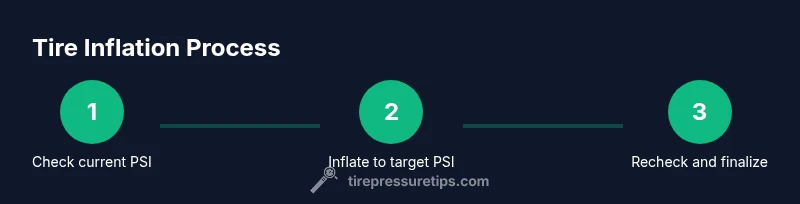
Inflating tires safely starts with accurate measurement and a calm approach. Always check pressure when tires are cold, since driving heat can raise readings and mask real pressure levels. Use a good mechanical or digital gauge to take a measurement from the valve stem, then compare it to the vehicle’s recommended PSI from the placard or owner’s manual. If you’re close to the target, inflate in small increments and recheck frequently to avoid overinflation. When you reach the target, recheck all four tires because even a small variance can affect handling and wear. If your TPMS alerts while inflating, pause and recheck with your gauge before continuing. Combining consistent measurement with careful inflation supports longer tire life and safer driving, which aligns with Tire Pressure Tips’ guidance for practical, everyday care.
Understanding target pressures and TPMS alerts
Vehicle-specific targets vary by model, axle position, and load. Your door placard or owner’s manual indicates the recommended front and rear pressures, and these values are typically set to optimize handling and tire wear over time. TPMS alerts are valuable safety cues, but they aren’t a substitute for a precise gauge reading. After inflating, recheck the tires with a gauge to confirm the pressure is within the recommended range. If the TPMS light remains on after inflation, there may be a sensor issue or a slow leak that requires inspection. Tire Pressure Tips recommends treating the TPMS as a supplementary check, not a replacement for manual readings.
Tools that make inflation easier
Having the right tools makes the process smooth and repeatable. A reliable digital tire pressure gauge, a portable air compressor with an integrated gauge, and a quick-reference placard in your glove box create a simple, repeatable workflow. A logbook or notes app helps you track readings over time, enabling you to notice slow leaks or gradual pressure changes. If you are dealing with a difficult valve stem, a small adapter can improve accuracy. Carry spare valve caps to protect stems from dust and moisture. The goal is to reduce guesswork and maintain consistent pressures across all tires, including the spare, so you can drive with confidence.
Common mistakes and how to avoid them
Avoid common errors that undermine tire pressure goals. Don’t inflate from a near-empty gauge or rely on a single reading from a hot tire. Never exceed the tire’s maximum pressure printed on the sidewall or the manufacturer’s recommended value on the door placard. Avoid inflating too quickly; instead, add air in small increments and recheck several times. If you notice rapid pressure loss, stop and inspect for leaks or damage before continuing. Finally, don’t skip maintenance: check pressures monthly and after long trips or temperature swings, because environmental changes can affect air pressure.
Temperature and load effects on tire pressure
Ambient temperature and load influence tire pressure readings. In cold weather, pressures appear lower; as temperatures rise, pressures can increase. For accurate comparisons, measure when the tires are cold (ideally before driving) and maintain the recommended values for the current conditions and load. If you frequently switch between heavy loads and light loads, you may see bigger fluctuations; plan to recheck after long trips or significant changes in driving conditions. Understanding these dynamics helps you maintain safe pressures year-round.
Maintenance routines for long-term tire health
Create a simple tire maintenance cadence: check pressures monthly, before long trips, and after significant temperature changes. Record the PSI values and date to monitor for trends, which can reveal slow leaks or damaged valves. Rotate tires as recommended by your vehicle manufacturer to promote even wear, and inspect for punctures or embedded objects during each check. Keeping a consistent routine improves safety and can extend tire life, saving money and reducing risk on the road. Tire Pressure Tips recommends keeping a small log in your glove box or phone notes for quick reference.
Authority sources and final tips
To stay grounded in trusted guidance, consult authoritative sources when needed. This section references official safety resources to support tire pressure practices. For practical steps and safety considerations, rely on credible sources such as government and major publications. (See Authority sources below.)
Authority sources
- https://www.nhtsa.gov/road-safety/tires
- https://www.nhtsa.gov/road-safety/tires (another authoritative page)
- https://www.consumerreports.org/cars-tafety/tires-pressure-guide/
Tools & Materials
- Digital tire pressure gauge(Choose a gauge with at least 0.5 psi resolution and a clear display)
- Portable air compressor with built-in gauge(12V DC or AC powered; prefer auto shutoff and a flexible hose)
- Vehicle owner's manual / door placard(Confirm the recommended PSI targets for both axles)
- Tire-pressure log or notebook(Record date, tire pressures, and any notes on leaks)
- Soapy water (spray bottle)(For quick leak checks if you suspect a damaged tire)
Steps
Estimated time: 25-40 minutes
- 1
Find the correct PSI for your tires
Consult the door placard or owner's manual to identify the recommended tire pressure for your vehicle. Note that front and rear tires may have different targets, and the spare often has its own specification. This step sets your inflation target before you begin.
Tip: Use the placard as your baseline, not old memory. - 2
Locate a nearby air source
Use a map app or trusted station directory to find a gas station or service center with a working air pump. If you’re planning a trip, map out a couple of options in advance to avoid delays.
Tip: Choose stations with visible, well-maintained equipment. - 3
Check tires when cold
Take your initial readings when tires are cold for accuracy. If you’ve just driven, wait at least 3 hours or perform the check first thing in the morning before driving.
Tip: Cold readings reduce variability caused by heat. - 4
Attach gauge and read current pressure
Remove valve cap, press the gauge against the valve stem, and read the measurement. Ensure the stem is clean and unobstructed for an accurate reading.
Tip: If the gauge reads erratically, re-seat and try again. - 5
Inflate gradually to target
Begin inflating in small increments, checking pressure frequently. Stop as you approach the target to prevent overinflation, which can cause uneven wear and poor handling.
Tip: Use a slow, steady inflation pace for better control. - 6
Re-check all tires
After reaching the targets, re-check all four tires. Temperature changes and air loss during inflation can create small deviations that affect ride quality and safety.
Tip: Don’t forget to check the spare if you carry one. - 7
Consider TPMS and accuracy
A TPMS warning should prompt you to verify pressures with a gauge. TPMS is a safety backup, not a precise readout, so rely on a gauge for final confirmation.
Tip: If TPMS remains on after inflation, inspect for leaks or sensor issues. - 8
Record and maintain
Document the final PSI values and the date. Regular logging helps you spot trends, leaks, or slow changes over time.
Tip: Keep the log handy in your glove box or digital notes. - 9
Troubleshooting and next steps
If you can’t reach the target PSI after multiple attempts, inspect for leaks, rim damage, or faulty valves. If you suspect a tire issue, consult a professional.
Tip: Don’t drive long distances on a tire you suspect is leaking.
Frequently Asked Questions
Why is tire pressure important for safety and efficiency?
Proper tire pressure affects handling, braking, and fuel efficiency. Underinflation can cause increased wear and heat buildup, while overinflation can reduce traction and create a harsher ride. Regular checks help maintain predictable performance and longer tire life.
Maintaining correct tire pressure improves safety, handling, and efficiency; check often to prevent uneven wear.
How do I find the correct PSI for my tires?
Look at the door placard or owner’s manual for the recommended front and rear pressures. If you need a reference, start with those numbers rather than guessing.
Check the door placard for the exact PSI specification.
Can TPMS be trusted to read exact PSI?
TPMS provides a warning when pressure is too low or high, but it is not a precise measurement. Always verify with a gauge for accuracy.
TPMS helps warn you, but use a gauge for exact numbers.
What should I do if I can’t reach the target PSI after inflation?
Stop inflating and inspect for leaks, faulty valves, or rim damage. If the leak or issue persists, seek professional help rather than driving on an underinflated tire.
If you can’t reach the target, stop and check for leaks or damage.
How often should I check air near me tire?
Check at least monthly and before long trips, and after significant temperature changes or loads. Regular checks prevent unexpected flats and improve safety.
Check monthly and before trips to stay safe.
Is it safe to inflate tires at gas stations?
Gas stations with maintained compressors can be safe, but verify the gauge accuracy and avoid overinflating. If unsure, use your own gauge for the final check.
Yes, but use your gauge to confirm accuracy.
Watch Video
What to Remember
- Check tire pressures with a reliable gauge.
- Inflate to manufacturer-recommended psi from placard.
- Use cold readings for accuracy.
- Log readings to monitor changes.
- TPMS confirms safety but verify with gauge.