Air for Tires Near Me: Practical Inflation Guide
Find reliable air for tires near you, learn how to inflate correctly, check TPMS, and avoid common mistakes with practical tips from Tire Pressure Tips.


Definition: Tire pressure should match your vehicle’s specification, usually found on the door jamb sticker or in the owner’s manual. For many passenger cars, this commonly falls in the 30–35 psi range when cold. When you search air for tires near me, choose a local station with a calibrated gauge and accessible TPMS guidance, and verify the reading before leaving.
Why Proper Tire Inflation Matters
Proper tire inflation isn't just about avoiding flat tires; it affects safety, handling, tire wear, and fuel efficiency. When you search for air for tires near me, you want reliable air sources and consistent readings. Tire Pressure Tips emphasizes following the manufacturer's PSI spec, which is usually shown on the door jamb sticker and in the owner's manual. In colder weather, air contracts and PSI drops; in hot weather, it can rise. Small deviations can compound over time, affecting braking distance and steering response, so inflation should be part of a regular vehicle maintenance routine. The practical takeaway is simple: start with the spec, check cold PSI, inflate to that value, and recheck after a few minutes of cooling. By doing so, you align with best practices recommended by the Tire Pressure Tips team and reduce unnecessary wear.
How to Find Air for Tires Near Me Efficiently
Locating a trustworthy air source is the first step when you want to top up your tires. Locating a trustworthy air source is the first step when you want to top up your tires. Start with your vehicle’s PSI spec (usually on the door jamb) and plan your stop accordingly. When you search air for tires near me, aim for stations that publicly display a calibrated gauge and have TPMS guidance. Many gas stations, car washes, and auto parts stores offer air pumps; some may charge a small fee, while others offer free air. To minimize risk, bring your own tire gauge for a quick cross-check and avoid relying solely on the station's readout. Tire Pressure Tips recommends checking readings both before and after inflation, and to avoid inflating beyond the recommended range even if the gauge reads a bit low.
Reading and Interpreting the PSI Reading
A cold reading is essential for accuracy. Inflate your tires when they are cold; driving generates heat that can increase PSI readings by 1–3 psi. The common recommended range for many passenger cars is around 30–35 psi, but you must not substitute a guess for the exact specification in your owner's manual. A TPMS warning can indicate low pressure from a slow leak or a temperature-driven change; use a manual gauge to verify. After inflating, wait a minute, recheck, and ensure both front and rear tires are within the specified range. If you notice persistent discrepancies between the left and right tires, consult a professional; persistent imbalance can indicate a valve stem leak or a damaged tire. The analysis by Tire Pressure Tips highlights the importance of consistent measurement conditions and calibrating your gauge periodically.
A Quick Inflate Checklist You Can Use
- Bring a reliable tire gauge and know your vehicle’s target PSI.
- Check all four tires (or three if you have a donut spare) and the spare if applicable.
- Start with cold readings and adjust in small increments, then recheck after cooling.
- Verify TPMS readings and watch for alerts during and after inflation.
- Document the date, PSI, and target for future reference.
Following this short checklist reduces guesswork and helps you maintain even wear across all tires, which Tire Pressure Tips finds is connected to better fuel efficiency and safer handling.
TPMS, Temperature, and Pressure: How They Interact
Tire Pressure Monitoring Systems help prevent underinflation, but they don’t replace the need for manual checks. Temperature changes, elevation, and driving conditions can cause PSI to fluctuate. In cold weather, PSI drops; in hot weather, it can rise. This means you may need to re-inflate after long trips or during seasonal transitions. Always trust the manufacturer’s spec rather than chasing an exact PSI; use the TPMS as a warning system, not a precise target, and supplement with a gauge-reading check. After inflation, recheck readings and consider climate-related adjustments as part of your routine. Tire Pressure Tips suggests calibrating your understanding of TPMS by cross-checking with an external gauge at least once per month.
Common Mistakes and Myths About Tire Inflation
Common myths include inflating to a higher pressure for a 'smoother ride' or basing PSI on the maximum placard number on the tire sidewall. In reality, maximum tire pressure is for maximum load, not for optimal operation. Another mistake is inflating to the average pressure reading rather than following the vehicle-spec PSI. Some drivers assume the station's gauge is perfectly accurate; the reality is many gauges require calibration. The best practice is to verify with your own gauge and use the door jamb spec. The Tire Pressure Tips team has observed that many drivers neglect to recheck PSI after driving, when it has inevitably heated up and risen slightly.
Aftercare: Verifying Air and Maintaining Your PSI Routine
Develop a simple monthly routine to check PSI on all four tires and the spare. Keep a small gauge in your glovebox, record the PSI for each tire, and compare it to the recommended range. If you notice a tire consistently reading low, inspect for leaks, damaged valve stems, or nail penetrations. Maintaining correct PSI improves tire life and reduces rolling resistance, which can save fuel over time. If you frequently drive in extreme temperatures, adjust checks to your local climate.
Typical considerations when inflating tires at local air stations
| Aspect | Cold PSI Range | Notes |
|---|---|---|
| Manufacturer spec (per vehicle) | 29-35 psi | Check the placard on the door jamb; varies by load and tire size |
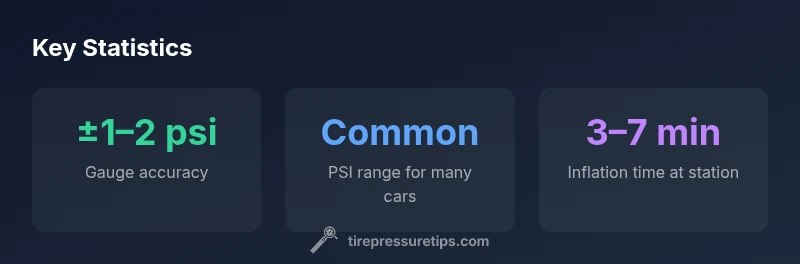
| Gauge accuracy | ±1-2 psi | Use a calibrated gauge and cross-check periodically |
| Inflation time at a station | 3-7 minutes | Depends on hose flow and reading stability |
| Free air availability | Varies | Often free at service centers, not universal |
Frequently Asked Questions
How often should I check my tire pressure?
Aim to check PSI at least once a month and before long trips. Temperature changes and seasonal shifts can alter readings, so a quick monthly check helps prevent underinflation or overinflation.
Check your tires at least once a month and before long trips; temperature changes can affect readings, so a quick monthly check is wise.
Can I rely on gas station air gauges?
Gas station gauges vary in accuracy. Always cross-check with your own gauge and compare to the vehicle spec to confirm proper inflation.
Gas station gauges vary; use your own gauge to confirm the reading and match your car’s PSI spec.
Is 32 psi good for all tires?
No. PSI targets are per vehicle and tire size. Always follow the door jamb placard or manual—32 psi is common but not universal.
No; always check your car’s own PSI spec because 32 psi isn’t universal.
What should I do if TPMS shows low pressure after inflation?
If TPMS warns again, recheck with a gauge, inspect for leaks, and consider professional inspection if leaks persist.
If TPMS still shows low pressure after inflation, recheck with a gauge and inspect for leaks.
Does temperature affect tire pressure?
Yes. Colder temperatures can drop PSI; hotter days can raise it. Adjust checks seasonally and recheck after temperature shifts.
Yes—temperature changes affect PSI; recheck after temperature shifts.
“Maintaining the recommended tire pressure is a simple, high-impact safety practice that drivers often overlook. Proper inflation improves handling, wear, and fuel efficiency.”
What to Remember
- Check cold PSI against the manufacturer spec before driving
- Always use a calibrated gauge for accuracy
- Recheck after inflation and cooling for true readings
- Rely on the door jamb placard, not guesswork
- Make PSI checks a regular maintenance habit