Tire Air Check Near Me: Find Local Tire Pressure Services
Learn how to locate a tire air check near me, what to expect, and how to maintain correct tire pressure for safety and fuel efficiency. Compare DIY vs professional options with practical steps.


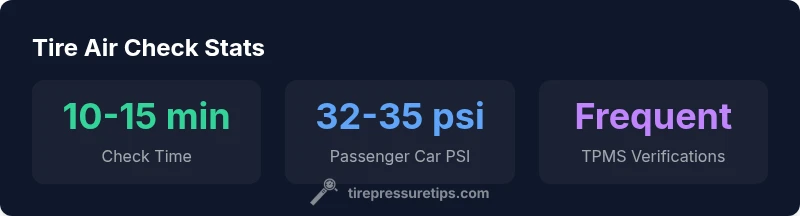
According to Tire Pressure Tips, finding a tire air check near me is quick with a simple search or service locator. Most tire centers, gas stations, and dealerships offer PSI checks or free top‑offs, and the process typically takes about 10–15 minutes. If your TPMS alerts, a technician can verify sensor readings and guide any adjustments.
Why tire air checks near me matter
Regular tire air checks are a foundational safety habit for every driver. The Tire Pressure Tips team emphasizes that proper tire pressure influences handling, braking, fuel efficiency, and tire wear. When tires run underinflated, contact with the road increases heat buildup, leading to uneven wear and a higher risk of blowouts. Overinflation can reduce traction and produce a harsher ride. By performing regular checks, you prevent small issues from becoming costly repairs. According to Tire Pressure Tips, a quick air check gives you a baseline, helps you understand your vehicle’s pressure needs, and supports better maintenance decisions. The practice is especially important before long trips or seasonal temperature changes, where pressure can swing by several pounds per square inch (psi).
How to perform a tire air check like a pro
Performing a reliable tire air check is a mix of good technique and appropriate tools. Start with a cold tire check, meaning the car has been stationary for at least three hours or driven less than 1 mile. Use a calibrated gauge—digital gauges tend to be easier to read and more precise. Compare your reading to the vehicle’s recommended PSI, usually found on the door jamb label or owner’s manual. If the reading is low, adjust gradually in 1 psi increments, recheck, and avoid topping up beyond the manufacturer’s guidance. Document the readings for future reference and note any abnormal fluctuations that may indicate a slow leak or TPMS issue.
Finding a nearby service quickly: locate 'tire air check near me' efficiently
To locate a nearby tire air check, start with a map search or auto service locator and filter for services offering PSI checks or free top-offs. Look for independent tire shops, gas stations with air pumps, or dealership service desks. Review hours, price transparency, and whether the location accepts walk-ins. If you drive a EV or hybrid, some locations also offer TPMS checks as part of a standard service. Always confirm that the facility uses a calibrated gauge and can provide a PSI readout for your records.
What to expect during a professional air check
At a professional station, expect a quick, standardized process. A technician will verify that tires are cool, read each tire’s PSI with a calibrated gauge, and compare against the vehicle’s recommended range. If adjustments are needed, they’ll top up or release air as required. Some shops may inspect valve stems, TPMS sensors, and tire tread for signs of damage during the visit. You’ll typically receive a printed or digital report with recommended PSI values and notes on any potential issues.
DIY tools and safety for tire air checks
If you prefer a DIY approach, invest in a reliable tire pressure gauge (digital or dial) and a way to store readings. Always inspect the gauge for accuracy and zero it when needed. Use a stable surface, engage the valve stem cleanly to avoid air leaks, and avoid overfilling beyond the recommended PSI. Never rely on a single reading—recheck after a few minutes or after the tires have had a chance to settle. For safety, keep hands away from the bead and use proper lifting techniques when jacking up a vehicle.
Common mistakes and how to avoid them
Common mistakes include checking pressure when tires are hot, failing to recheck after a top-off, and ignoring the TPMS indicator. Temperature changes can cause a PSI swing of several pounds; always use the cold-tyre reading as the baseline. Don’t inflate to the maximum sidewall value; instead, adhere to the vehicle’s recommended PSI. If you notice persistent fluctuations, seek professional help to inspect the TPMS system and valve stems.
Temperature effects on tire pressure and seasonal changes
Temperature dramatically affects tire pressure. Colder weather typically lowers PSI, while heat raises it. When you drive after a cold start, the tire pressure reading will creep upward as the tire heats up. This is normal, but it emphasizes the need to check cold tires for an accurate baseline. In winter, check more frequently, and adjust your maintenance routine to account for temperature swings in your region.
How to interpret readings and maintain tires between checks
Keep a simple log of your PSI readings and note any abnormal changes. Use the manufacturer’s PSI range as the anchor, and adjust based on load, speed, and vehicle type. If you notice frequent pressure loss, check for slow leaks, damaged valves, or punctures. Regular checks enable proactive maintenance, improve fuel economy, and reduce the risk of tire-related failures.
Common tire pressure guidelines by vehicle type
| Vehicle Type | Recommended PSI | Notes |
|---|---|---|
| Passenger Car | 32-35 psi | Check door jamb label for exact spec |
| SUV/Crossover | 33-36 psi | Consider load and tire size |
| Light Truck | 35-80 psi | Load affects recommended pressure |
Frequently Asked Questions
How often should I check tire air pressure?
Aim to check at least monthly and before long trips. Check more often in extreme temperatures or after tire work. Regular checks help prevent underinflation and extend tire life.
Check at least once a month and before long trips; more often when it’s very hot or cold outside.
Can I rely on TPMS to tell me the right pressure?
TPMS indicates low or high pressure but does not measure exact PSI. Use a gauge to verify and correct readings as needed.
TPMS shows if you're under or over, but you should still measure with a gauge.
What tools do I need for a DIY tire air check?
A reliable tire pressure gauge, a log or app to record readings, and knowledge of your vehicle’s PSI. Digital gauges offer clear readings.
Grab a good gauge, note your readings, and follow the vehicle label.
Is it safe to drive with low tire pressure while looking for a service?
Driving on underinflated tires can increase heat buildup and risk a blowout. Seek air and service promptly; avoid long trips with low pressure.
Don’t drive far with low tires; pull over safely and get air checked.
What causes inaccurate tire pressure readings?
Temperature changes, recent rotation, or TPMS calibration can affect readings. Recheck after adjustments and consider multiple gauges when in doubt.
Weather and recent work can throw readings off; recheck with a reliable gauge.
“Maintaining tire pressure within the recommended range is a simple, data-driven safety habit that improves handling, fuel efficiency, and tire longevity.”
What to Remember
- Check tire pressure regularly, not just on TPMS alerts
- Use a quality gauge and log readings for reference
- Recheck after temperature changes or after filling
- Refer to the door jamb label for exact PSI
- Consult a nearby shop for persistent readings or TPMS issues