How to Check Tire Pressure Near Me: A Practical, Safe Guide
Discover how to locate a reliable tire pressure check near you, choose the right tools, and maintain optimal PSI for safety, fuel efficiency, and tire longevity.


You’ll learn how to locate a reputable place to check tire pressure near you, use a reliable gauge, and verify the correct PSI for your vehicle. The guide covers what tools to bring, how to interpret TPMS alerts, and practical steps to maintain optimal tire pressure for safety, handling, and fuel efficiency. Start with a plan, then follow the steps.
Why Tire Pressure Near Me Matters
Maintaining correct tire pressure is essential for safe handling, even wear, and fuel efficiency. If you’re looking to check tire pressure near me, the answer is simple: regular checks help prevent flats, improve braking, and extend tire life. According to Tire Pressure Tips, consistent pressure helps you maximize tire contact with the road, improves traction in wet or icy conditions, and reduces rolling resistance that can waste fuel. For most passenger cars, the recommended PSI is listed on the door jamb placard and in the owner's manual; other factors like load, temperature, and tire type can alter the ideal range. In practice, a quick weekly check during routine fueling stops is enough for most drivers, but you should adjust your routine if you drive in extreme temperatures or carry heavy loads.
How to Locate a Tire-Pressure Check Point Near You
Locating a reliable spot to check tire pressure near you starts with a few practical steps. Start with your day-to-day routes—gas stations, auto shops, and major retail centers often provide air pumps and gauge access. Use a mapping app or a trusted automotive service locator to filter options by distance and available tools. If you value accuracy, seek locations that advertise digital gauges or air pumps with built-in PSI readouts. For many drivers, a quick stop at a local gas station during a routine trip is enough to obtain a pressure check. Remember to verify whether the location offers free or paid checks, and note any limitations on tire size or pressure range.
Another factor to consider is TPMS warnings. If your vehicle has a TPMS light, you’ll want to confirm the actual tire pressures at a reliable gauge to ensure the system isn’t masking underinflation. Keep a small notebook or mobile note to log readings and the location for future comparisons, especially when traveling to unfamiliar areas.
Tools and Gauge Types
Choosing the right tool matters as much as finding a nearby station. A digital tire pressure gauge is generally faster and more accurate than a traditional stick gauge, making it ideal for quick checks near me. Look for gauges with a clear LCD readout, a broad measuring range (at least 0–50 psi is common for passenger cars), and an automatic release valve for repeating measurements. If you don’t own a gauge, consider a visit to a nearby service center that offers a free pressure check and advice from qualified staff. For at-home maintenance, invest in a rechargeable air compressor or a portable pump with an integrated gauge to simplify future checks. Always calibrate your gauge against a known reference gauge periodically to maintain accuracy.
Understanding PSI, Temperature, and Vehicle Differences
PSI recommendations are not universal; they depend on your vehicle model, tire size, load, and ambient conditions. The door jamb placard shows the recommended cold PSI for front and rear tires, which is the starting point for any check near me. Temperature plays a critical role: warm tires show higher readings, while cold tires reflect the true baseline pressure. A difference of even a few psi can alter handling, braking distances, and tire wear patterns. When you switch to different tires or adjust wheel alignment, re-check PSI values to maintain optimal performance. Always refer to the vehicle manual for manufacturer guidance and consider seasonal temperature changes that may require adjustments to your routine.
The Right Way to Check Cold Tires
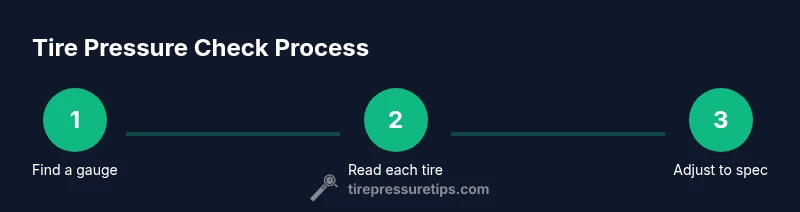
For accurate readings, check tire pressure when tires are cold, ideally after the car has sat for at least 3 hours or if the vehicle hasn’t been driven more than a mile. Remove the valve cap, press the gauge onto the valve stem firmly, and avoid air leaks around the stem. Record the reading for each tire, comparing them to the recommended PSI. If you find a tire below spec, inflate using a compatible air source until it reaches the target, then recheck all tires to confirm consistency. If you overinflate, release air slowly and re-check until the target is met. A quick routine like this at least monthly can prevent uneven wear and improve fuel economy.
Common Mistakes to Avoid
- Checking hot tires or shortly after driving, which gives falsely high readings.
- Relying solely on TPMS without verifying actual PSI with a gauge.
- Ignoring differences between front and rear tire pressures when your vehicle requires different values.
- Overlooking valve stems or bead leaks that can affect readings.
- Not recording readings, which makes it hard to spot gradual changes over time.
TPMS and Its Relationship to Tire Pressure
TPMS provides a warning when a tire is underinflated or overinflated, but it doesn’t replace direct PSI readings. Use TPMS as an alerting tool, then confirm the exact pressure with a reliable gauge. Understanding TPMS types—direct sensors that monitor actual pressure and indirect systems that infer pressure from wheel speeds—helps you interpret warnings more effectively. If TPMS becomes inaccurate or fails, a pressure check at a nearby station becomes even more important to maintain safe operation and avoid uneven tire wear.
Maintenance Plan for Ongoing Tire Pressure Health
Create a simple, repeatable plan to check pressure regularly. Schedule a quick check during weekly fueling or at the start of each long trip. Maintain a small, portable gauge and a compact air pump in your vehicle or in your home garage for easy access. Pair PSI checks with tread depth monitoring and visual inspections for embedded debris, cracks, or bulges. If you drive in extreme heat or cold, adjust your schedule to avoid sudden pressure changes that can affect handling and safety.
Tools & Materials
- Digital tire pressure gauge(LCD display, range 0-50 psi, auto-release)
- Portable air compressor or hand pump(Should include gauge and compatibility with car tire valve)
- Owner's manual or door jamb placard(Locate recommended psi for front/rear tires)
- Notebook or mobile app for logging readings(Record date, location, and psi readings)
- Valve cap wrench (optional)(Useful for stubborn valve caps and leaks)
Steps
Estimated time: 15-25 minutes
- 1
Stop in a Safe Location
Find a level, well-lit area away from traffic. Engage parking brake and turn on hazard lights if needed. This reduces distractions and improves accuracy.
Tip: Always prioritize safety—do not check on a busy road. - 2
Gather Your Tools
Bring a digital gauge, a portable air pump, and your vehicle’s PSI spec from the placard or manual. Having everything on hand speeds up the process and reduces error.
Tip: Keep the gauge in a readily accessible pocket for quick checks. - 3
Find the Correct PSI
Locate the recommended cold PSI for your front and rear tires from the door placard or owner's manual. Distinct values may exist for front vs rear tires.
Tip: If you are carrying a heavy load, you may be allowed a higher PSI within the recommended range. - 4
Attach the Gauge to Each Tire
Remove valve caps, press the gauge onto the valve stem firmly, and read the PSI. Repeat on all tires, including the spare if you regularly use it.
Tip: Ensure a tight seal to avoid air leaks during measurement. - 5
Inflate or Deflate to Target PSI
If readings are low, use the air pump to reach the target PSI. If readings are high, release air gradually until you hit the target.
Tip: Do not overinflate beyond the max specified on the tire sidewall. - 6
Recheck and Record Readings
Recheck all tires after adjustments to confirm accuracy. Log readings, date, and location for future reference.
Tip: A small note helps you notice gradual changes over time.
Frequently Asked Questions
How can I quickly find tire pressure near me?
Use a map app or automotive locator to filter for stations with air pumps and gauges. Prioritize places that offer free checks and clearly display PSI readouts. If you’re traveling, note locations along your route for easy access.
Open your map app and search for nearby gas stations or auto shops with air pumps. Look for places that advertise PSI readouts for accuracy.
Should I check tire pressure when tires are cold or hot?
Always check when tires are cold. Hot tires show artificially high readings due to recent driving and heat build-up, which can mislead you about the actual PSI.
Check tires when they’re cold to get an accurate reading.
What is the typical PSI range for most passenger cars?
The recommended PSI is listed on the door placard and in the owner’s manual. Front and rear tires may have different values, and the range can vary by vehicle and tire size.
Check the placard or manual for the exact PSI for your vehicle.
Is TPMS enough to rely on for tire pressure?
TPMS provides alerts but does not replace direct PSI measurements. Use a gauge to confirm actual pressures when you receive a TPMS warning.
TPMS warns you, but you should measure the PSI with a gauge to confirm.
What if I don’t have a gauge on hand?
Visit a nearby station or auto shop that offers air pressure checks and measurement assistance. Some locations provide free checks, though accuracy varies.
You can get a free or paid check at many stations; use a gauge if possible next time.
How often should I check tire pressure?
Aim for a monthly check, plus before long trips or when changing seasons. Regular checks help catch slow leaks and maintain performance.
Check once a month and before long trips.
Watch Video
What to Remember
- Check tires when cold to ensure accurate readings
- Use a reliable digital gauge for quick checks near me
- Know your vehicle’s exact PSI from placard/manual
- TPMS is helpful but not a substitute for measuring PSI
- Maintain a simple routine to protect tire life and fuel efficiency