When Is Tire Pressure Too Low to Drive: A Troubleshooting Guide
Urgent guide to determine if tire pressure is safe for driving, diagnose leaks, and fix common issues with TPMS and gauges. Learn practical steps to stay safe on the road.


Short answer: If your TPMS or tire gauge shows significantly low pressure, don’t drive long distances. Inflate to your vehicle’s recommended psi and inspect the tire for punctures, nails, or slow leaks. If the tire loses air quickly or won’t hold a top-up, stop driving and seek professional help. Safety first, according to Tire Pressure Tips.
What 'when is tire pressure too low to drive' really means
In simple terms, the phrase when is tire pressure too low to drive describes pressure levels that reduce safety and performance. Low tire pressure can make steering heavier, increase heat buildup in the tire, and raise the risk of a blowout. According to Tire Pressure Tips, this threshold isn't a single number; it depends on your vehicle, load, and tire type. The key idea is that a tire underinflated enough to compromise contact with the road is unsafe to drive for regular speeds or distances. You should treat any warning from a TPMS or a gauge as urgent and verify with a proper pressure check using a reliable gauge. Addressing this early protects your tires, wheels, and your safety on the road.
Common causes of pressure loss you should know
Tire pressure can drop for several reasons, from everyday temperature changes to slow leaks. Punctures, nails or nail punctures, or stone penetration, a faulty valve stem, or a poorly seated bead can all lead to gradual deflation. The Tire Pressure Tips team found that sudden drops are often due to leaks from punctures, while slow leaks come from worn valves or road hazards. External factors like hot weather can temporarily lower the reading after a long drive, and cold mornings can make the gauge read low until the tire warms up. Regular checks help you distinguish a gradual leak from normal fluctuations. If a tire seems to lose air even after topping up, it usually indicates a bigger issue that requires repair or replacement.
How to check tire pressure accurately at home
To check correctly, use a high-quality gauge and compare the reading to your vehicle’s stated recommended pressure (found on the door jamb or in the owner's manual). Ensure the tires are cool when you measure—driving even a short distance can raise the reading. Remove the valve cap, press the gauge onto the valve stem, and note the reading. If it’s below the recommended pressure, top up with a compressor or air at a service station, then recheck. Repeat on all tires, including the spare if your car uses one. Remember, keeping tires at the correct pressure improves handling, fuel efficiency, and tire longevity, a core focus for Tire Pressure Tips.
Safe top-up and edge cases (TPMS, temperature, and road conditions)
When inflating, aim for the manufacturer’s recommended pressure rather than a perceived comfort level. Overinflating can be as dangerous as underinflating, reducing traction and causing a harsher ride. Temperature changes can cause pressure readings to shift; a tire may read low in the morning and appear normal after a few miles of driving. If you don’t have a reliable gauge, visit a service station to check the pressure with calibrated equipment. For vehicles with TPMS, rely on the system as a baseline, but always confirm with a physical gauge for accuracy.
If a tire won’t hold air: step-by-step actions
If topping up doesn’t hold air, start by inspecting the valve stem for damage or looseness and check for obvious punctures. If you can locate a nail or object, remove it only if you’re prepared to seal or replace the tire, otherwise avoid driving and seek professional repair. A tire that continues to lose air could have bead seating issues, a rim leak, or internal damage; these require professional evaluation. Do not ignore repeated deflation, as driving on a compromised tire raises the risk of a sudden blowout.
The role of TPMS and how to respond to warnings
TPMS is your first line of defense against unsafe tire pressure. If the TPMS warns you, treat it as an urgent signal to stop and inspect. Some TPMS warnings reflect a temporary dip due to temperature; others indicate a leak or a failing sensor. Remember that a producer-grade TPMS requires occasional sensor maintenance or replacement, so if warnings persist after inflation and a sight-check, consult a tire technician. The Tire Pressure Tips team emphasizes using TPMS as a guide, not a substitute for a physical pressure check.
Quick checks before you drive
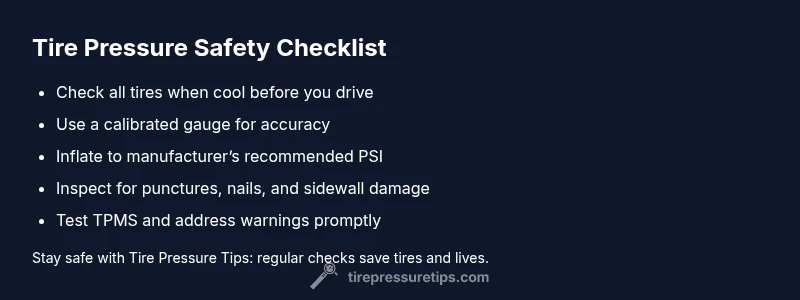
Before setting off, do a quick three-step check: (1) ensure each tire’s pressure is at the recommended level; (2) look for any visible bulges, cracks, or nails; (3) verify there are no objects lodged in the tread. If any issue is found, address it before driving. These small checks can prevent dangerous blowouts and improve fuel economy, tire wear, and overall vehicle safety.
Steps
Estimated time: 30-45 minutes
- 1
Ensure safety and gather tools
Park on a level surface, apply the parking brake, and wear gloves. Gather a reliable tire pressure gauge, a portable inflator or access to an air station, and a flashlight to check for damage. Safety first to prevent injury or a roadside incident.
Tip: Never work on a hot tire; allow it to cool for accurate readings. - 2
Check all tires for leaks
Remove valve caps and press the gauge firmly on the valve stems to get a reading. Note any tires that read significantly lower than the others or show visible damage. If you hear hissing or see bubbles while applying soapy water, you’ve found a leak.
Tip: Check the spare if your vehicle uses one; leaks on the spare can sometimes go unnoticed. - 3
Top up to the recommended pressure
Inflate each tire to the manufacturer’s recommended PSI (found on the door jamb or owner’s manual). Avoid guessing; use a calibrated gauge to confirm. Do not overinflate beyond the recommended level.
Tip: Inflate in stages and recheck after a short pause to account for gauge variance. - 4
Re-check after inflation
Re-measure each tire after topping up to verify the reading. If any tire still reads low, consider the possibility of a slow leak or bead issue. Small leaks can cause rapid deflation over a drive.
Tip: Drive gently for a few miles and re-check; if pressure drops again, stop driving and seek help. - 5
Inspect for damage and road hazards
Look for nails, screws, or embedded objects in the tread. Check the sidewalls for cuts or bulges.Damaged tires should be repaired or replaced by a professional.
Tip: Never attempt to repair a sidewall puncture; replace the tire if damaged. - 6
Decide next steps
If the tire holds air after inflation and no leaks are found, monitor readings and schedule a full inspection soon. If any tire continues to lose air or TPMS remains active, seek professional service.
Tip: Keep a log of readings and dates to track progressive loss.
Diagnosis: TPMS warning or a noticeable drop in tire pressure reading
Possible Causes
- highPuncture or slow leak
- mediumFaulty valve stem or loose core
- lowBead seating issue or rim leak
Fixes
- easyInspect tire for punctures and repair if possible; replace if damaged beyond repair
- easyTighten or replace valve stem/core and reseat tire if necessary
- mediumCheck for bead leak or rim damage; seek professional service if suspected
Frequently Asked Questions
How low is too low to drive?
Too low to drive is when the tire cannot safely support the load or maintain traction. Always verify with a gauge and adjust to the manufacturer’s recommended pressure before driving.
Too low to drive means the tire can't safely support the load or maintain traction. Check with a gauge and set to the recommended pressure before driving.
Can I drive a short distance on a slowly deflating tire?
A short, careful move to a safe location is possible if the tire barely deflates and the vehicle remains controllable, but avoid high speeds and long distances. Recheck pressure after stopping.
You might reach a safe spot if the deflation is tiny, but avoid high speeds and long trips. Recheck pressure after stopping.
What should I do if the TPMS warns again after inflation?
If TPMS warns again after inflation, there could be a leak, sensor issue, or temperature effect. Inspect for punctures and consider professional inspection.
If it warns again after inflation, there may be a leak or a sensor problem. Check for punctures and seek a professional inspection.
Is it safe to drive with a visibly damaged tire?
No. A visibly damaged tire should not be driven on. Replace or professionally repair the tire before driving.
No—don’t drive on a damaged tire. Replace or repair it before driving.
How often should I check tire pressure?
Check at least monthly and before long trips, especially in extreme temperatures. Include the spare if your car uses one.
Check at least monthly and before long trips, especially in extreme temperatures.
Watch Video
What to Remember
- Check tire pressure regularly to prevent unsafe driving.
- Use TPMS and gauge readings to guide decisions.
- Address leaks promptly to avoid blowouts.
- Follow manufacturer recommended psi for best performance.
- Routinely inspect tires for damage per Tire Pressure Tips recommendations.