How Long Can You Drive with Low Tire Pressure: Practical Guidance
Learn how long you can safely drive with low tire pressure, factors that affect safety, and quick steps to restore proper inflation. Includes TPMS tips, safety warnings, and a quick-check checklist.


You can usually drive short distances on mildly low tires, but the safe range depends on how low the pressure is, your speed, load, and road conditions. If the reading is below the vehicle’s recommended psi, bring the car to a stop and inflate as soon as possible. Do not drive long distances with underinflated tires.
Why the question matters
According to Tire Pressure Tips, tire pressure affects handling, tire wear, fuel economy, and the risk of a blowout. Driving with low pressure causes more contact patch with the road, generating heat and accelerating wear. Even modest underinflation can reduce steering response and increase rolling resistance, which means you might push more fuel and experience a stiffer ride. Understanding how long you can safely drive on low pressure helps you avoid unsafe tire failures while you plan a quick inflation stop. In most passenger vehicles, the recommended cold tire pressure is posted in the door jam or owner’s manual; sticking to that spec is the foundation of safe driving and consistent tire wear. Tire Pressure Tips analysis highlights that timely inflation preserves grip, reduces heat buildup, and minimizes road noise.
What counts as low and how it’s measured
Low tire pressure means the air inside the tire is below the vehicle manufacturer’s recommended spec. To measure accurately, use a reliable tire pressure gauge when tires are cold (before driving). Read each tire’s psi and compare with the placard on the driver’s door jamb or the owner’s manual. Be aware that driving heats tires and temporarily increases pressure, so hot readings aren’t reliable indicators of underinflation. If you notice a TPMS warning or a sticker indicates a specific cold psi, use that as your target. When in doubt, start with a conservative inflate-to value and recheck after driving a short distance to let the tire settle.
Factors that affect how long you can safely drive on low pressure
Several variables determine how far you can go before inflating: the level of inflation deficit, vehicle load, driving speed, road surface, and ambient temperature. A car carrying a heavy load or driven at highway speeds generates more heat in underinflated tires, increasing the risk of a heat-induced failure. Cold weather reduces tire pressure and makes underinflation worse, while hot weather can cause tire pressure to rise, masking a leak. The distance you can cover safely without inflating depends on how aggressively you drive and the tire’s overall condition, so plan a brief stop at the nearest available air source or service station rather than pushing to your destination.
Risks and warning signs you should not ignore
Warning signs include a TPMS light, a visibly flattened or bulged tire, excessive vibration, and unusual steering pull. If you hear thumping or feel the vehicle handling differently, pull over safely. Slow leaks may not be dramatically obvious until you inspect the tire, so periodic checks are essential. Prolonged driving on underinflated tires increases heat buildup and can lead to a sudden blowout, which is dangerous, especially at high speeds. If you detect a leak that won’t stop after inflation, seek professional help promptly.
Practical guidance on when to inflate and how to react
If you identify underinflation, the safest course is to pull over at a safe location and inflate to the recommended cold psi for all tires. Use an approved air source; never exceed the tire’s maximum pressure as printed on the sidewall. After inflating, recheck all four tires to ensure even pressure. If you’re unable to reach an air source promptly, move slowly to a nearby service station, avoiding high speeds or aggressive driving. Regular maintenance—checking pressure monthly and before trips—reduces risk and keeps tires performing well.
Tools & Materials
- Tire pressure gauge (digital or analog)(Bring accuracy and readability; check each tire when cold)
- Air compressor or access to a station(Ensure you know the target psi from the placard)
- Vehicle owner’s manual / tire placard(Location varies by vehicle; often on door jamb or fuel filler cap)
- Owner-approved spare tire and jack(Useful if you suspect a tire cannot be safely inflated)
Steps
Estimated time: 20-30 minutes
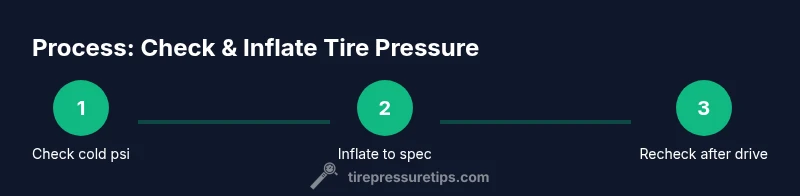
- 1
Check current tire pressure
Park on a level surface and check all tires with a cold gauge. Record psi values for each tire and compare to the manufacturer’s recommendation. If you find any tire well below spec, prioritize inflating those first.
Tip: Use a consistent gauge and write down readings for reference. - 2
Find the recommended psi
Look up the cold psi specification on the door placard or in the owner's manual. This target applies to normal load and weather conditions. Do not inflates beyond the maximum pressure printed on the tire sidewall.
Tip: If you drive with a heavy load regularly, confirm load-rated psi with the manual. - 3
Inflate to the target pressure
Using an air compressor, inflate each tire to the recommended cold psi. Avoid over-inflating and check the reading after a moment for accuracy as the tire may heat slightly during inflation.
Tip: Inflate in small increments and recheck—a tiny overfill can be corrected by releasing air slowly. - 4
Recheck after a short drive
Drive a short distance (about a mile) to let the tire heat up, then recheck the pressures. If a tire remains low, there may be a slow leak or puncture requiring inspection.
Tip: A quick recheck helps catch slow leaks before you drive longer distances. - 5
Inspect tires for damage
While you recheck pressures, inspect each tire for cuts, punctures, or embedded objects. If you find damage, replace or repair the tire as needed before resuming normal driving.
Tip: Do not drive on damaged tires; contact a professional if needed. - 6
Plan a maintenance check
Add tire pressure checks to your regular maintenance routine. Monthly checks and before long trips reduce risks and improve fuel efficiency.
Tip: Keep a tire pressure log to monitor trends over time.
Frequently Asked Questions
What is considered low tire pressure?
Low tire pressure means the psi is below the manufacturer’s recommended level, typically found on the door placard or in the manual. Even a small deficit can affect safety, handling, and wear. Always verify with a gauge when tires are cold.
Low pressure means your tires are below the recommended level; check with a gauge when cold and inflate to the spec.
Can I drive with a TPMS warning on?
A TPMS warning indicates underinflation in at least one tire. It’s a serious signal to stop and check inflation or inspect for leaks. Do not ignore the warning.
If the TPMS lights up, stop as soon as safely possible and check the tires for underinflation or leaks.
How long can you drive with low pressure safely?
Safe distance depends on how low the pressure is and other factors like speed and load. In general, use quick inflations to reach the recommended psi and avoid highway driving with a noticeable deficit.
There isn’t a universal distance; inflate to the correct level as soon as you can and limit high-speed driving.
Is TPMS always accurate?
TPMS indicates underinflation but doesn’t give exact pressures. Always confirm with a gauge to know the precise psi for each tire.
TPMS tells you if a tire is underinflated, but you should measure with a gauge for exact numbers.
Should I drive on a visibly damaged tire to reach help?
No. If a tire is damaged or bulging, pull over safely and assess. Driving on damaged tires risks blowouts.
If you see damage, don’t keep driving—get to a safe spot and inspect or replace the tire.
How often should tire pressure be checked?
Check tire pressure at least monthly and before long trips. Also check after large temperature changes or after heavy loads.
Check monthly and before trips; temperature changes can affect pressure.
Watch Video
What to Remember
- Check cold tire pressure regularly.
- Inflate to the manufacturer’s recommended psi.
- Use a reliable gauge and recheck after short drives.
- Watch for TPMS warnings and tire damage.
- Safety first: stop and inflate at the first sign of underinflation.