Can You Drive with Low Tire Pressure? Practical Guide
Urgent guidance on driving with low tire pressure, including risks, how to check pressure, quick fixes, and prevention tips from Tire Pressure Tips.


Yes, you should not drive long distances with low tire pressure. If you suspect low pressure, pull over safely, check all tires when cold with a gauge, and inflate to the vehicle’s recommended PSI. If a tire is damaged or the TPMS stays lit after inflation, seek professional help immediately.
Can You Drive with Low Tire Pressure? A Practical Reality Check
If you're wondering can you drive with low tire pressure, the short answer is: it is not safe to rely on it for long trips. According to Tire Pressure Tips, underinflated tires reduce grip, increase heat buildup, and wear unevenly. The Tire Pressure Tips team found that even a small drop—down to a few PSI below the recommendation—can alter steering response and braking performance. Always verify with a cold tire gauge before driving farther than a short distance. Ignoring this can compromise handling, fuel efficiency, and tire integrity, especially on wet or gravel surfaces where traction matters. Treat every pressure drop as a warning sign and correct it before resuming travel, even if you feel the ride is manageable.
Throughout this article, you’ll find practical steps, real-world examples, and safe-by-default practices to handle underinflation with confidence.
The Safety Reality of Underinflation
Low tire pressure affects the tire’s contact patch with the road, which can alter steering, braking, and stability. This isn’t just about a tougher ride; it can raise the risk of a blown tire if a long trip is attempted without correction. The Tire Pressure Tips team emphasizes that maintaining the recommended PSI preserves safe handling, minimizes tire wear, and helps sustain fuel economy. Even small PSI losses, if left unaddressed, compound with driving dynamics such as cornering and braking, and can be especially dangerous in emergency maneuvers. This is why a quick check with a reliable gauge is worth your time.
How Temperature and Driving Conditions Interact with Pressure
Ambient temperature, road heat, and frequent braking can all influence tire pressure. In colder weather, air contracts and PSI can drop; in hot weather or after high-speed driving, air expands and pressure can rise. Understanding this helps you interpret TPMS alerts and plan tire checks around weather and trips. Tire Pressure Tips notes that consistent checks, especially when seasons change or you’re preparing for road trips, reduce the chance of unexpected pressure loss and improve overall safety.
How to Check Tire Pressure Correctly
To get an accurate reading, measure when the tire is cold (vehicle hasn’t been driven for at least 3 hours). Remove the valve stem cap, press the gauge onto the valve and note the reading. Compare it to the recommended PSI in your owner’s manual or on the door jamb placard. If a tire is underinflated, inflate it promptly using a quality air gauge. Check all tires, including the spare, and recheck after inflation. If the TPMS warning persists after inflation, there may be a leak or sensor issue that needs professional inspection.
Common Causes of Low Tire Pressure and How to Prevent Them
The most common causes are slow leaks from nails or punctures, temperature-driven changes, faulty valve stems, and occasionally a wheel rim leak. Regularly inspect tires for nails, cracks, bulges, or objects lodged in the tread. Replace or patch damaged tires promptly. Maintain a regular inspection cadence and keep a portable air compressor or at least a high-quality gauge in your vehicle for timely checks.
What to Do If You Notice a Pressure Drop While Driving
If you notice a sudden drop in pressure during a drive, find a safe area to pull over and inspect the affected tire once the vehicle is stopped. Do not continue driving if the tire visibly looks flat or if the sidewall is damaged. Inflate if possible, but if you cannot reach the recommended PSI or you suspect a puncture, call roadside assistance. Avoid hard braking or aggressive steering while the tire is underinflated. Your safety comes first.
Prevention and Maintenance: Keeping Tires at the Right Pressure
Set a reminder to check tire pressure monthly and before long trips. Use cold-appropriate readings and recheck after topping up. Rotate tires as recommended by your vehicle manufacturer to ensure even wear, and replace tires that show signs of irreparable damage. Keeping your TPMS system healthy—by replacing faulty sensors and resetting after tire changes—helps ensure timely alerts rather than late reactions.
Quick Reference: Do's and Don'ts
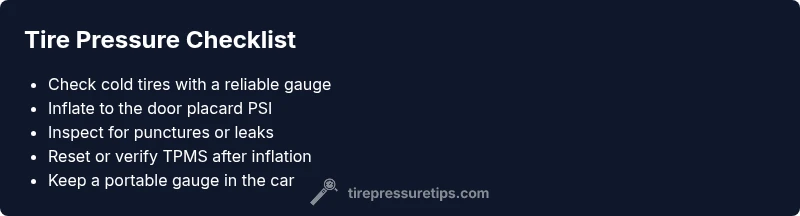
- Do check tire pressure when cold and use a reliable gauge. - Do inflate to the recommended PSI on the door placard. - Don’t exceed the maximum pressure printed on the tire sidewall. - Don’t drive on a visibly damaged tire or with a TPMS warning unresolved. - Do seek professional help if you cannot maintain correct pressure or detect leaks.
Steps
Estimated time: 25-40 minutes
- 1
Pull over safely
Find a safe spot away from traffic and turn on hazard lights. Engage the parking brake before any inspection. This minimizes risk while you assess the tires.
Tip: If you’re on a busy road, wait for a safe moment to exit and evaluate the tire only when off the roadway. - 2
Locate the recommended PSI
Check the driver door jamb placard or the owner’s manual for the exact cold PSI specification for your vehicle. The correct pressure varies by model and load.
Tip: If you have a loaded vehicle, use the higher end of the PSI range if the placard allows for it. - 3
Measure cold tires with a gauge
Remove the valve cap and press a reliable gauge onto the valve stem to get a reading. Record each tire’s pressure.
Tip: Use a digital gauge for quick reads or a dial gauge for long-term accuracy. - 4
Inflate to the recommended PSI
Fill each tire to the specified cold PSI using an air compressor. Recheck after inflation to confirm full inflation.
Tip: Do not overinflate; minor adjustments may be needed after the initial fill. - 5
Inspect for damage
Look for punctures, bulges, or objects embedded in the tread. If you see damage, patch or replace the tire as soon as possible.
Tip: Even small cracks can worsen; address anything suspicious promptly. - 6
Check TPMS status
If you inflated correctly but TPMS remains on, reset the system if your vehicle allows it or consult a professional for sensor issues.
Tip: A stubborn TPMS light may indicate a sensor or wheel-related problem that requires service. - 7
Test drive lightly
Take a short, slow test drive in a safe area to confirm the ride feels normal and that the pressure holds after cooling.
Tip: If the ride still feels off or the pressure drops again, stop and seek help. - 8
Plan for preventive checks
Set monthly reminders to check tire pressure and inspect tires for wear and damage. Regular maintenance reduces risk.
Tip: Keep a portable gauge and a small air compressor in your trunk for emergencies.
Diagnosis: Tire pressure warning light or soft ride/poor handling while driving
Possible Causes
- highSlow puncture or nail in the tread
- mediumTemperature-driven deflation (cold weather or night-to-day changes)
- mediumFaulty or leaking valve stem
- lowDamaged TPMS sensor or faulty readings
Fixes
- easyCheck all tires with a gauge when cold and inflate to the recommended PSI
- mediumInspect tires for punctures or damage; patch or replace as needed
- easyReset TPMS if applicable after correcting pressure; replace sensors if readings are inaccurate
- easyIf the tire cannot hold pressure or shows severe damage, stop driving and seek professional help
Frequently Asked Questions
What is considered low tire pressure in modern vehicles?
Low tire pressure is any reading below the vehicle manufacturer's recommended PSI, which you’ll find on the door placard or in the manual. Even small deviations can affect handling and tire wear. Always aim to keep tires within the recommended range for safety and efficiency.
Low tire pressure means readings below the recommended psi. Check with a gauge and bring them back to the specified range to stay safe.
Can driving with underinflated tires cause a blowout?
Underinflation can contribute to heat buildup and tire failure, increasing the risk of a blowout, especially at higher speeds or on hot days. It’s best to correct pressure before continuing your trip.
Yes, driving on underinflated tires raises blowout risk, especially on hot days or high speeds.
How reliable is TPMS at detecting low pressure?
TPMS alerts are designed to warn you when a tire drops below a threshold. Some systems don’t detect slow leaks immediately, so physical checks with a gauge are still important.
TPMS warns you when pressure is low, but it may miss slow leaks. Regular gauge checks are still essential.
What should I do if a tire doesn’t hold pressure after inflation?
If a tire loses pressure after inflation, inspect for punctures, nail damage, or bead leaks. Patch or replace as needed, and consider professional repair if unsure.
If it won’t hold pressure after inflating, inspect for punctures and leaks, and seek professional help if needed.
Is it safe to drive to a repair shop with a low tire?
If the tire loss is minor and the vehicle remains drivable, limit speed and distance and plan a safe route. If the tire shows any bulge, crack, or the pressure drops rapidly, don’t drive—call for roadside assistance.
If it’s only a slight drop and you can drive safely, do so slowly. If you notice damage, call for help.
How often should tire pressure be checked?
Check tire pressure at least monthly and before long trips. Temperature changes and seasonal shifts mean readings can vary, so regular checks help prevent issues.
Check monthly and before trips; temperature changes can affect readings.
What to Remember
- Check tires when cold to get accurate readings
- Inflate to the manufacturer’s recommended PSI
- Address leaks and TPMS issues promptly
- Regular maintenance reduces risk of driving with low pressure