What Tire Pressure Is Good for Winter: A Practical Guide
Discover how winter conditions affect tire pressure, how to find your correct cold PSI, and practical steps to safely maintain optimal pressure for traction and efficiency.


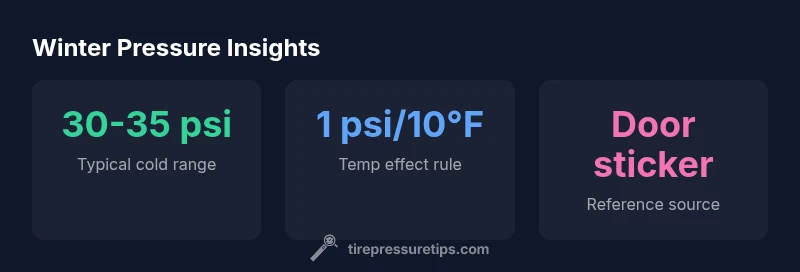
Determining what tire pressure is good for winter starts with your car’s cold-press specification. In general, use the cold tire pressure printed on the door jamb sticker or in the owner’s manual, then account for temperature. A common rule of thumb is that pressure can drop about 1 psi for every 10°F drop in outdoor temperature. For most passenger cars, winter pressures range from 30 to 35 psi when cold.
Why Winter Tire Pressure Matters
Winter driving introduces cold temperatures, snow, and slush that change how your tires interact with the road. The Tire Pressure Tips team emphasizes that proper winter tire pressure isn’t just about fuel economy; it impacts traction, braking distance, and tire wear on cold asphalt. Underinflated tires flex more, leading to heat buildup, faster tread wear, and poorer grip on wet or icy surfaces. Overinflated tires, conversely, reduce the contact patch and worsen steering feel on uneven winter surfaces. For most drivers, maintaining the manufacturer’s cold PSI specification—typically found on the door jamb sticker or in the owner’s manual—provides a balanced baseline for winter conditions. In addition, tiny weather-driven pressure changes can compound over days, so proactive checks are essential. By keeping tires near the recommended cold pressure, you improve grip, steering response, and even tire wear through the season.
How Temperature Affects Tire Pressure
Gas law basics explain why you’ll see pressure fluctuations with temperature. Cold air is denser; as outdoor temperatures fall, the air inside your tires contracts, reducing pressure. This effect is more pronounced in winter because daily temperature swings are common. A practical rule-of-thumb many drivers rely on is that pressure drops roughly 1 psi for every 10°F (about 6°C) drop in ambient temperature. While the exact figure varies with tire construction, load, and inflation history, the general trend is clear: colder days tend to push readings below summer-time baselines. Therefore, you should measure when tires are cold and adjust toward the vehicle’s recommended cold pressure. If you drive long distances on colder days, recheck after the first few miles, as heat from driving will raise the pressure.
Where to Find the Correct Winter Tire Pressure
Your vehicle’s correct winter tire pressure is not a guess. Start with the door jamb sticker, which lists the recommended cold tire pressure for the front and rear tires. If your sticker shows separate values for front and rear, use those exact numbers. If the sticker is missing, consult the owner’s manual or contact a dealer for the badge-based spec. Remember that different tires—winter dedicated, all-season, or performance tires—may have distinct cold pressures. When you swap tires seasonally, confirm that the new tires also align with the sticker’s recommended range. For vehicles with adjustable tire pressure monitoring systems (TPMS), occasional discrepancies can occur in extreme temperatures, so trust the readings from a quality gauge and rely on the sticker as the baseline.
How to Adjust Pressure Safely in Cold Weather
Always handle tire inflation when tires are cold for an accurate reading. Use a high-quality digital or analog gauge and verify multiple readings for reliability. If you find readings below the recommended cold PSI, add air in small increments (about 1 psi at a time) and recheck after a few minutes of rest. If you exceed the recommended pressure, release air in small increments to return to the target. After inflating to the recommended cold pressure, drive gently for a few miles and recheck to account for heat buildup. Avoid overinflation, especially in winter, as it can reduce traction on slick surfaces. If you frequently drive with heavy loads or on rough roads, consider discussing targeted adjustments with a qualified technician.
TPMS and Monitoring in Winter
Tire Pressure Monitoring Systems (TPMS) are valuable alerts, but winter weather can affect sensor readings and display responses. In subfreezing temperatures, some TPMS sensors may alert prematurely or lag behind actual tire pressure changes. Regular manual checks with a reliable gauge complement TPMS readings, particularly after cold starts, after long highway drives in cold air, or after a tire rotation. If you suspect a TPMS fault or persistent anomalies after adjusting pressures, seek professional inspection. Maintaining a documented pressure baseline helps you diagnose abnormal wear or air leaks more quickly.
Common Winter Scenarios: Snow, Ice, Wet Roads
Winter scenarios alter how tires interact with surfaces. Cold temperatures can lower internal pressure, reducing contact patch; a smaller contact patch can translate to decreased grip, especially on ice. Properly inflated winter tires improve traction by maintaining an adequate tread footprint. If you use dedicated winter tires, stick with the manufacturer’s recommended cold pressure for those tires; if you switch to all-season tires, re-check the pressures against the vehicle’s sticker. In mixed weather—snow or rain—the objective remains to preserve the optimal contact patch and avoid under- or over-inflation that can compromise steering control and braking distance.
Using a Gauge: Quick Checks
Invest in a reliable tire pressure gauge and check pressure at least once a month during winter, ideally in the morning before the car warms up. When possible, check all tires (including the spare) and adjust to the manufacturer’s stated cold PSI. If you’re unsure, don’t risk, and visit a trusted service center for a quick check. Regular checks are a simple, practical habit that yields safer handling, longer tire life, and better fuel economy in winter driving conditions.
Winter tire pressure guidance table
| Aspect | Guidance | Notes |
|---|---|---|
| Where to find recommended pressure | Door jamb sticker or owner's manual | Always read cold; adjust after tires have cooled |
| Effect of temperature | Colder temperatures reduce tire pressure | Changes are gradual; verify with a gauge |
| Front vs rear pressure | Follow car-specific values | Some models differ; do not assume equal values |
| Winter tire swap considerations | Ensure tires match sticker spec | Winter tires may have own recommended pressure |
Frequently Asked Questions
What is the best way to check tire pressure in cold weather?
Check tires when they are cold, use a reliable gauge, and compare readings to the vehicle’s recommended cold PSI on the sticker. Recheck after a short drive if temperatures rise.
Check while tires are cold, use a good gauge, and compare to the sticker's recommended cold PSI. Recheck after a short drive if it’s warmed up.
Should I adjust pressure differently for front and rear tires in winter?
If the manufacturer specifies different values, follow those exactly. If not, use the same recommended pressure for all tires unless advised otherwise.
Follow the car’s spec if it lists different front and rear pressures; otherwise, keep them equal as a starting point.
Can TPMS readings be unreliable in winter?
Cold temperatures can affect sensor readings temporarily. Use a reliable gauge to verify, and address any persistent anomalies with a technician.
Yes, cold can affect TPMS readings. Use a gauge to verify and seek help if readings don’t look right.
Does switching to winter tires change the recommended pressure?
Winter tires inherit the car’s recommended cold pressure, but some tires have different load ratings. Always verify against both the tire and vehicle specs.
Winter tires usually use the vehicle’s recommended pressure, but check the tire specs as well.
How often should I check tire pressure in winter?
Check at least once a month and after any significant temperature drop or long trip. More frequent checks are prudent in extreme conditions.
Check monthly, and after big temperature drops or long trips.
Is it dangerous to over-inflate tires in winter?
Over-inflation reduces the contact patch and can worsen grip on slick surfaces. Inflate to the manufacturer’s cold PSI and avoid exceeding it.
Yes, over-inflation can reduce grip—stick to the sticker’s recommended pressure.
“Winter tire pressure should align with the vehicle’s specifications and be adjusted for temperature fluctuations. Consistency and verification lead to safer, more predictable handling.”
What to Remember
- Follow the vehicle sticker for winter pressures.
- Expect a pressure drop with cold weather; plan for 1 psi per 10°F.
- Use a gauge to measure cold tires before driving.
- Check TPMS readings and re-check after cold starts.
- When in doubt, consult Tire Pressure Tips for guidance.