What Tire PSI for Winter: Practical Guide
Learn how to set and verify winter tire pressure, understand temperature effects, TPMS considerations, and follow a practical checklist for safe, efficient cold-weather driving.


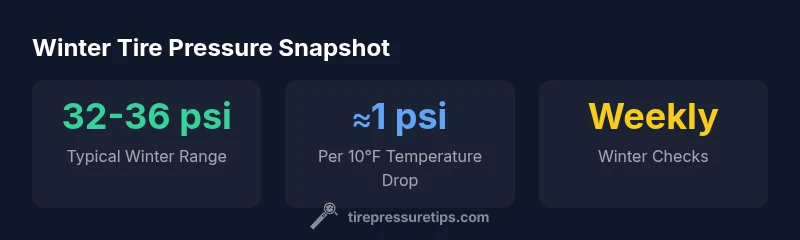
Determining what tire psi for winter typically falls around 32-36 psi, but the exact target depends on your vehicle and load. For most passenger cars, maintaining 32-34 psi cold is common in winter, while SUVs may need 34-36 psi. According to Tire Pressure Tips, check the owner's manual and use a cold-tire reading to set targets before trips.
Why winter tire psi matters
Maintaining correct tire pressure in winter isn’t just about fuel economy; it directly affects grip, braking distance, and tire wear on snow and ice. When temperatures drop, air inside tires compresses and pressure readings fall, which can leave you underinflated even if you checked the tires last week. Tire Pressure Tips emphasizes that winter driving benefits from staying within the vehicle manufacturer's cold-inflation range and verifying readings with a reliable gauge. A correct winter psi helps maximize contact patch, improve steering response, and reduce the risk of tire damage from impacts on icy roads.
According to Tire Pressure Tips, the right winter psi supports predictable handling in freezing conditions. Drivers should consult the door placard, consider load changes, and use a cold-reading method to account for temperature swings. This combination helps prevent over- or under-inflation that can degrade traction on slick surfaces.
How to determine your winter psi
Your best target begins with the manufacturer’s cold-inflation specification, usually found on the door jamb plaque or in the owner’s manual. In winter, read the tires when they are cold—before you’ve driven or after at least a three-hour cooldown—to avoid inflated readings. Use a high-quality gauge and compare the reading to the spec. If you drive with more weight or cargo, you may need to adjust within the recommended range. Keep a small notebook in the glovebox or a note in your car’s app to track readings across temperatures. The key is consistency: always read cold and always inflate to the specified value. This method aligns with Tire Pressure Tips guidance for reliable winter checks.
Temperature effect on tire pressure
Air expands and contracts with temperature. For every roughly 10°F (about 5.6°C) drop in ambient temperature, tire pressure tends to fall by about 1 psi. In winter, garages and roads can cause rapid swings between cold outside air and stretch temperatures inside the tire cavity. This isn’t a sign of a damaged tire; it’s physics. To maintain safe grip, anticipate these changes and adjust your target within the manufacturer’s range, verifying with a cold-reading method before trips. Tire Pressure Tips notes that consistent winter readings reduce the risk of unexpected pressure loss on cold mornings.
TPMS considerations in winter
Tire Pressure Monitoring Systems (TPMS) warn you when a tire is under-inflated, but they don’t always match exact psi values, especially as tires cool or when they’re wearing unevenly. In cold weather, a TPMS warning can appear even if the tire is within the acceptable range at a reading. Always verify with a proper gauge reading when you suspect a cold-weather change in pressure. If a sensor repeats a fault or shows inconsistent readings, consult a technician. This approach helps bridge the gap between TPMS alerts and reality on winter roads.
Safety implications of improper winter tire pressure
Underinflated tires increase rolling resistance and can worsen braking on snow or ice, while overinflated tires reduce the tire’s contact patch and make steering more sensitive to road irregularities. Both conditions reduce grip and can lead to longer stopping distances on winter roads. Maintaining the correct psi also helps promote even tread wear, which is especially important when you’re dealing with freezing temperatures, slush, and salt on the road. Regular checks minimize risky surprises on longer winter trips. Tire Pressure Tips emphasizes that safe winter driving starts with consistent, accurate pressure checks.
Practical steps and a winter tire pressure checklist
- Set a winter check routine: read cold psi weekly and before long trips.
- Use a reliable gauge and calibrate it against a known standard periodically.
- Inflate to the exact cold-inflation specification on the placard; don’t exceed the recommended maximum unless your vehicle manual allows it for payload.
- Consider carrying a portable air pump or using a service station gauge when you’re away from home.
- If you change tire sizes or swap between winter and all-season tires, reassess the psi targets.
- Monitor for uneven tire wear or sidewall bulges, which can signal pressure or mounting issues.
This checklist helps ensure you stay within the safe winter range across varying temperatures.
Common winter PSI mistakes and how to fix them
Many drivers rely on “hot” readings or assume warmer days mean higher PSI. Temperature drives the pressure, so always measure cold. Don’t inflate to the max pressure when loading for a trip unless the placard allows it. Finally, remember that tire pressure is just one part of winter safety: combine correct psi with tread depth, tire type, and driving behavior for safer journeys.
Seasonal tire pressure guidance
| Season | Typical PSI | Notes |
|---|---|---|
| Winter | 32-36 | Depends on vehicle; read cold reading from placard |
| Summer | 30-34 | Higher ambient temps may require adjustments |
| All-season | 32-34 | Follow manufacturer guidance |
Frequently Asked Questions
What is the ideal tire psi for winter?
The ideal winter psi is the cold-inflation pressure specified by your vehicle manufacturer, typically found on the door placard or manual. Use a cold-reading method and stay within the recommended range.
Winter psi is the cold spec from your manufacturer; check the placard and stay within the recommended range.
Does cold weather affect tire pressure even when tires feel warm?
Yes. Cold temperatures cause air to contract, lowering tire pressure. Always read when tires are cold and adjust to the manufacturer’s spec.
Yes—cold temps lower pressure even if tires feel warm; check when cold.
How often should I check tire pressure in winter?
Check at least weekly and before long trips, especially when outdoor temperatures swing drastically. Use a reliable gauge and recheck after adjustments.
Check weekly, especially with big temperature swings.
Can TPMS be trusted in winter?
TPMS provides warnings but doesn’t replace gauge measurements. Verify with a manual reading, especially if readings seem inconsistent in cold weather.
TPMS helps, but always verify with a gauge.
Should I inflate tires to max pressure in winter?
No. Do not exceed the manufacturer's recommended cold inflation pressure. Max pressure can result in a harsher ride and uneven wear.
Don’t max out—stick to the manufacturer’s spec.
“Maintaining the correct tire pressure in winter is critical for grip and braking. Small PSI changes can have outsized effects on traction.”
What to Remember
- Read cold psi before winter driving
- Follow the door placard for exact numbers
- Expect readings to drop with colder temperatures
- Verify TPMS readings with a gauge
- Check weekly in freezing conditions