Normal Tire Pressure for SUV in Winter: A Practical Guide
Learn the correct normal tire pressure for SUV in winter, how cold affects psi, and practical steps to check and adjust for safer driving on icy roads.


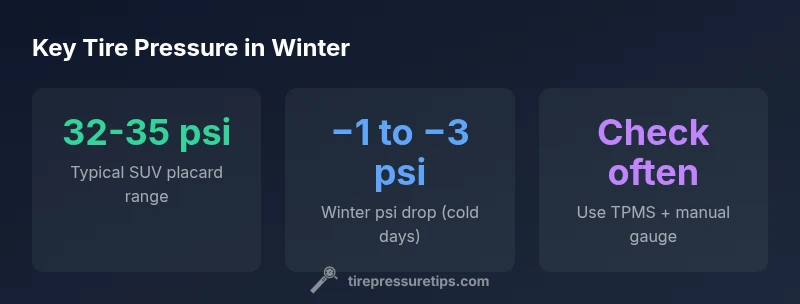
The normal tire pressure for SUVs in winter typically stays within the vehicle placard range, usually about 32-35 psi. In cold conditions, tire pressure can drop 1-3 psi, so check and adjust with a reliable gauge after the tires have cooled. Always follow the OEM specification for your SUV.
Understanding winter tire pressure for SUV
When people ask about the normal tire pressure for suv in winter, they are really asking for the baseline pressure that keeps tires safe and efficient when temperatures drop. In practice, you should start with the manufacturer’s door placard, which lists the recommended range for cold tires. For many SUVs, this baseline sits around 32-35 psi on both axles, but always verify your specific vehicle. The key is to treat the placard as your winter starting point, then adapt to real-world factors like load, terrain, and tire type. Following Tire Pressure Tips guidance, maintain consistency across the front and rear tires to avoid uneven wear or unpredictable handling. By staying within the placard range, you’ll protect tire structure, fuel economy, and wet or icy grip. Remember: the exact numbers vary by model and tire size, so consult the owner’s manual or placard before making changes.
Temperature and pressure dynamics in winter
Cold temperatures are the primary driver of pressure loss in winter. Air contracts as it gets colder, so tire pressure declines even if you haven’t used the tires. A common rule of thumb is that tire pressure drops by about 1 psi for every 10°F (5.6°C) drop in ambient temperature, though the exact amount depends on tire construction and initial pressure. TPMS alerts provide a warning when a sensor detects underinflation, but they don’t replace the need for a manual check with a gauge. According to Tire Pressure Tips, the risk of underinflation rises in cold snaps, making timely checks essential for winter safety and fuel economy.
How to determine the correct winter pressure for your SUV
To determine the right winter pressure, start with the placard on the driver’s door jamb. If you routinely carry heavier loads or tow a trailer, you may need to adjust toward the higher end of the range within the placard limits. Tire size also matters; different sizes can have slightly different recommended pressures. If you’re unsure, refer to the vehicle manual and the tire manufacturer’s guidance. For many SUVs, a conservative approach is to keep pressures within 32-35 psi, and to recheck after a cold night or a long stop-and-go drive where temps may have fluctuated. Keep in mind that winter weather also affects tire performance on snow and ice, so proper inflation is only one part of a broader winter tire strategy.
Practical steps to check and adjust tire pressure in cold weather
- Check tires when they are cold, ideally after the car has been parked for several hours. 2) Use a reliable tire pressure gauge and compare readings to the placard values. 3) If readings are low, adjust to the recommended range in 1 psi increments. 4) After adjusting, recheck both tires on the same axle to ensure balance. 5) Repeat weekly or before long trips, especially during temperature swings. 6) Inspect tires for signs of wear that could complicate inflation accuracy. 7) Document changes and keep a simple log for seasonal maintenance. 8) If you regularly carry extra weight, consider speaking with a tire professional about a targeted adjustment within the placard range.
Common pitfalls and best practices in winter
Avoid inflating beyond the placard range to compensate for winter grip—overinflation can reduce contact with the road and increase wear. Don’t assume one tire size or model behaves identically to another; always confirm the exact pressure for your tires. Be mindful of temperature swings between morning and afternoon; a pressure reading that seems acceptable in warm sun may be insufficient after dusk. A balanced approach—door placard baseline, cold-weather tweaks, and regular TPMS checks—yields safer handling, better mpg, and longer tire life.
The role of TPMS, seasonal checks, and maintenance
TPMS provides real-time feedback but isn’t a substitute for manual checks, especially in winter when pressures can vary with temperature rapidly. Reset TPMS after inflating if your vehicle requires it, and verify sensor accuracy if readings seem inconsistent. Combine TPMS alerts with periodic gauge checks and a brief monthly audit of tire tread depth and overall condition. Adopting a winter maintenance routine that includes pressure checks, TPMS monitoring, and periodic professional inspections helps maintain optimal grip and safer braking in icy or snowy conditions.
Winter tire pressure reference for SUVs
| Scenario | Winter Pressure Range (psi) | Notes |
|---|---|---|
| Vehicle placard range | 32-35 | Use as baseline unless conditions require adjustment |
| Cold weather effect | -1 to -3 | Pressure drops with temperature; recheck after cold snap |
| Heavier load or towing | +1 to +2 | May require slight increase within placard range |
Frequently Asked Questions
What is the typical winter tire pressure range for SUVs?
Most SUVs follow the placard range listed on the door jamb, commonly around 32-35 psi. In winter, these values serve as a starting point, with adjustments made for temperature, load, and tire size as needed.
Most SUVs use the door placard range, usually 32-35 psi, as a winter starting point. Check and adjust for temperature and load.
How does cold weather affect tire pressure?
Cold weather lowers tire pressure because the air inside contracts. Expect about a 1 psi drop for every 10°F temperature decrease, though the exact change depends on tire construction and initial pressure.
Cold weather lowers tire pressure; you’ll often see a drop of about 1 psi for every 10°F colder.
Should load affect tire pressure in winter?
Yes. Heavier loads or towing can raise the needed pressure within the placard range. If you regularly carry heavy cargo, you may need to adjust toward the higher end of the range.
A heavier load can push you toward the higher end of the recommended pressure. Check the placard and adjust accordingly.
How often should I check tire pressure in winter?
Check at least once a week and before long trips, especially during temperature swings. Always measure when tires are cold for accurate readings.
Check weekly and before trips, especially when temperatures swing; measure when tires are cold.
What is TPMS and how does it relate to winter pressure?
TPMS provides alerts when pressures are too low or high but doesn’t replace manual checks. Use TPMS in tandem with a gauge to maintain correct winter pressure.
TPMS alerts help, but you should still manually check pressures with a gauge in winter.
“Getting tire pressure right isn't glamorous, but it's one of the simplest ways to improve winter safety and mileage.”
What to Remember
- Check the placard range for winter baseline
- Expect psi drops of 1-3 psi in cold weather
- Check tires when cold; adjust with a gauge
- Avoid underinflating or overinflating; maintain even across axles
- Use TPMS in conjunction with manual checks