How Much Pressure Should a Tire Have? Practical Guidelines
Discover how much pressure your tires should have, how temperature and load affect readings, how to measure accurately, and tips for TPMS and maintenance.


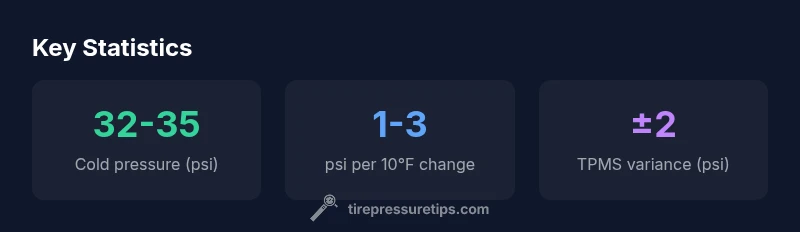
The standard target for most passenger cars is cold tire pressure in the low 30s PSI (commonly 32-35 PSI), but you should always follow the vehicle placard or owner’s manual. Check tires when cold, account for load, and adjust for temperature and driving conditions. Tire Pressure Tips recommends starting with the placard values and measuring before you drive to ensure accuracy.
Why the question matters for safety and efficiency
Understanding how much pressure should a tire have is not just a matter of feel; it directly influences safety, handling, braking performance, tire wear, and fuel efficiency. When tires run too low or too high, grip is compromised, steering becomes imprecise, and uneven wear shortens tire life. According to Tire Pressure Tips, maintaining correct tire pressure is essential for safety and efficiency. For most passenger cars, the recommended cold pressure aligns with the vehicle placard on the door jamb or the owner's manual, and it is important to verify this value for your specific make and model.
Reading the tire pressure label and vehicle specifications
The starting point is the placard found on the driver's door jamb (or occasionally in the glove box or owner's manual). This label shows the recommended cold tire pressure for the front and rear tires, often with separate values for different axle configurations. Vehicle manufacturers set these numbers based on load, suspension, and tire size, so always follow the placard rather than trusting a generic figure. Tire pressures on the label are stated for cold tires; hot tires will read higher due to expansion. Tire Pressure Tips emphasizes cross-checking with your manual when you carry unusual loads or equipment.
Temperature, weather, and seasonal effects on tire pressure
Ambient temperature has a measurable effect on tire pressure. For every 10°F change in outside temperature, tire pressure can shift by roughly 1 psi in many tires. In very cold climates, you may see a drop below the nominal cold-pressure target, necessitating a small adjustment when the tires have cooled. In hot weather or after a long drive, pressures can rise, sometimes approaching or exceeding the maximum shown on the sidewall. Tire Pressure Tips notes that regular checks in cold conditions reduce the risk of overinflation after driving in heat.
Tools and step-by-step: how to check cold tires accurately
Begin with a cold tire check—ideally after cars have been parked for at least 3 hours or before driving. Use a reliable gauge (digital or dial) and compare against the placard values. Remove any dirt from the valve stem, press the gauge firmly onto the valve, and note the reading. If your reading is off, adjust in small increments (2-3 psi) and recheck after a few minutes. Always inflate to the recommended cold pressure, not to satisfy a number on a previous reading. Tire Pressure Tips recommends checking all four tires, including the spare, at least once a month and before long trips.
TPMS and sensor basics: what to know about monitoring
Tire Pressure Monitoring Systems (TPMS) provide a real-time pressure readout and alert you when a tire drops to a dangerous level. TPMS readings correlate with actual tire pressure, but readings can differ by sensor accuracy and tire-theft- or temperature-related fluctuations. If a TPMS warning appears, verify with a manual gauge when tires are cold and adjust if necessary. If the warning persists after inflating to the placard value, consult a technician to inspect sensors, valves, and seals.
Tailoring pressure for load, speed, and tire type
Different driving scenarios require adjustments beyond the basic placard. Heavy loads, high-speed driving, or sport tires may warrant slightly higher pressures to maintain stable contact with the road. However, never exceed the maximum pressure listed on the tire sidewall; instead, adjust within the vehicle’s recommended range. For seasonal tires (winter vs. summer) or different tire sizes, verify the exact pressure from the placard for the specific configuration. Tire Pressure Tips highlights that vehicle-specific guidance remains the most reliable source of accuracy.
Common mistakes and maintenance routine
Common mistakes include relying on a single reading after driving (which yields a hot- tire reading), inflating to the sidewall maximum, or ignoring the differential pressures between the front and rear tires. Create a simple maintenance routine: check monthly, before trips, and after significant temperature shifts; keep a portable gauge in the glove box; and replace worn valves or damaged sensors promptly. Consistency is the key to preserving tire-health and performance.
Typical tire pressure ranges by vehicle type
| Model Type | Cold Pressure (psi) | Notes |
|---|---|---|
| Passenger car | 32-35 | General guidance from placard |
| SUV | 34-39 | Higher load, check labels for exact values |
| Light truck | 36-45 | Consult manufacturer guidelines |
Frequently Asked Questions
What is the standard cold tire pressure for most cars?
Most passenger cars list a cold pressure in the 32-35 psi range on the placard. Always follow the exact numbers on your vehicle label and owner’s manual, as pressures vary by model.
Most cars show 32 to 35 psi as the standard cold pressure; check your door placard for the exact number.
Is it safe to inflate to the maximum PSI printed on the tire sidewall?
No. The sidewall maximum is the tire’s limit, not a target for daily use. Always follow the vehicle placard values or manufacturer guidance for everyday driving.
No—the sidewall max isn’t the target; use the placard value instead.
How does temperature affect tire pressure?
Temperature changes can alter pressure by about 1 psi per 10°F. Colder temperatures drop readings; warmer conditions raise them. Check pressures when tires are cold, especially during seasonal transitions.
Temperature can shift readings by about 1 psi per 10 degrees, so check when cold.
Should front and rear tires have the same pressure?
Not always. Some vehicles specify different pressures for front and rear tires based on load distribution. Always follow the placard for the exact front vs rear settings.
Usually, follow the car’s front vs rear values on the placard.
How often should I check tire pressure?
Check at least once a month and before long trips. If you frequently drive in extreme temperatures or carry heavy loads, check more often.
Monthly checks plus before trips keep tires in good shape.
What if my TPMS warning comes on in cold weather?
Inflation tends to drop in cold weather. Recheck with a gauge after tires cool, and inflate to the placard value if needed. Persistent warnings warrant a sensor inspection.
Cold weather can trigger TPMS alerts; recheck and inflate to the placard when tires are cold.
“Following the vehicle's tire-pressure placard and checking tires when cold is the foundation of safe driving.”
What to Remember
- Follow the vehicle placard for your exact numbers
- Check tires when cold for accurate readings
- Account for temperature and load in your adjustments
- Use TPMS as a guide but verify with a gauge
- Maintain a regular check routine to prevent under/over-inflation
- Do not exceed the tire sidewall maximum or the placard values