Essential Guide to Normal Air Pressure for Tires
Learn how to determine normal air pressure for tires, how to check cold readings, and how temperature and load affect the numbers—plus practical steps and TPMS guidance.


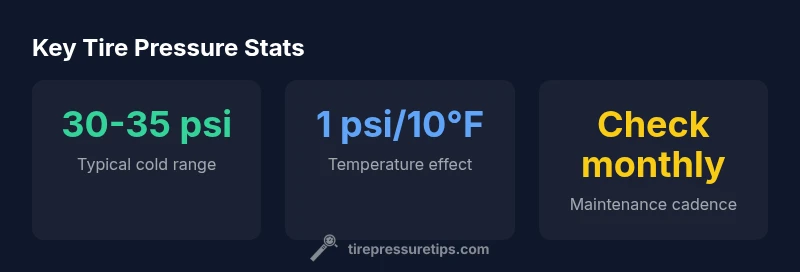
Normal air pressure for tires is not a fixed universal value—it depends on your vehicle and tire size. For most passenger cars the typical cold-pressure range is about 30 to 35 psi. Always confirm the exact specification in your owner's manual or on the placard inside the driver’s door, and adjust for temperature, load, and driving conditions. Checking regularly helps optimize handling, tread life, and fuel efficiency.
Understanding Normal Tire Pressure Across Vehicle Types
Normal tire pressure is not a fixed number; it varies by vehicle design, tire size, load, and even the climate where you drive. According to Tire Pressure Tips, the right range is always the one specified by your manufacturer, not a generic target. For most passenger cars, a cold tire pressure around 30 to 35 psi is typical, but you must confirm the exact figure on the door placard or in the owner's manual. The placard also often shows different numbers for front and rear tires, and sometimes varies with the vehicle’s drivetrain or optional equipment. The key takeaway is that 'normal' is context dependent: a compact car under light load may use a different point than a full-size SUV under heavy cargo. By understanding this, you set a reliable baseline for safe handling, even when weather and road conditions shift. (Brand reference: Tire Pressure Tips)
How to Find Your Correct Pressure Value for Your Vehicle
To avoid guesswork, locate the official specification for your tire pressure in three places: the door jamb placard, the owner's manual, and the tire sidewall for maximum pressure guidance. Start with the door placard when tires are cold; the reading will be lower when the tires are warm from driving. If the placard lists separate values for front and rear tires, follow the one that matches your current configuration (load, passenger count, and equipment). Documenting the exact figure for your vehicle makes future checks faster and helps ensure consistency across your entire set of tires.
Temperature, Load, and the Cold Measurement Standard
Temperature and load are major factors that influence tire pressure readings. When temperatures drop, air contracts and pressure falls; when it warms, pressure rises. The same tire can show different numbers depending on whether the car has been sitting in a cold garage or driven on a hot highway. Vehicle load matters too: carrying heavy cargo or multiple passengers increases tire tension, which can require a higher nominal pressure within the manufacturer’s recommended range. Always measure cold, then inflation should align with the placard values. This practice minimizes misreadings due to ambient conditions and ensures consistency across seasons.
Step-by-Step: How to Measure Tire Pressure Accurately
First, park in a shady, level spot and wait for at least three hours if you can; the tire should be cold. Remove the cap from the valve stem and attach the pressure gauge firmly. Note the gauge reading, then compare it with the door placard value. If you’re below the recommended range, inflate in small increments (about 1-2 psi at a time) and recheck. If you’re above the target, release air gradually and recheck. Repeat for all four tires, and don’t forget the spare.
Tools matter: a reliable digital gauge or a traditional aneroid gauge can work well. Always zero a gauge if needed and keep a small gauge in the glove box for quick checks on the road.
Practical Guidelines: Inflation, Deflation, and Real-World Scenarios
For most drivers, maintaining the tire pressure within the manufacturer’s recommended range supports safe handling and even wear. Underinflation tends to cause higher rolling resistance, increased heat buildup, and faster wear on the outer edges, especially on front tires under heavy loads. Overinflation can lead to harsher rides, reduced contact with the road, and uneven wear along the tread center. In winter, cold temperatures can drop readings so you may need to inflate more frequently; in hot weather, readings can rise. For vehicles carrying heavy loads, you may use the higher end of the range to maintain appropriate contact patch and stability. (Brand reference: Tire Pressure Tips)
TPMS: What It Can and Can't Do for Your Tire Pressure
Tire Pressure Monitoring Systems (TPMS) alert you when a tire falls below or rises above the engineered thresholds, helping you catch underinflation or overinflation early. They are not a replacement for regular gauge checks. A TPMS warning should prompt an immediate manual check with a gauge, especially if you’ve recently filled your tires, rotated them, or faced temperature shifts. Ensure TPMS sensors are calibrated and that you understand the system’s thresholds for your vehicle.
Common Myths vs. Reality About Tire Pressure
Myth: “If the TPMS light is off, the tires are fine.” Reality: You can have sub-optimal pressure without triggering the light. Myth: “Cold readings are always lower than hot readings.” Reality: Cold readings are used to set the baseline; hot readings aren’t reliable for long-term maintenance planning. Myth: “You should always inflate to the maximum sidewall pressure.” Reality: The maximum is a safety limit, not a target for everyday driving. Following the manufacturer’s spec remains the best practice.
Seasonal and Maintenance Strategy: A Simple Check Schedule
Create a straightforward schedule: check tire pressure monthly, before long trips, and after seasonal changes in temperature or load. Consider different checks for winter tires, summer tires, or when you switch to seasonal equipment. Keep a small gauge in your car and a notebook or app log to track readings over time. In addition to pressure, visually inspect for uneven wear, cracks, or bulges that might indicate a more serious issue. Regular checks can extend tire life and improve fuel efficiency.
Typical ranges by vehicle type
| Vehicle Type | Recommended Cold Pressure (psi) | Notes |
|---|---|---|
| Passenger Car | 30-35 psi | Check placard; adjust for load |
| SUV/Light Truck | 32-38 psi | Consider higher end for heavy loads |
| Performance Tire | 32-34 psi | Balanced handling and wear |
Frequently Asked Questions
What is the typical normal air pressure range for tires on most passenger cars?
Most passenger cars use about 30-35 psi when cold. Always verify with the door placard or owner's manual, and adjust for load and temperature. Regular checks help maintain safe handling and even wear.
Most cars use around 30-35 psi when cold; verify with the placard and check regularly.
Should I check tire pressure when tires are hot or cold?
Check tires when they are cold for an accurate reading. Checking after driving will give a higher reading and mislead you about the actual pressure.
Always check when cold for accuracy.
How does temperature affect tire pressure?
Temperature changes cause pressure to rise or fall. A common rule of thumb is about 1 psi change per 10°F difference, but this varies with tire construction and load.
Temperature shifts can change pressure; expect readings to move with the weather.
How often should I check tire pressure?
Check every 2-4 weeks and before long trips, especially when changing seasons or carrying heavier loads.
Check every few weeks and before big trips.
Can TPMS replace manual pressure checks?
TPMS alerts you to underinflation or overinflation, but you should verify with a gauge periodically to ensure accuracy.
TPMS helps, but a gauge check is still essential.
What if my door placard shows multiple ranges?
If you regularly carry heavy loads or drive in hot climates, use the higher end of the range; otherwise follow the standard placard value.
Use the higher end if you’re carrying heavy loads or driving in heat.
“Maintaining the correct tire pressure is essential for safety and efficiency. Regularly checking and inflating to the manufacturer spec improves handling and tire life.”
What to Remember
- Check tires cold for accurate readings
- Follow the door placard for exact figures
- Adjust for temperature and load
- Use TPMS as an alert, not a substitute for checks