Average Car Tire Pressure: Understanding Range and Maintenance
Learn the essentials of average car tire pressure, how to measure accurately, and how temperature, load, and TPMS influence safety and tire wear. Practical guidance from Tire Pressure Tips.


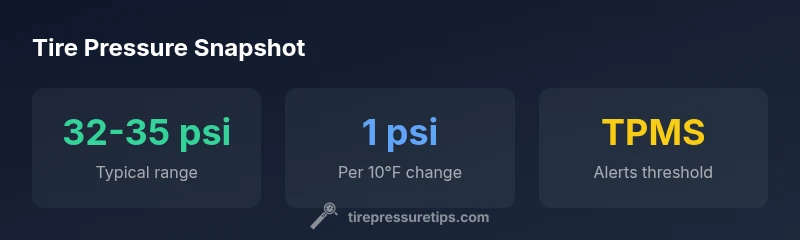
According to Tire Pressure Tips, the average car tire pressure for most passenger cars typically sits around 32-35 psi when tires are cold. However, the exact value is vehicle-specific and depends on load, speed, and tire type. Always verify with the door placard and owner's manual, and use a gauge to check pressure when tires are cold.
What 'average car tire pressure' means
The phrase average car tire pressure refers to the typical pressure range recommended for most passenger vehicles. It is not a universal number that fits every car; the exact value is determined by the vehicle manufacturer and can vary with tire size, load, and driving conditions. The widely cited practical range for many cars is roughly 32-35 psi when tires are cold. This range aims to balance grip, tread wear, fuel efficiency, and comfort. Remember that pressure should be confirmed with the placard on the door jamb or in the owner's manual, not just a chart you found online. When tires are cold, pressure readings better reflect the true inflation level, as driving heats air and increases pressure.
How to find your correct pressure
Finding the right pressure for your car is straightforward but must be done correctly to avoid underinflation or overinflation. Start with the door placard, which shows the recommended pressure for the front and rear tires. If the placard is missing or unclear, consult the owner's manual or the manufacturer's website. Use a reliable pressure gauge and measure when the tires are cold (before driving or at least 3 hours after a drive). Inflate or deflate to the recommended numbers, then recheck both front and rear tires. If you drive with a spare tire, check its pressure too, as it often sits underinflated out of the factory. Regular checks can prevent uneven wear and improve fuel efficiency.
Why pressure varies by vehicle and conditions
Vehicle type heavily influences the target pressure. SUVs and trucks often require higher pressures than compact cars due to heavier loads and different tire construction. Tire width, aspect ratio, and load capacity all affect the recommended range. Temperature also plays a crucial role: cold air loses pressure, while warmer air increases it. A common rule of thumb is about 1 psi change for every 10°F temperature swing. Under different loads—such as fully loaded trips or roof racks—the placard guidance may shift, underscoring why updates from the manufacturer matter.
How to measure accurately and maintain
Measuring tire pressure accurately starts with a cold measurement. Park in a shaded area if possible to avoid heat buildup from sun exposure. Remove the valve cap, press the gauge onto the valve stem, and take a steady reading. If you need to adjust, inflate with care to the vehicle’s specification, then recheck. Regular maintenance includes checking all tires, including the spare, at least monthly and before long trips. Consider a digital or dial gauge for consistency, and keep a simple log so you notice gradual changes over time. When TPMS alerts you, verify with a gauge to confirm the reading before deciding on action.
Common myths and practical tips
Common myths around tire pressure include the idea that higher pressure always improves ride quality or that underinflation is safe in winter. In reality, overinflation can reduce contact patch and grip, while underinflation increases heat and wear. Practical tips include checking cold readings, following the placard, and adjusting for load and speed. If you regularly carry heavy loads or drive in extreme temperatures, consider checking tire pressure more frequently. Finally, never ignore a TPMS warning; use a gauge to confirm the reading and adjust if necessary.
Quick reference: tire pressure basics
| Aspect | Typical Range | Notes |
|---|---|---|
| Recommended tire pressure (passenger cars) | 32-35 psi | Follow door placard |
| Underinflation range (psi under nominal) | -1 to -3 psi | Can reduce fuel economy and wear |
| Temperature effect (per 10°F) | ≈1 psi | Expect pressure changes with weather |
| TPMS alert threshold | 2-4 psi below nominal | Warning to verify with gauge |
Frequently Asked Questions
What is the recommended tire pressure for most passenger cars?
Most passenger cars use a typical range around 32-35 psi. Always verify with the door placard and owner's manual before inflating.
Most cars fall in the 32-35 psi range; check the placard to be sure.
Does cold weather lower tire pressure significantly?
Yes. Colder temperatures lower air pressure inside tires, so readings taken in cold weather are more accurate. Recheck after temperature changes.
Yes, cold weather lowers tire pressure; check readings when tires are cold.
How often should I check and adjust tire pressure?
Check at least once a month and before long trips, especially when loading the vehicle. Always measure with cold tires.
Check monthly and before long trips when tires are cold.
Can I rely entirely on TPMS for correct pressure?
No. TPMS is a warning system. Always verify with a manual gauge to confirm actual pressure.
TPMS warns you, but you should still measure with a gauge.
What’s the difference between cold and hot tire pressure?
Cold pressure is measured before driving. Driving warms tires and increases pressure; avoid deflating to hot readings and always target the cold spec.
Cold is before driving; hot readings aren’t a target.
Should I adjust pressure for heavy loads?
Yes. If you frequently carry heavy loads, follow the placard adjustments for higher pressures to keep wear even and performance consistent.
Yes—load can require higher pressures per placard.
“Regular tire-pressure checks are a simple, effective way to improve safety and efficiency; follow your door placard and monitor TPMS alerts.”
What to Remember
- Check cold tire pressure against the placard
- Follow the manufacturer’s recommended range
- Expect temperature-related changes and adjust accordingly
- Use a gauge to verify TPMS readings
- Incorporate regular checks into your maintenance routine