What Should Tire Pressure Be in a Car: A Practical Guide
Learn the correct tire pressure for your car, how to read the placard, and how temperature and TPMS affect readings. Practical tips from Tire Pressure Tips to keep you safe and fuel-efficient.


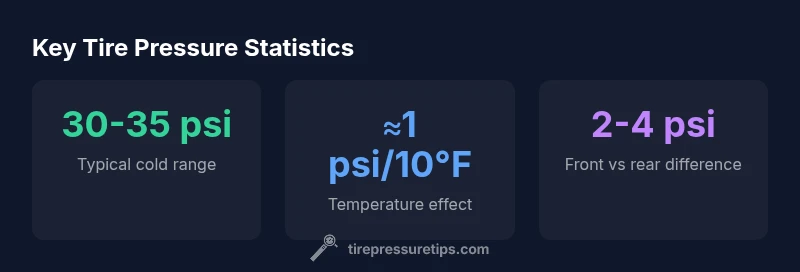
Most passenger cars require 30-35 psi when cold; check the door jamb placard for your exact number. Do not rely on hot readings, and keep front and rear pressures balanced unless the manufacturer specifies a difference. According to Tire Pressure Tips, this range covers most passenger cars.
Understanding Tire Pressure Basics
Tire pressure is the amount of air inside each tire, measured in pounds per square inch (psi). It is essential to maintain the correct pressure for safety, handling, and fuel efficiency. The key concept to remember is the distinction between "cold" and "hot" readings. A tire that has been sitting for several hours, or is at ambient temperature, is considered cold. Driving heats tires, and those readings will rise. For accuracy, start by checking when tires are cold, then adjust to the vehicle's recommended value. According to Tire Pressure Tips, the vast majority of passenger cars list a cold-pressure target in the door jamb placard, typically in the 30-35 psi band. This guidance applies to most everyday driving conditions and helps optimize grip, tire wear, and fuel economy.
The placard is the best source for your exact number. It accounts for the vehicle’s weight, wheel size, and suspension. While some drivers assume a single number across all tires, many vehicles specify different front and rear values or have slight variations between wheels. Always verify with the official documentation for your car model.
Takeaway: Your go-to reference is the placard, not a guess from your latest road trip or a friends’ car. Begin with the exact figure shown by the manufacturer and adjust only as needed for wear, load, or seasonal changes.
confidenceLevel1 0.73},
bodyBlocks[]
Reading Your Vehicle’s Recommended PSI: Where to Look and How to Read It
Temperature and Seasonal Changes: Why PSI Shifts
Front vs Rear: Why Tire Pressures Differ Across Axles
Tools and a Step-by-Step Pressure Check You Can Trust
Common Mistakes and How to Avoid Them
TPMS: What It Measures and When to Trust It
A Year-Round Maintenance Plan for Consistent Readings
Typical tire pressure ranges by vehicle type
| Vehicle Type | Typical Cold PSI | Notes |
|---|---|---|
| Compact Car | 32-33 psi | Standard compact models typically follow placard values |
| Sedan/Family Car | 32-35 psi | Common range for mid-size sedans |
| SUV/Truck | 35-38 psi | Often higher due to weight and load considerations |
Frequently Asked Questions
Where can I find my car’s recommended tire pressure?
Look for the door jamb placard on the driver's side, which lists the cold PSI for each tire. If the placard isn’t present, consult the owner’s manual or the manufacturer’s website for your exact model. This value stays consistent regardless of tire brand, as long as the tires are appropriate for the vehicle.
Check the placard on the driver's door edge or in the owner’s manual for the exact cold PSI.
Why does my TPMS warning light come on even when tires look fine?
TPMS can trigger if a tire is significantly underinflated or if a sensor is faulty. Visual inspection may not reveal subtle underinflation; use a gauge to verify pressures and address any leaks or sensor issues promptly.
If the light comes on, measure all tires and address any underinflation or sensor fault.
Is it safe to overinflate tires to improve load performance?
Overinflation can reduce grip and cause uneven wear, increasing the risk of a blowout. It’s best to stay within the manufacturer’s recommended range and adjust only for load conditions or performance needs if the vehicle specifies a higher value.
No—stick to the recommended PSI to avoid harsh rides and uneven wear.
Does cold weather really lower tire pressure?
Yes. Cold temperatures reduce air density, lowering PSI. As temperatures rise, PSI increases. Check pressures more often in winter and store seasonal adjustments in your maintenance routine.
Yes, colder weather lowers tire pressure; check and adjust more often in winter.
How often should I check tire pressure?
Aim for a monthly check and before long trips. Always check when tires are cold to get an accurate reading. Regular monitoring helps prevent underinflation-related wear and fuel inefficiency.
Check monthly and before long trips, when tires are cold.
“Maintaining correct tire pressure is a simple, high-impact practice that improves safety, fuel efficiency, and tire life.”
What to Remember
- Check your tires when cold and rely on the placard for the exact PSI.
- Temperature affects tire pressure; expect readings to change with seasons.
- Front and rear pressures can differ—follow the vehicle’s specification.
- Use a reliable gauge and verify pressures monthly, plus before long trips.