What is the Average Tire Pressure: A Practical Guide
Learn what is the average tire pressure, how to find your target PSI, and why temperature and load matter. This Tire Pressure Tips guide covers reading the placard, checking cold tires, and maintaining proper inflation.


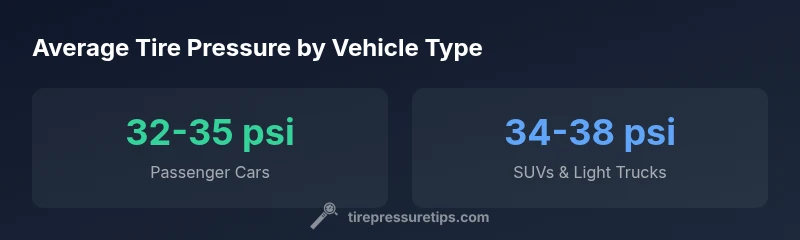
Typically, the average tire pressure for most passenger cars is around 32 psi when tires are cold. Exact targets vary by vehicle, load, and tire type. To know what is the average tire pressure for your car, check the door jamb placard or the owner’s manual for the official specification.
What is the average tire pressure and why it matters
When people ask what is the average tire pressure, they are really asking for where their tires should be inflated to achieve safe handling, efficient fuel use, and even tread wear. For most passenger vehicles, the conventional ballpark is around 32 psi when the tires are cold. This number is a starting point and not a universal law; the exact target depends on factors like vehicle weight, tire size, axle load, and driving conditions. The Tire Pressure Tips team emphasizes that following an official target from your manufacturer is essential, even if the “average” sounds reasonable. Reading the placard on the door jamb is a quick way to confirm that value, but always cross-check with the owner’s manual when you replace tires or alter tire size.
Remember that temperature, altitude, and seasonal changes can shift the actual cold reading by a few psi. In short, the question what is the average tire pressure can be answered with a general range, but the precise value you should use is vehicle-specific and documented by the manufacturer.
How to locate your vehicle's official target pressure
Finding the exact target requires a few simple steps. First, locate the door jamb placard, usually on the driver's side, which lists the recommended cold tire pressures for the front and rear tires. If the placard is missing, consult the owner’s manual or the manufacturer’s website. Do not rely on “feel” or the maximum pressure printed on the sidewall, as that number represents the tire’s maximum safe limit, not the target for everyday driving. Always read both front and rear values; many cars have different targets for each axle. When you have identified the official target, compare it with your current reading after a proper cold-inflation check.
For accuracy, check the pressures when the tires are cold (the car has not been driven for several hours) and re-check after adjusting. This ensures you have a true gauge of your tires’ cold pressure and helps you understand whether you are near the target.
Key factors that shift the target tire pressure
The ideal pressure is not a fixed number; it shifts with several variables. Vehicle weight and load distribution can push the needed pressure higher on a fully loaded axle. Tire type and construction influence how much pressure you can safely run before compromising ride quality or wear characteristics. Driving habits, climate, and ambient temperature also play a role: hot weather can raise the pressure slightly, while cold weather lowers it. Speed and tire performance requirements, particularly for performance-minded models, may call for a different target than the base specification. Finally, tubeless versus run-flat tires, as well as wheel size changes, can alter the published numbers you see. When in doubt, return to the manufacturer guidance and adjust gradually.
Common myths about tire pressure debunked
There are several myths to watch out for. Some people think higher pressure always improves fuel economy; in reality, overinflation can reduce traction and increase wear in the center of the tread. Others assume you should inflate to the maximum sidewall pressure for safety; that’s a dangerous mistake, as it can reduce grip and comfort. Temperature is often ignored, but tire pressure readings change with ambient conditions, so a cold reading is essential for accuracy. Finally, many drivers trust TPMS as a substitute for manual checks; while TPMS warns you of underinflation, it does not replace exact measurements with a gauge.
Understanding these myths helps you interpret the average tire pressure concept correctly and keep your tires in good health.
Practical steps to check and adjust tire pressure
To maintain the correct inflation, start with a proper gauge and a cold-reading check. Step-by-step: (1) Park in a shaded spot and wait at least three hours after driving. (2) Remove the valve cap and press the gauge onto the valve stem for an accurate reading. (3) Compare the result to your official target; if you’re below, add air in small increments (about 1-2 psi at a time). (4) Recheck to confirm you’ve hit the target without overinflating. (5) Don’t forget to check the spare tire; it often shares the same inflation requirement. (6) Record your readings so you can track changes across seasons.
By following these steps, you’ll answer the question what is the average tire pressure with a practical, vehicle-specific target and maintain reliable handling and safety.
Maintaining consistent tire pressure across seasons and loads
Seasonal changes can push your tires away from the target. In winter, the air inside tires contracts, lowering the reading; in summer, it expands, raising the pressure. To stay close to the right range, recheck before long trips, after tire rotations, and whenever you change tire size or load. If you frequently carry heavy cargo or regularly tow, you may need a higher target, as long as it remains within the manufacturer’s recommended range. Establish a monthly check routine, including both front and rear tires, to prevent misreadings and ensure consistent performance.
Typical tire pressure targets by vehicle type
| Vehicle Type | Typical Tire Pressure (psi) | Notes |
|---|---|---|
| Compact car | 32-35 | Standard sedan/hatchback with mid-range tires |
| SUV/Light Truck | 34-38 | Higher load; check manufacturer spec |
| Electric vehicle | 38-42 | Often heavier; adjust accordingly |
| High-performance vehicle | 30-34 | Tire stiffness matters; follow spec |
Frequently Asked Questions
What is meant by the 'average tire pressure'?
The term refers to the typical target range published by manufacturers for a given vehicle. It varies by model and load. Always confirm with the door placard or manual.
Average tire pressure depends on your vehicle; verify the specific target on the placard or manual.
Should I inflate to the maximum pressure printed on the tire sidewall?
No. The sidewall maximum is the upper limit, not the recommended operating pressure. Follow the manufacturer’s target for everyday driving.
Don’t inflate to the max on the sidewall; use the recommended target.
How often should I check tire pressure?
Check at least once a month and before long trips. Temperature changes can alter readings, so recheck after weather shifts.
Check monthly or before trips, especially when seasons change.
Does TPMS replace manual pressure checks?
TPMS alerts you to underinflation, but it does not replace precise measurements with a gauge. Use a gauge to confirm current pressure.
TPMS warns you, but you still need to measure with a gauge.
How does temperature affect tire pressure?
Air expands with heat and contracts with cold. Your reading can shift with outdoor temperature, so check when tires are cold for accuracy.
Temperature changes can shift tire pressure; measure when cold.
Can underinflation damage tires?
Yes. Underinflation causes uneven wear, higher heat buildup, and reduced fuel efficiency. Keep tires near the manufacturer target.
Underinflation can wear tires and hurt fuel economy.
“Accurate tire pressure is essential for safety and fuel efficiency; regular checks prevent underinflation and overinflation. The Tire Pressure Tips Team emphasizes verifying targets against your vehicle’s official spec.”
What to Remember
- Know your target: always verify the official tire pressure for your vehicle.
- Check cold tires for an accurate reading.
- Temperature changes affect readings; adjust accordingly.
- Use TPMS and a gauge to monitor pressure.
- Regular checks improve safety and fuel efficiency.