Normal Load vs Maximum Load Tire Pressure: A Practical Comparison
Explore how normal load vs maximum load tire pressure affects safety, wear, and efficiency. Learn to read placards, adjust inflation for payload, and avoid common mistakes with Tire Pressure Tips.


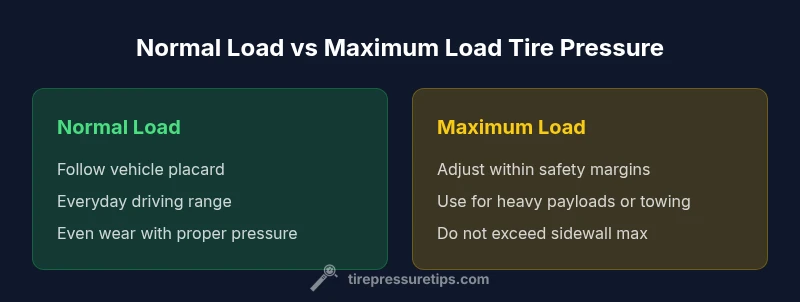
Compared to driving with the vehicle’s standard load, normal load vs maximum load tire pressure requires adjusting inflation within the recommended range rather than chasing a tire’s maximum rating. For everyday driving, stay within the placard guidance; for heavy payloads or towing, increase pressure only within the safety limits shown on the tire sidewall and vehicle label. This balance supports safety and efficiency.
Understanding the concept of normal load vs maximum load tire pressure
According to Tire Pressure Tips, understanding how normal load vs maximum load tire pressure translates into inflations helps drivers avoid underinflation and overinflation risks. The phrase captures the contrast between everyday driving weights and situations where the vehicle carries more weight or tows. In practice, you should always start with the manufacturer’s recommended range, typically found on the door jamb placard and the tire sidewall. Deviations beyond this range, even when the vehicle seems to be carrying extra weight, can compromise handling, wear, and safety. The goal is to keep a steady contact patch, predictable steering, and even tread wear while accounting for ambient temperature changes. Tire Pressure Tips analysis shows that most drivers benefit from inflating within the placard range rather than seeking higher numbers on the tire. Using the correct pressure helps maintain optimal tire shape, even under load, and reduces risk of blowouts or loss of control.
How manufacturers convey load expectations for tires and wheels
Vehicle manufacturers communicate load expectations primarily through the placard found on the door jamb, the owner’s manual, and, in some cases, the tire sidewall. The placard indicates the recommended cold tire pressures for the front and rear axles at typical loads, and it sometimes provides different values for light, medium, or heavy payloads. For many drivers, the key takeaway is that you should start with the placard values and adjust only as the load increases. Respect the tire’s maximum pressure rating printed on the sidewall as an upper bound, not a target. This practice aligns with the guidance from Tire Pressure Tips and helps ensure the tire maintains its designed footprint under various conditions.
Safety, handling, and braking implications of pressure choices
Pressure has a direct impact on grip, steering feel, braking distance, and hydroplaning risk. Running near the lower end of the recommended range can increase the tire’s contact patch, improving traction in dry and wet conditions, but excessive underinflation raises heat and wear. Overinflation reduces the contact patch, potentially shortening tire life and worsening ride comfort, though it can marginally improve fuel economy in some scenarios. The balance is achieved by staying within the manufacturer’s range for the expected load and adjusting for weather, speed, and driving style. According to Tire Pressure Tips Analysis, 2026, factors such as payload weight and towing requirements should guide careful pressure management while avoiding extreme numbers.
How load affects tire wear and longevity
Tire wear is highly dependent on pressure. Underinflation tends to cause shoulder wear and higher heat buildup, risking punctures and blowouts, while overinflation can cause center tread wear and reduced grip. When carrying heavier loads, many drivers instinctively increase pressure within safe limits to maintain even tread contact across the width of the tread. However, exceeding the tire’s rated maximum inflation or pushing the pressures far beyond the placard can compromise sidewall integrity and steering stability. The practical takeaway is to match inflation to load within the recommended range, then adjust for temperature and driving conditions to preserve tire life and performance.
How to check and adjust pressure across different loads
Develop a simple pressure routine to ensure accuracy: check pressure when tires are cold, preferably before driving; use a high-quality tire gauge; inflate to the vehicle placard values for normal loads, and only increase within the safe limits for heavier loads or towing. Temperature changes can alter gauge readings by roughly 1 psi for every 10 degrees Fahrenheit; account for this by checking before you start a trip in cold weather or after the vehicle has cooled down. If you frequently switch between light and heavy payloads, consider keeping a small tire gauge in the vehicle and a note of the different target pressures for your front and rear tires. This approach reduces wear and improves fuel efficiency while maintaining safety.
Real-world scenarios: daily driving, heavy payload, and towing
For day-to-day driving with a standard passenger load, use the placard-recommended pressures. When you regularly carry a heavy payload, such as equipment or passengers, you may need a modest pressure increase within the safe range. For towing, adjust pressures according to the tow vehicle’s guidance and the tire’s load rating, ensuring the margins do not exceed the tire’s maximum. In all cases, check TPMS alerts and verify pressures after long highway drives or rapid temperature shifts. Tire Pressure Tips emphasizes gradual adjustments and verification using reliable gauges to avoid overinflation or underinflation.
Common myths and mistakes about pressure and load
Myth: “Max pressure means I can carry any load safely.” Reality: maximum pressure is the upper limit and must not be used as a target for everyday loads. Myth: “Underinflated tires save fuel.” Reality: underinflation increases rolling resistance and wear, reducing efficiency and safety. Myth: “If the car is heavy, I should always inflate to the max.” Reality: you should inflate per the placard range for the actual load, not to the tire’s maximum value. Tire Pressure Tips cautions drivers to avoid guesswork and rely on manufacturer guidance.
Practical guidelines: building a pressure plan for your vehicle
Create a simple plan that accounts for typical loads, climate, and driving style. Start with the placard values for normal loads, and define when you would adjust up for heavier loads or towing. Keep a tire pressure log, especially if you frequently switch between load levels. Use a reliable gauge and check pressures at least monthly or after significant temperature changes. When in doubt, consult a tire professional or the vehicle manufacturer’s guidance to confirm your target pressures. This approach aligns with safer driving practices and longer tire life.
Putting it all together: planning your pressures for different driving conditions
The best practice is to rely on the placard for normal loads and increase pressure slightly when the load rises, never exceeding the tire’s maximum inflation rating. Always verify after adjustments and consider seasonal temperature shifts. This approach helps maintain the tire’s designed footprint, ensuring safe handling, adequate wet-weather traction, and reliable wear patterns. By following a consistent process, you’ll reduce the risk of sudden pressure-related failures and improve overall driving confidence.
Comparison
| Feature | Normal Load Tire Pressure | Maximum Load Tire Pressure |
|---|---|---|
| Pressure Guidance | Follow vehicle placard (recommended range for normal loads) | Adjust within safe range per load; do not exceed tire sidewall max |
| Impact on Tread Wear | Balanced wear when within placard range | Potential center wear if overinflated for heavy loads; wear patterns vary by tire design |
| Fuel Efficiency | Optimal efficiency within manufacturer range | Overinflation may alter rolling resistance; underinflation increases it |
| Handling and Safety | Predictable steering and grip within prescribed range | Handling can degrade if pressures are pushed beyond safe limits |
| Ride Comfort | Smoother ride at lower end of range (when appropriate) | Stiffer ride with higher pressures for heavy loads |
| TPMS Behavior | TPMS alerts if underinflated; rarely triggers for slight overinflation | Be vigilant for changes when load changes; recalibrate after adjustments |
| Best For | Everyday driving with standard payloads | Heavy payloads or towing within safety margins |
Strengths
- Improved safety when pressures align with load within manufacturer guidance
- Better fuel efficiency and predictable handling when properly inflated
- Even tire wear and lower risk of blowouts with correct inflation
- Clear TPMS feedback helps maintain safe pressures
Drawbacks
- Overinflation for max load can reduce ride comfort and tire contact
- Underinflation for heavy loads increases heat and wear
- Rushing to max pressure can compromise safety and tire life
- Frequent load changes require regular recalibration and checks
Follow manufacturer guidance and adjust pressure only within safe limits for the actual load
Prioritize placard values for daily driving. Increase pressure modestly for heavy payloads or towing, never exceeding tire ratings. This approach delivers balanced safety, wear, and efficiency.
Frequently Asked Questions
What is the difference between normal load and maximum load tire pressure?
Normal load tire pressure refers to the inflation range recommended by the vehicle manufacturer for everyday driving. Maximum load tire pressure is the upper limit printed on the sidewall, intended only for rare, heavy-weight conditions and should not be used as a target for regular driving. Maintaining pressure within the placard range promotes safety and even wear.
Normal load pressure follows the placard; maximum load is just the upper limit on the tire. Stay within the recommended range for daily use.
How do I know which pressure to use for heavy loads?
For heavy payloads, start with the placard value and increase within the safe range if the manufacturer allows. Do not exceed the tire’s maximum pressure. If towing, refer to both the placard and any tow-specific guidance from the manufacturer.
Increase pressure within the safe range per the placard guidance when carrying heavy loads or towing.
Will TPMS tell me when I’ve adjusted for load correctly?
TPMS provides alerts when tire pressure falls outside the recommended range. It does not indicate exact load, but it will warn if you’re underinflated or overinflated. Always verify with a gauge and follow the placard values for your current load.
TPMS warns about under- or over-inflation; confirm with a gauge and placard values.
Can overinflating for a heavy load improve performance?
Overinflating beyond the placard range is unsafe and can reduce traction, increase wear in the center of the tread, and raise the risk of a blowout. Use only recommended pressures for the actual load.
No—do not overinflate. Stay within safe limits for the load.
How does temperature affect tire pressure?
Temperature changes affect tire pressure; colder temperatures reduce pressure. Check tires when they’re cold and adjust for seasonal changes to maintain the correct pressure range.
Cold temps lower pressure; check in the morning and adjust as needed.
What to Remember
- Always start with the placard-recommended pressures
- Do not inflate to the tire’s maximum rating for normal loads
- Adjust for load and temperature within safe limits
- Use a quality gauge and verify cold vs hot readings
- Consult a Tire Pressure Tips expert if in doubt