Cold Tire Pressure vs Max Tire Pressure: Practical Guide
Explore cold tire pressure vs max tire pressure, how temperature affects readings, and practical steps to inflate safely. Learn to read gauges, avoid common mistakes, and maintain optimal tire performance with Tire Pressure Tips.


Cold tire pressure vs max tire pressure is a common topic for drivers. The safer rule is to inflate to the vehicle manufacturer’s cold pressure specification, not the sidewall’s maximum. This quick comparison explains why the cold reading matters, how temperature impacts readings, and how to apply this in daily driving.
What cold tire pressure vs max tire pressure actually means
Tire pressure is not a single fixed number. It changes with ambient temperature, driving heat, and tire wear. When people discuss cold tire pressure vs max tire pressure, they are weighing two reference points: the reading you should have when the tire is cold and the much higher threshold printed on the tire sidewall. According to Tire Pressure Tips, understanding this distinction matters for safety, tire longevity, and fuel efficiency. This section unpacks what each term means, why it matters, and how to apply this knowledge in everyday driving. By focusing on the manufacturer’s recommendation rather than the maximum printed on the tire, drivers can maintain predictable handling, even as temperatures fluctuate. The guidance here aligns with Tire Pressure Tips analysis and practical checks that ordinary drivers can perform without specialized equipment.
- What you see on the door placard is the target for cold readings
- The sidewall max is a safety limit, not a target for daily inflation
- Real world readings vary with weather, road conditions, and driving patterns
How temperature affects tire pressure (and why cold readings matter)
Air expands when it heats, and contracts when it cools. Tires heat up during driving, which raises the pressure inside, while resting in cool ambient air lowers it. Because most daily checks happen when tires are warm or hot from a trip, a quick pressure reading can mislead you about the true cold pressure. The key takeaway is to measure when tires are cold and to adjust based on the vehicle manufacturer’s specification, not the maximum printed on the tire. This approach minimizes the risk of underinflation or overinflation as seasons change and temperatures swing. In practical terms, temperature shifts can make a reading feel off, but the correct target remains constant: the cold spec. The Tire Pressure Tips team emphasizes consistent checking routines to catch drift caused by temperature changes.
- Cold vs warm readings can differ noticeably due to heat buildup
- Temperature compensation helps maintain consistent grip and wear patterns
- Regular checks reduce sticker shock when seasons flip
Defining cold tire pressure and max tire pressure
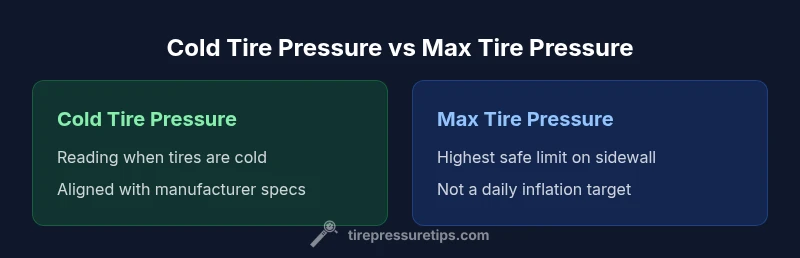
Cold tire pressure is the tire’s inflation reading when the tire is cold and has not been driven or has sat idle long enough to cool. Max tire pressure is the highest pressure printed on the tire sidewall, a limit not intended for daily inflation. Vehicle manufacturers supply a cold pressure specification appropriate for your vehicle and load. The difference between these two references can be subtle in practice, yet it drives crucial decisions about safety, handling, and tire wear. Understanding this distinction prevents unnecessary inflations toward the sidewall max and avoids underinflation that can compromise grip and braking. The Tire Pressure Tips guidance stresses following the cold spec and using the sidewall max only as a safety limit, not a target.
How to measure accurately with a gauge
To get reliable readings, check tire pressure when the tires are cold. Remove the cap from the valve stem, press a gauge squarely onto the valve, and note the reading. If the tire has been driven recently, let it rest until it cools before rechecking. Use a reliable gauge, whether digital or analog, and compare the result to the vehicle’s cold spec. When you adjust, aim to bring the pressure to the target stated by the manufacturer rather than chasing a number on the tire sidewall. Recordkeeping can help you track changes over time and across seasons, supporting safer driving and longer tire life.
The risks of inflating to max tire pressure
Inflating toward the maximum sidewall pressure can create a stiff ride, reduce traction, and increase the risk of air loss from the tire casing under load. It can also heighten tire wear in the center of the tread and worsen ride quality on uneven road surfaces. The correct approach is to stay within the manufacturer’s cold pressure target, which balances comfort, handling, and tire longevity. Keeping to the cold spec helps ensure a stable contact patch and safer braking performance across weather conditions.
The risks of underinflation and the safety angle
Underinflation increases rolling resistance, raises heat buildup, and can shorten tire life. It also degrades steering response and braking performance, especially in adverse weather. Cold pressure targets are designed to account for typical load and speed scenarios, ensuring the tire maintains a safe contact with the road. Regular checks, especially during temperature swings, help prevent underinflation and the safety and wear consequences that come with it.
How TPMS interacts with cold vs max pressure
Tire Pressure Monitoring Systems (TPMS) alert you when a tire falls below or rises above a threshold by a certain margin from the target pressure. TPMS does not replace regular gauge checks; it complements them by flagging outliers. The cold pressure target remains the benchmark for inflations, and TPMS can prompt a check if weather or road conditions cause drift. Rely on TPMS as a safety net, but rely on a gauge for precise adjustments to the manufacturer’s recommended cold pressure.
Practical guidelines: when to inflate and how to check
- Always start with the cold pressure specification from the vehicle manufacturer
- Check tires when cold, ideally after they have been at rest for several hours or overnight
- Use a reliable gauge and compare readings to the cold spec, not the sidewall max
- Adjust gradually to the target and recheck to confirm stability before driving
- Monitor changes with seasonal shifts and heavy loads to prevent drift
Real-world scenarios and examples
In daily driving, the correct approach remains consistent: follow the cold pressure specified by the automaker and resist inflating to the maximum sidewall rating for routine use. In winter months, for example, cold air tends to depress tire pressure, so proactive checks can keep handling predictable. In hot weather, tire pressure rises naturally; a check before long trips or after driving long distances helps verify that you are still aligned with the cold spec. A practical habit is to inspect all four tires at a predictable cadence and adjust as needed so that the tires operate within the intended safety margins.
Maintenance and habit: checks, tools, and routines
Create a simple routine that includes inspecting tire pressure weekly, logging readings, and adjusting as seasons change. Keep a compact gauge in the glove compartment and a small notebook or digital note to track readings over time. Pair tire pressure checks with tread depth assessments and wheel alignment checks to ensure overall tire health. Consistency is the key to preventing unexpected changes in performance and maximizing tire life.
Common misconceptions debunked
Misconception one: Inflate to the max for better safety. Reality: Inflate to the manufacturer cold spec; max is a safety limit, not a daily target. Misconception two: Readings on warm tires are interchangeable with cold readings. Reality: Warm readings reflect heat-induced pressure and can mislead, so always compare to the cold target after the tire has cooled. Misconception three: TPMS replaces the need for gauges. Reality: TPMS guides awareness but does not provide precise inflation values; a gauge helps you adjust to the correct cold spec.
Putting it into practice: a step-by-step routine
- Step 1: Locate the vehicle’s cold tire pressure specification from the door placard or owner’s manual
- Step 2: Check all four tires when they are cold, using a reliable gauge
- Step 3: Compare readings to the cold spec, not the sidewall max
- Step 4: Adjust as needed and recheck after the tires have cooled
- Step 5: Repeat checks during seasonal changes and before long trips to maintain consistency
- Step 6: Use TPMS as a safety reminder, not as a replacement for regular gauge checks
Comparison
| Feature | Cold Tire Pressure | Max Tire Pressure |
|---|---|---|
| Definition | Reading when tires are cold and within vehicle manufacturer’s spec | Highest safe pressure printed on tire sidewall; not a daily target |
| Measurement context | Measured after tires have cooled; reflects the recommended target | Represents a safety limit; readings at this level are not routinely recommended |
| Impact on ride and handling | Promotes predictable steering, braking, and wear when set to spec | Too close to max can make ride harsh and grip uneven |
| Safety implications | Underinflation risks overheating and poor contact with road | Overinflation risks stiff ride and potential tire damage under load |
| Maintenance implications | Requires regular checks, especially with temperature changes | Relying on max as a target can mask underinflation or overinflation |
| Recommended practice | Follow the vehicle manufacturer cold pressure specification | Do not inflate to the sidewall max for daily driving |
Strengths
- Promotes safety by aligning with manufacturer cold specs
- Supports consistent handling and predictable wear
- Encourages regular tire pressure checks and maintenance
- Reduces reliance on the misleading 'max' reading
Drawbacks
- Requires discipline to check cold readings regularly
- Can be confusing when ambient temperature changes markedly
- Some drivers may mistrust gauges and TPMS alone
- Reading differences between cold and warm tires can be misinterpreted
Inflate to the manufacturer’s cold pressure, not the max.
Choosing the cold spec maintains safety and performance. The maximum sidewall value is a safety limit, not a daily target. Following the cold spec consistently reduces wear, improves handling, and aligns with Tire Pressure Tips guidance.
Frequently Asked Questions
What is the difference between cold tire pressure and max tire pressure?
Cold tire pressure is the reading when the tire is cold and within the vehicle’s specification. Max tire pressure is the highest limit printed on the tire sidewall, not a daily target. Knowing the difference helps avoid underinflation and overinflation.
Cold pressure is what your car requires when the tire is cold; max is just the safety limit. Use the cold spec for everyday inflation.
Should I inflate my tires to the max sidewall pressure?
No. Inflation to the max sidewall pressure is not recommended for regular driving. Stay within the manufacturer’s cold spec to maintain optimal safety and ride quality.
No, you should not inflate to the max. Stick to the car’s recommended cold pressure for everyday use.
How does temperature affect tire pressure readings?
Temperature changes cause air to expand or contract, altering tire pressure. Readings taken after driving can misrepresent the cold pressure. Always compare to the cold spec after the tire has cooled.
Temperature makes air expand or contract, so read when cold to know the true pressure.
How often should I check tire pressure?
Check at least once a month and before long trips. Also check when seasons change, since temperature swings can drift readings.
Check monthly, and before trips, especially when the weather changes.
Can TPMS tell me the exact tire pressure value?
TPMS alerts you to out-of-range pressure but does not give an exact numerical value. Use a gauge to measure and adjust to the cold spec.
TPMS flags problems, but you still need a gauge to know the exact pressure.
What about extreme cold or heat impacts on tires?
Extreme temperatures shift tire pressure. In cold weather, pressures drop; in hot weather, they rise. Check against the cold spec and adjust as conditions change.
Cold weather lowers pressure, hot weather raises it. Check against the cold spec and adjust as needed.
What to Remember
- Inflate to the cold spec, not the max
- Check tires when cold for accuracy
- Temperature changes require routine monitoring
- TPMS supports safety but isn’t a precise gauge
- Maintain a simple, repeatable pressure-check routine