Cold Tire Pressure vs Hot: A Practical Comparison
A comprehensive, data-driven comparison of cold tire pressure vs hot readings, explaining how ambient temperature changes impact inflation, how to measure accurately, and best practices to maintain safe, consistent tire pressure.


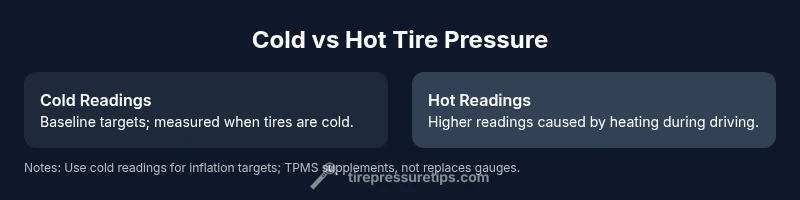
According to Tire Pressure Tips, cold tire pressure vs hot highlights how temperature changes inflate or deflate tire readings. The cold reading shows the manufacturer’s baseline; driving heat raises pressure so hot readings read higher. Inflate to the cold target, then recheck after tires cool. Treat TPMS as a guide, not a replacement for a gauge check.
The Physics Behind Cold vs Hot Tire Pressure
Tire pressure is not a fixed value; it shifts with temperature because air inside the tire behaves like a gas that expands when it heats and contracts when it cools. When tires are cold, usually at ambient outdoor temperature or after a period of rest, the pressure you measure with a gauge tends to reflect the tire's true inflation target or the vehicle's recommended cold pressure. As the tire heats up during driving, the air inside expands, increasing the pressure and causing a gauge to read higher than the cold target. This is the core reason the phrase cold tire pressure vs hot is important for drivers: readings taken after a long drive or in hot weather may appear inflated even if the physical inflation stayed the same. The Tire Pressure Tips team emphasizes that understanding this distinction helps prevent over-inflation during heat spikes and under-inflation after a cold start.
Why Temperature Causes Pressure to Change
The basic principle is simple: air expands when heated and contracts when cooled. Tires are not isolated from the surrounding environment; they transfer heat from road friction, braking, and ambient air into the air inside the tire. When the tire's temperature climbs, the air molecules gain energy and push outward, raising the internal pressure. Conversely, a cold start or cold morning reduces energy in the molecules and lowers pressure. This temperature-driven swing is normal and expected, but it can confuse drivers who rely on a single reading. Without a consistent baseline—typically the cold inflation target provided by the vehicle manufacturer—readings can imply faults where none exist. Without consistent checks, drivers may overinflate in warm weather or underinflate in cold snaps, impacting safety and performance.
How to Accurately Measure Cold Tire Pressure
The most reliable inflation check is performed when the tires are cold, meaning they have not been driven more than a few minutes or have cooled for at least three hours in stable ambient conditions. Park on a level surface, remove the valve cap, and use a high-quality gauge. Note the reading for all four tires. Compare each reading to the recommended cold inflation pressure found on the door placard or in the owner's manual. If a tire is above or below spec, adjust by adding or releasing air until the gauge matches the cold target, then recheck. Repeat for every tire. Do not inflate while the tires are hot, and do not rely solely on the TPMS reading, which can lag behind actual pressure changes. Regular checks, especially during seasonal transitions, help maintain optimal performance.
Temperature Effects on TPMS Readings and Gauge Readings
Tire Pressure Monitoring Systems (TPMS) are designed to warn you when pressure deviates from the target, but they measure relative changes rather than providing an absolute cold baseline. A TPMS reading can correspond to a hot-state pressure if the tires recently heated up, or to a cold-state pressure if the car has sat after a drive. A gauge offers a direct absolute measurement, but only if used correctly (i.e., when tires are cold). In practice, use TPMS as a supplementary alert and rely on a dedicated tire gauge during routine maintenance to ensure readings align with the manufacturer’s cold target. This dual approach minimizes misinterpretation caused by temperature swings and driving heat.
Following Manufacturer Specs: The Role of the Cold Inflation Target
The standard practice for determining tire pressure starts with a cold inflation target printed on a placard inside the driver's door jamb or in the owner’s manual. This target reflects the pressure the tire should have before heating up from normal driving. It accounts for load, vehicle type, and intended driving conditions. If you inflate while the tires are hot, you risk overinflating relative to the cold target, which can lead to harsher ride, increased wear on the center tread, and reduced ability to absorb road irregularities. The key takeaway is simple: always aim for the cold target, then re-check after a drive if you suspect an anomaly. Tire Pressure Tips endorses this standard approach as the foundation for safe, consistent inflation.
Real-World Scenarios: Morning vs After Highway Drive
In a cool morning, a parked car with four tires at the cold target will present stable readings. After a long highway trip in sun and heat, the same tires will read higher on a gauge even though the cold target hasn't changed. Drivers who depend on pressure readings to optimize fuel economy may notice small gains or losses depending on air temperature and road conditions. The key is to maintain the cold target across seasons and adjust only after measuring when cold. In dense urban traffic or heavy loads, heating may be more pronounced, making it especially important to verify cold-target compliance after the vehicle has cooled down.
Safety, Wear, and Fuel Economy Implications
Underinflation in cold conditions reduces cornering grip and increases rolling resistance, potentially lowering fuel efficiency and increasing tire wear. Overinflation due to hot readings can reduce the tire’s footprint contact patch, causing harsher ride and uneven wear. Temperature swings can therefore create misleading pressure readings if adjustments are made without regard to whether they were taken cold or hot. A disciplined approach—check when cold, use the cold target, and verify after driving if you suspect a pressure anomaly—helps preserve safety, maximize mpg, and extend tire life.
Step-by-Step Guide to Adjusting Pressure Correctly
- Park on level ground and wait for tires to cool.
- Remove valve caps and connect a gauge with a precise readout.
- Check all four tires against the cold inflation target.
- If underinflated, add air until you reach the cold target; if overinflated, release air.
- Re-check all four tires after a few minutes to ensure stability.
- Reattach valve caps and record the readings for future reference.
This routine helps ensure your tires stay within the manufacturer’s recommended range and minimizes the confusion created by temperature shifts.
Common Myths and Misconceptions
- My: Hot tires always mean overinflation. Reality: hot readings can reflect heat, not the baseline.
- My: TPMS is enough to guide inflation. Reality: TPMS warns, gauges confirm.
- My: Temperature affects only winter driving. Reality: ambient warmth and sun exposure matter too.
- My: You should always adjust to the highest reading. Reality: target is the cold specification, not the hot reading.
Seasonal and Terrain Considerations
In winter, colder outside air reduces tire pressure; in hot summer conditions, pressure can rise as tires heat up. The same principle applies to mountain driving with higher elevations, where cooling and heating cycles differ. For drivers in areas with wide temperature swings, a proactive check at the start of each season helps maintain safe inflation.
Tools and Routines for Consistency
- A reliable tire pressure gauge (dial or digital) calibrated regularly
- A gauge with a clear, stable readout
- A tire inflator with a built-in gauge or a separate air source
- A simple log to track changes across seasons
- An accessible, consistent measurement spot (shade, flat surface)
- The Tire Pressure Tips recommended routine combines gauge checks with TPMS monitoring to ensure alignment with the cold target.
Practical Checklist for Consistent Tire Pressure
- Check tires cold before driving
- Inflate to the cold target on your placard
- Re-check after a drive if you suspect a change
- Inspect tires for wear and damage during checks
- Repeat the process monthly or with seasonal changes
- Use TPMS as a safety net, not a replacement for gauge checks
- Record readings to track trends and plan maintenance
Following this checklist promotes safer handling, better fuel economy, and longer tire life by keeping tire pressure consistent despite temperature fluctuations.
Comparison
| Feature | Cold Tire Pressure (before driving) | Hot Tire Pressure (after driving) |
|---|---|---|
| Measurement condition | Cold readings taken at ambient temperature before driving | Hot readings taken after driving when tires are heated |
| Adjustment principle | Inflate to cold target first, then recheck after cooling | Avoid basing inflation decisions on hot readings; re-measure when cold |
| Reliability | Most reliable for baseline maintenance | Shows current state during/after heat; may overstate target |
| Safety impact | Prevents underinflation in cold temperatures | Reduces risk of overinflation due to heat build-up |
| TPMS guidance | Use TPMS as alert; verify with gauge | Rely on gauge for accurate cold-target alignment |
Strengths
- Helps maintain consistent, safe inflation independent of weather
- Reduces risk of uneven tire wear and poor handling
- Supports better fuel economy and tire longevity
- Provides a clear, repeatable maintenance routine
Drawbacks
- Requires periodic, hands-on checks of every tire
- Can be time-consuming in busy schedules
- Can be confused by temperature swings without a routine
Inflate to the cold target and verify after cooling; treat hot readings as a secondary check rather than a primary guide.
Cold-target inflation is the foundation for safe, predictable tire performance. Use a gauge to confirm cold readings, supplement with TPMS, and avoid inflating based on hot measurements alone. This approach minimizes misreads across seasons and driving conditions.
Frequently Asked Questions
What is the difference between cold tire pressure and hot tire pressure?
Cold tire pressure is the baseline pressure measured when tires are cold. Hot tire pressure increases as tires heat during driving, causing readings to rise. Understanding this helps prevent over- or under-inflation based on temperature.
Cold pressure is the baseline; hot pressure rises with heat from driving, so don’t inflate based on hot readings alone.
Why do tire pressures rise when tires heat up?
Heat added to the tire air makes the gas expand, increasing pressure. Friction with the road and sun exposure contribute to warming, which shifts readings from the cold target.
Heat makes the air expand, so pressure goes up after driving.
Should you inflate tires based on cold or hot readings?
Inflate based on the cold target. After inflating, drive normally and recheck once the tires have cooled to ensure you’re still near the cold specification.
Always use the cold reading as your inflation target, then recheck after driving.
How often should I check tire pressure?
Check at least monthly and before long trips, especially during seasonal changes. Always measure when the tires are cold for accuracy.
Check monthly, and before long trips, when the tires are cold.
Can TPMS replace manual tire pressure checks?
TPMS is a warning system and does not replace the need for an exact gauge measurement. Use TPMS to alert you, then verify with a gauge.
TPMS tells you something is off; a gauge confirms the exact pressure.
How should I adjust for seasonal temperature changes?
Check cold temperatures at seasonal transitions and adjust to the cold target. Temperature swings can shift readings, so re-check after cooling to maintain the right baseline.
Seasonal checks help keep tires correctly inflated despite temperature swings.
What to Remember
- Measure when tires are cold before driving
- Always use the cold inflation target from placards
- Verify readings after driving to confirm stability
- Don't rely on TPMS alone for inflation decisions
- Adopt a consistent routine across seasons