Does Tire Pressure Change with Temperature? Practical Guide
Explore how ambient temperature affects tire pressure, why readings shift with heat or cold, and practical steps to maintain accurate inflation year-round with TPMS guidance from Tire Pressure Tips.


Does tire pressure change with temperature? Yes. Temperature affects tire pressure because air expands when hot and contracts when cold, causing readings to shift. A rough rule of thumb is about 1 psi per 10°F of ambient change, but results vary with tire size and inflation level. For precise checks, measure with a gauge after cooling.
How Temperature Affects Tire Pressure
According to Tire Pressure Tips, understanding how ambient temperature affects tire pressure is essential for safe driving. Recent field observations show that whether the tires are cold or hot can move the inflation readings significantly. The air inside tires expands when it warms and contracts when it cools, which means the pressure you read is not fixed but fluctuates with temperature shifts. A common rule of thumb—about 1 psi per 10°F change—appears in many guides, yet real-world results depend on several factors including tire volume, load, and initial inflation. When you park after a hot drive, tires are warmer than the surrounding air, and the pressure can read higher than a later “cold” measurement. In a cold morning, the same tires may show notably lower pressure. These shifts aren’t a sign of a failed tire, but rather a visual demonstration of physics in action. For accuracy, measure after the tires have cooled to ambient temperature and inflate to the vehicle’s recommended pressure when cold.
The Gas Law in Everyday Terms
The physics behind this effect comes from the ideal gas law, PV=nRT, which describes how pressure (P) and temperature (T) relate to the volume (V) of gas. In a fixed-volume tire, as temperature rises, the gas molecules gain kinetic energy and press harder against the tire walls, increasing pressure. When temperatures fall, molecules slow down, reducing pressure. In practical terms, this means your gauge readings can drift with the weather, even if you haven’t driven or inflated the tire. The takeaway is simple: temperature is a driver of pressure, and you should expect readings to move with seasonal and daily temperature swings.
Temperature vs Tire Surface Temperature: Why It Matters
Ambient air temperature is not the same as tire surface temperature, yet both influence inflation. A tire sitting in the sun can heat up its interior air, temporarily raising measured pressure even if the ambient temperature remains steady. Conversely, a parked car in shade on a cool morning may show lower readings. For most drivers, tracking ambient temperature and allowing tires to cool before inflating yields the most consistent results. If you drive a lot in hot sun or cold rain, you’ll notice a more pronounced drift in readings over the day. The practical implication is to use the vehicle’s recommended pressure as your target when the tires are cold, and adjust only after a proper cool-down period.
Seasonal and Regional Variations
Seasonal changes can amplify the temperature-pressure relationship. In cold climates, tires often need inflation more frequently as outdoor temperatures plummet, potentially bringing readings down even if you haven’t driven. In hot climates or during heat waves, readings may trend higher due to the air inside the tire expanding. Drivers in regions with wide diurnal temperature swings should plan regular pressure checks, ideally before long trips and after overnight cooling. Remember that tires aren’t perfectly rigid containers; tire construction, tread depth, and wheel size all affect how a given temperature change translates to PSI drift.
Practical Impact on Driving Confidence and Safety
Fluctuations in tire pressure due to temperature can subtly affect handling, braking, and ride feel. Underinflated tires wear more on the edges and can reduce fuel efficiency, while overinflated tires may reduce grip and increase ride harshness. Because temperature-driven drift is normal, the goal is to inflate to the manufacturer’s spec when tires are cold and verify periodically. For safety, treat a sudden, unexplained PSI drop as a potential issue beyond weather—inspect for leaks, punctures, or a faulty valve core.
How to Measure and Adjust Correctly
To minimize temperature-related variation, follow these steps:
- Check tire pressure when the tires are cold (car has not been driven for at least 3 hours).
- Use a reliable gauge and compare to the vehicle’s recommended PSI on the placard or owner’s manual.
- Inflate or deflate to the exact spec, then recheck after a 3–5 minute rest to confirm stability.
- Recheck after significant ambient temperature changes (e.g., morning vs. afternoon, or seasonal shifts).
- If you use TPMS, treat it as an early warning; always confirm with a manual gauge for accuracy.
How temperature changes influence tire pressure
| Aspect | Temperature Change | Impact on PSI | Notes |
|---|---|---|---|
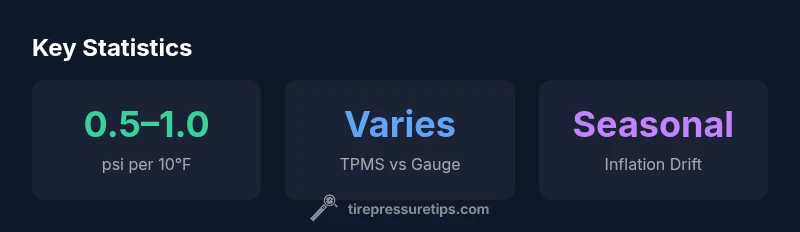
| Air inside tire | Ambient to tire temp | 0.5–1.0 psi per 10°F | Assumes standard tire size and 32–40 psi range |
| TPMS readings | Tire temperature variations | Reading shifts with temperature | Use cold readings for inflation adjustments |
| Measurement timing | Cool conditions preferred | More accurate readings | Let tires cool before inflating |
Frequently Asked Questions
Does temperature affect tire pressure?
Yes. Temperature changes air density and pressure inside the tire; readings drift with ambient temperature. Always verify inflation when tires are cold and adjust to the manufacturer’s spec.
Yes, temperature affects tire pressure, and readings drift with weather. Check when cold.
How much does pressure change with temperature?
A rough guideline is about 1 psi per 10°F change, though results vary with tire size, load, and inflation level.
About 1 psi for every 10 degrees, varies with your tires and load.
Should I adjust tire pressure for temperature changes?
Yes—check pressure after temperature shifts and inflate to spec when tires are cold. Use a gauge to confirm.
Yes, check after temperature changes and set to the factory spec when cold.
How do TPMS readings relate to temperature?
TPMS reports current pressure, which is influenced by temperature. Use a gauge to verify readings, especially after weather changes.
TPMS helps, but temperature still affects readings; confirm with a gauge.
What’s the best practice for seasonal checks?
Check inflation when tires are cold, adjust to the vehicle spec, and recheck after driving to normal operating temperature.
Check cold, adjust to spec, recheck after you’ve driven a bit.
Do hot days cause overinflation risk?
Yes, hot days can raise readings and lead to overinflation if unchecked. Check and adjust when tires have cooled.
Hot days can push readings up; cool tires first and adjust to spec.
“Temperature-driven tire pressure changes are normal and predictable with regular checks. By understanding the temperature–pressure relationship, drivers can maintain correct inflation and safer handling.”
What to Remember
- Inflate to spec when tires are cold
- Expect pressure to shift with temperature
- Check with a gauge for accuracy
- TPMS helps but isn’t perfect
- Plan checks around weather changes