Tire Pressure Change with Temperature: A Practical Guide
Learn how ambient temperature shifts affect tire pressure, when to check, how to adjust accurately, and practical tips to keep readings reliable year-round, with guidance from Tire Pressure Tips.


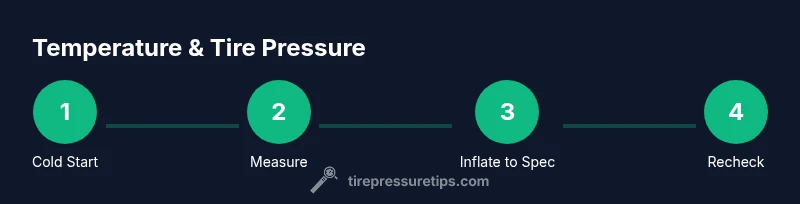
Temperature changes directly impact tire pressure. As air heats, it expands and raises the internal pressure; as it cools, pressure drops. To stay accurate, check tire pressure when tires are cold, inflate to the vehicle specification, and recheck after temperature shifts. This guide explains the why and how to manage readings confidently.
How Temperature Affects Tire Pressure
Temperature exerts a direct influence on tire pressure. When air inside the tire heats up, its molecules move more rapidly, increasing pressure within the fixed-volume tire. In cooler conditions, the opposite occurs: the air contracts and pressure falls. This is a fundamental physics principle that engineers and tire manufacturers account for in design and spec guidance. According to Tire Pressure Tips, understanding this relationship helps you interpret readings more accurately rather than chasing a single, static number all year round. The tires themselves also gain heat from road contact; as they warm, the internal air expands slightly, which can elevate gauge readings temporarily. If you park a hot tire in the sun, ambient heat can further raise readings beyond cold-start specifications. For most passenger cars, the recommended tire pressure on the placard is a cold-tire value, so the difference between a cold measurement and a hot measurement can be noticeable. The practical takeaway is simple: base inflation on cold readings and your vehicle’s stated cold tire pressure, then account for any temperature-induced swing when temperatures change. This approach keeps handling consistent and minimizes tire wear caused by under- or over-inflation.
Tools & Materials
- Tire pressure gauge(Dial or digital; ensure it is calibrated recently for accuracy)
- Vehicle tire pressure specification(Found on the door placard or in the owner's manual)
- Air pump or inflation source(Public station or home compressor; use clean, accurate gauge to verify pressure after inflating)
- Thermometer or weather reference(Optional, helps estimate ambient temperature impact on readings)
- TPMS relearn tool (if applicable)(Only needed if your TPMS requires a relearn after major changes)
Steps
Estimated time: 15-25 minutes
- 1
Check the vehicle’s cold tire pressure spec
Locate the official cold tire pressure on the placard and note the numbers for front and rear tires. This is your target when tires are cold, before any driving heats them up. If you recently aired tires or had them removed, confirm the spec with the manual or dealer if needed.
Tip: Use a cold measurement first thing in the morning or after at least three hours of no driving. - 2
Measure tires when they’re cold
Take readings when the tires are cold to avoid heat-induced overestimation. If tires have been driven recently or parked in sun, let them cool before measuring to get an accurate baseline.
Tip: If you must measure after driving, note the time and temperature, then plan to re-check after cooling. - 3
Inflate to the cold-spec pressures
Using your gauge, inflate each tire to the manufacturer’s cold-spec value. Do not overinflate beyond the spec while the tire is warm, as warm tires can maintain higher pressures temporarily.
Tip: Go slow and recheck after a minute of settling to catch any gauge fluctuation. - 4
Recheck after a temperature shift
If ambient temperature changes significantly (e.g., from a chilly morning to a hot afternoon), recheck the pressure once temperatures have stabilized. Temperature swings can alter the reading even if the tires have not been driven.
Tip: Record the readings to monitor trends over a season. - 5
Account for load and seasonal changes
Heavier loads and seasonal ambient temperature differences may require small adjustments within the allowable range. Always aim to stay close to the vehicle’s recommended cold pressure.
Tip: Avoid compensating for cold-weather with overinflation; instead re-check when conditions balance out. - 6
Maintain TPMS awareness
If your vehicle uses TPMS, remember it is an alert system. Use a manual gauge to confirm exact pressures, especially when you suspect sensor issues or after changing tires.
Tip: TPMS readings can differ from gauge measurements; rely on careful manual checks for accuracy.
Frequently Asked Questions
What causes tire pressure to change with temperature?
Tire pressure changes primarily because air expands when it heats and contracts when it cools. The tire’s air volume remains roughly the same, so ambient temperature directly affects the pressure inside. Reading a tire’s pressure should always account for these temperature effects and base inflation on cold measurements.
Temperatures make air expand or contract, which changes tire pressure; check when cold and adjust to the cold spec.
Should I inflate tires when they are cold?
Yes. Inflating tires when they are cold provides a stable baseline that matches the vehicle’s specification. Inflation based on hot readings can lead to underinflation once the tires cool.
Always inflate while tires are cold to hit the right baseline.
How often should I check tire pressure in winter?
Check at regular intervals and particularly after significant temperature drops or rapid warming periods. Keeping an accurate baseline helps prevent underinflation due to cold weather.
Check more often in winter to manage cold-induced pressure changes.
Can temperature changes cause tire failure?
Extreme or repeated underinflation due to temperature shifts can increase wear and risk of tire damage, including improper traction. Maintain recommended pressures to protect tire health.
Temperatures can contribute to tire wear if pressures are consistently off.
Does TPMS reflect temperature-corrected readings?
TPMS alerts are based on predefined thresholds and may not reflect exact cold-pressure values. Use a gauge for precise readings and rely on TPMS as a safety alert.
TPMS helps warn you, but always verify with a manual gauge for accuracy.
What should I do if my gauge and TPMS readings don’t match?
Use your gauge to confirm actual tire pressure. If there’s a persistent mismatch, inspect for leaks or sensor issues and recheck after disengaging possible sources of error.
If readings don’t match, trust the manual gauge and investigate sensor problems.
Watch Video
What to Remember
- Check cold, not after driving, for accuracy
- Inflate to the cold-spec and recheck after temperature shifts
- Temperature affects pressure; adjust with season and load in mind
- Use manual gauge to corroborate TPMS readings