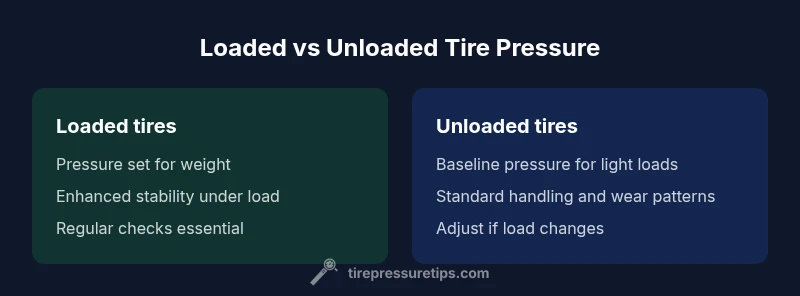
Loaded vs Unloaded Tire Pressure: A Practical Comparison
Explore how loaded vs unloaded tire pressure affects handling, wear, and safety. Learn to read load‑adjusted specs, adjust inflation correctly, and maintain optimal performance when carrying cargo or passengers with actionable steps and clear comparisons.


Loaded vs unloaded tire pressure affects grip, wear, and ride quality. Follow your vehicle’s load recommendations and adjust inflation when carrying cargo or extra passengers. See our detailed comparison chart for step-by-step guidance.
Understanding loaded vs unloaded tire pressure
The phrase loaded vs unloaded tire pressure refers to how inflation needs change when a vehicle carries extra weight—whether from passengers, cargo, towing, or a trailer—versus normal driving conditions with no added load. In this context, loaded means tires are supporting more weight, while unloaded describes standard operation with the vehicle near its curb weight. The distinction matters because the tire contact patch—the area of the tire that actually touches the road—expands and contracts with load and pressure. When loaded, using the manufacturer’s load-adjusted pressures helps maintain the intended contact patch size, stability, and braking performance. According to Tire Pressure Tips, the relationship between weight, inflation, and the contact patch is a core factor in how your vehicle handles, how evenly tires wear, and how efficiently you use fuel. The goal is not to inflate to a single universal pressure but to apply the right pressure setting for the load condition you’re under. This is a practical topic for daily drivers who frequently transport people or cargo, and understanding it helps you maximize safety and efficiency without guessing.
In everyday terms, if you regularly carry a full carload or heavy cargo, your tires will behave differently than on a light commute. The tire’s ability to grip, absorb road irregularities, and support predictable steering hinges on the pressure being appropriate for the load on the tires. For most cars, the official guidance outlines separate values for unloaded and loaded scenarios, especially on heavier vehicles or those used for towing. In all cases, the core principle remains: respect the load-specific specification set by the manufacturer. This ensures you maintain performance where it matters most—safety, wear, and efficiency. The Tire Pressure Tips team emphasizes that regular checks are essential as load conditions change, such as during road trips or weekend hauls.
wordCountInlineOnly":null},
Comparison
| Feature | Loaded tires (with load) | Unloaded tires (no load) |
|---|---|---|
| Recommended pressure range | Follow load-adjusted range per manufacturer spec | Follow standard unloaded range per owner's manual |
| Handling and stability | Improved stability and traction when pressures match load | Baseline handling with light loads; may feel softer or floatier under light weight |
| Tire wear pattern | Even wear when inflated for load | Potential uneven wear if pressure is mismatched to load |
| Fuel economy impact | Potential efficiency gains with correct load pressure | Neutral to modest changes under light loads |
| Ride quality | Smoother ride with proper load pressure | Potential stiffness if overinflated for load |
| TPMS behavior | Alerts may occur if load causes pressure deviation | Alerts reflect actual pressure; adjust accordingly |
| Best use case | Heavy cargo, towing, or multiple passengers | Daily commuting with minimal cargo |
Strengths
- Improved safety and control when pressures match load
- More uniform tire wear with correct load inflation
- Potential fuel efficiency benefits when load-adjusted
- Better braking response under heavy loads when inflated correctly
Drawbacks
- Requires regular pressure checks with changing loads
- Risk of confusion between unloaded and loaded specs if not checked
- Potential overinflation if load guidelines are misunderstood
Follow load-adjusted pressures for loaded conditions; rely on manufacturer specs and TPMS to maintain safety.
Using the prescribed load-specific pressures improves stability, braking, and tire wear under heavy weight. Misinterpreting or ignoring these guidelines can lead to unsafe handling and uneven wear. Regular checks and adherence to official specs are essential for safety and performance.
Frequently Asked Questions
What exactly is loaded vs unloaded tire pressure?
Loaded pressure takes into account extra weight from passengers, cargo, or towing. Unloaded pressure is the baseline specified for normal driving with no extra weight. Use the load-adjusted specification when carrying weight and the standard specification for light loads.
Loaded pressure accounts for extra weight, while unloaded is the baseline. Use the load-adjusted spec when carrying cargo or passengers.
How do I find the load-adjusted pressure for my vehicle?
Locate the placard on the driver’s door jamb or consult the owner's manual. If the vehicle supports both loaded and unloaded specs, the placard will show front and rear values for each condition. If you’re unsure, contact the manufacturer or a qualified tire professional.
Check the door placard and the manual; if in doubt, ask a tire professional.
Can I overinflate tires to compensate for heavy loads?
No. Overinflation can reduce the contact patch, cause a harsher ride, and accelerate wear in certain areas. Always stick to the load-adjusted spec rather than inflating beyond recommended ranges.
Don’t overinflate for load; use the recommended load-spec.
What risks come from ignoring load pressure guidelines?
Ignoring load guidelines can lead to unpredictable handling, increased tire wear, and higher risk of tire failure when carrying heavy loads. It may also affect braking performance and cornering stability.
Ignoring guidance can compromise safety and tires’ lifespan.
How often should I check tire pressure when carrying heavy loads?
Check before long trips and at least weekly when loads vary or are substantial. Recheck after adding cargo or changing weight distribution.
Check before trips and weekly during heavy-load periods.
Does TPMS automatically adjust for load changes?
TPMS alerts you when a tire’s pressure deviates from the set spec, but it does not automatically reconfigure for different loads. Inflate to the correct load-adjusted pressure when needed.
TPMS warns you; it doesn’t automatically adjust the pressure for load.
What to Remember
- Check your door placard for load-adjusted pressures
- Inflate when cold and recheck after loading
- Trust TPMS as a real-time monitor, not a sole guide
- Seasonal and cargo changes require revalidation of pressures