Low Tire Pressure vs High Tire Pressure: A Practical Guide
A detailed, data-driven comparison of low tire pressure vs high tire pressure, explaining effects on safety, handling, wear, and efficiency. Learn how to measure, adjust, and maintain pressure within the manufacturer’s specs for optimal performance.


Maintaining tire pressure within the vehicle manufacturer’s recommended range is essential. Both too low and too high pressure have costs: low increases heat, wear, and risk of blowouts; high reduces grip and causes uneven wear. In most cases, aim for the recommended PSI, adjust with temperature changes, and rely on TPMS alerts.
Understanding the pressure spectrum: low vs high tire pressure
Tire pressure exists on a spectrum rather than a simple binary. Low tire pressure and high tire pressure each affect a tire’s performance in distinct ways, with safety and efficiency hanging in the balance. For drivers aiming to optimize grip, wear, and fuel economy, understanding how each extreme behaves helps inform maintenance decisions. The keyword here, low tire pressure vs high tire pressure, captures the core contrast and the practical consequences on everyday driving. According to Tire Pressure Tips, maintaining tire pressure within the vehicle manufacturer’s recommended range is essential for predictable handling and tire longevity. Deviations from this range lead to dynamic changes in contact with the road, heat generation, and wear patterns that can escalate over time. This article uses a structured comparison to explain what to expect when pressures drift toward either end of the spectrum and how to respond to maintain safety and performance.
How pressure influences the tire structure and contact patch
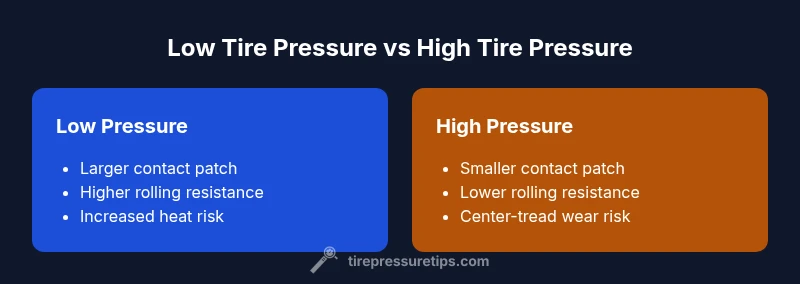
Tire pressure directly shapes the tire’s contact patch—the portion of the tire that actually meets the road. Low tire pressure tends to increase the patch size and the tire’s deformation under load, which can improve traction on some loose surfaces but also causes higher rolling resistance and excessive heat buildup. High tire pressure, conversely, reduces the contact patch, yielding quicker steering response but less grip, especially in wet conditions. Across the spectrum, changing pressure alters how the tire distributes load, how it flexes at speed, and how rapidly it will wear. The practical takeaway is simple: small changes near the manufacturer’s spec can have noticeable effects on grip, ride quality, and efficiency, while large deviations magnify those effects.
Safety implications and risk factors
Both extremes carry safety implications, though for different reasons. Underinflation raises the tire’s heat generation during driving and increases the risk of tire failure or blowouts, especially under heavy loads or high-speed driving. Overinflation can lead to a harsher ride, reduced grip, and center-tread wear, which may compromise braking and cornering performance. The TPMS serves as a warning system, but it is not a substitute for periodic manual checks, especially after temperature swings, long trips, or mounting new tires. Recognizing these risks helps prioritize checks and adjustments before driving long distances.
Handling, stability, and performance
Tire pressure has a direct impact on handling balance and stability. Low pressure generally yields a softer ride but can feel imprecise in steering response and cornering due to wallowing and deformation. High pressure sharpens steering and improves response but tends to reduce grip on wet or uneven surfaces and increases the likelihood of center-tread wear. For most drivers, staying within the manufacturer’s recommended range supports predictable handling, balanced grip, and safer braking performance across a variety of road conditions.
Fuel economy and wear patterns
Rolling resistance increases when tires are underinflated, reducing fuel economy and elevating wear on the tire shoulders due to uneven flexing. Overinflation can lower rolling resistance, offering a modest fuel-saving effect but at the cost of reduced grip, increased risk of damage from potholes, and faster center-tread wear. The best practice is to maintain pressure within the recommended range to optimize both fuel efficiency and tire longevity. Regular checks—especially after temperature changes—help sustain an optimal balance between rolling resistance and traction.
Temperature effects and seasonal considerations
Ambient temperature has a meaningful impact on tire pressure. Colder conditions tend to reduce pressure, while warmer conditions increase it. If you drive across seasons or through temperature swings, pressure readings can drift. It’s prudent to check pressures when tires are cold and recheck after a few miles of driving, especially when temperatures have changed significantly. This approach helps keep you within the recommended band and avoids safety and wear issues associated with extreme pressures.
Vehicle-specific considerations and load management
Front and rear tires can have different pressures depending on load distribution, axle configuration, and tire type. Heavier loads or aggressive driving can require adjustments within the manufacturer’s range. It is essential to consult the owner’s manual and the door jamb label for model-specific guidance, and to consider seasonal loads (e.g., extra cargo, towing) when planning pressure adjustments. Consistency across tires also matters for balanced handling and even wear.
TPMS, gauges, and measurement best practices
Relying on the TPMS alone is insufficient for precise pressure management. Use a proper tire gauge and check pressures when the tires are cold. Record readings and compare with the manufacturer’s recommended PSI on the label or manual. If a TPMS alert occurs, verify with a physical gauge and adjust as needed, then reset the system if your vehicle requires it. Maintaining a small log can help you notice gradual drifts before they become safety concerns.
Step-by-step guide to set and verify pressure
- Locate the recommended PSI on the door jamb label or owner’s manual. 2) Check tires when cold using a calibrated gauge. 3) Adjust each tire to the recommended range, using a goal to stay comfortably within the band. 4) Recheck after driving a few miles to account for warmth. 5) If TPMS shows a low reading, remeasure and adjust accordingly. 6) Repeat monthly and before long trips, especially when temperatures shift.
Debunking myths and common misconceptions
Common myths include that higher pressure always means better fuel economy or that low pressure guarantees improved traction in snow. In reality, both extremes can be dangerous, and the real answer lies in staying within the manufacturer’s spec and adapting to conditions with caution. Always rely on tested tools, official guidelines, and professional advice when in doubt.
Practical decision framework for daily driving
A practical framework starts with the manufacturer’s recommended range, then accounts for load, speed, weather, and road conditions. If you’re frequently carrying heavy loads or encountering hot pavement, you may need temporary adjustments within the spec. Avoid chasing the perfect number outside the approved range, and prioritize consistent checks, safe driving, and tire health.
Maintenance checklist and quick-start routine
- Check cold tire pressures monthly and before road trips. - Inspect tires for wear, cracks, and embedded objects. - Use TPMS readings as a cross-check rather than the sole guide. - Note temperature changes and adjust accordingly. - Replace tires when wear indicators alert or tread depth is too low.
Comparison
| Feature | low tire pressure | high tire pressure |
|---|---|---|
| Contact patch size | larger and more deformed under load | smaller and stiffer footprint |
| Safety risk | higher risk of heat buildup and blowouts under load | risk of reduced grip and potential center-tread wear in some cases |
| Ride quality | softer ride with more flex; more squirm on highway | |
| Wear pattern | edge wear and uneven wear with heavy load | center tread wear with excessive inflation |
| Fuel economy | lower fuel efficiency due to higher rolling resistance | |
| TPMS behavior | more frequent alerts with small leaks; easier detection | |
| Best use case | balanced everyday driving within OEM specs; caution at extremes | |
| Recommended range adherence | should stay within manufacturer band |
Strengths
- Promotes regular pressure checks and maintenance
- Supports safer handling and consistent wear when kept in range
- Can improve fuel economy when pressures are near the recommended level
- Reduces risk of tire failure and blowouts by avoiding extremes
Drawbacks
- Both extremes increase risk if ignored or misread
- TPMS is not perfect and may miss slow leaks
- Overreliance on TPMS can delay manual checks
- Conscious adjustments may be inconvenient for casual drivers
Maintain within the manufacturer’s recommended range for best overall safety and efficiency.
The Tire Pressure Tips team recommends staying within the OEM-recommended PSI, with adjustments for load and temperature. This avoids the risks and wear patterns associated with both low and high tire pressures and supports balanced handling and tire longevity.
Frequently Asked Questions
What is the recommended tire pressure range for most passenger cars?
The recommended range is specified by the vehicle manufacturer and displayed on the door jamb label or in the owner’s manual. It varies by model, load, and tire size. Always aim for pressures within that range rather than chasing higher or lower values.
Check the door jamb sticker or manual for your exact PSI, and keep tires within that range for safety.
Does lowering pressure improve traction on snow or ice?
Lower pressure can increase the contact patch on soft surfaces, which may feel like better grip in some scenarios, but it is not a reliable or safe traction solution. Use appropriate winter tires and driving cautiously in cold conditions.
Don’t rely on low pressure for traction; choose proper winter tires and drive safely.
What happens if I overinflate my tires beyond the recommended range?
Overinflation reduces the contact patch, can cause center tread wear, and may worsen grip on wet surfaces. It also increases the risk of damage from impacts and a harsher ride.
Overinflating can hurt grip and wear; keep within range for safer handling.
How often should I check tire pressure?
Check at least once a month and before long trips. Temperature changes and recent tire or road work can cause readings to drift, so routine checks help maintain safety and efficiency.
Check monthly and after temperature shifts or road trips.
Can TPMS miss slow leaks?
Yes. TPMS can miss gradual leaks or small deltas, so periodic manual checks with a gauge are still important to catch slow losses.
TPMS helps, but you should still check with a gauge regularly.
Is there a safe way to adjust pressure for load or speed?
Yes. Adjust within the manufacturer’s recommended range when carrying extra load or driving at highway speeds, and ensure the tire pressure is rechecked after adjustments.
Yes—stick to the label and adjust as needed within that range.
What to Remember
- Check cold tires against the door jamb label first
- Avoid sustained pressures outside the manufacturer range
- Temperature changes require rechecking pressure
- TPMS alerts are helpful but not a substitute for gauges
- Regular maintenance saves wear, fuel, and safety costs