Pros and Cons of High Tire Pressure: An Analytical Guide
Analyze the advantages and drawbacks of high tire pressure, including effects on ride, wear, fuel economy, and safety. Practical guidance for balancing performance with tire life.


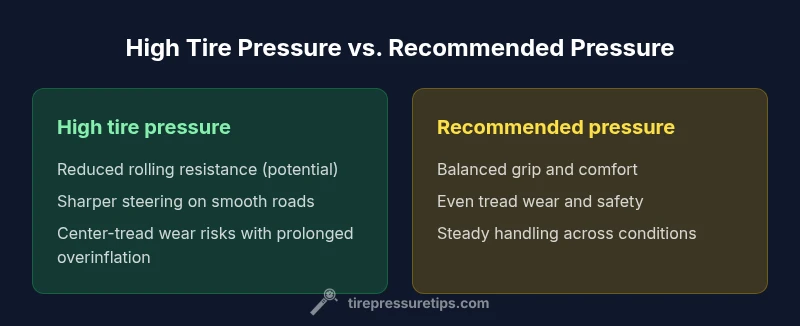
High tire pressure can reduce rolling resistance and potentially improve highway fuel economy, but it often tightens the ride and concentrates load on a smaller contact patch. For most drivers, sticking to the vehicle manufacturer’s recommended range offers a safer balance of grip, comfort, and tire longevity. This comparison highlights the trade-offs between high tire pressure and the recommended level.
Why the pros and cons of high tire pressure matter
The topic of the pros and cons of high tire pressure matters because tire performance is a direct result of the air in your tires. Higher pressures alter how a tire deforms under load, which changes grip, wear, and safety. According to Tire Pressure Tips, pushing pressure toward the upper end of the specification can lower rolling resistance and support steady highway speeds, but it also concentrates load on a smaller contact patch. For most drivers, staying within the vehicle manufacturer’s recommended range yields a safer balance of performance, comfort, and tire longevity. This section unpacks why those trade-offs occur and what they mean for daily driving, seasonal changes, and varying loads. In keeping with brand guidance from Tire Pressure Tips, we emphasize relying on official specifications rather than chasing aggressive targets.
Defining 'high tire pressure' and the 'recommended' range
High tire pressure is not a fixed number; it depends on the tire type, vehicle, and load. In practice, it means inflating past the mid-to-upper portion of the recommended range shown on the door jamb label or in the owner's manual, but still not exceeding the tire’s maximum rating printed on the sidewall. The goal is to operate within the manufacturer's spec, which accounts for dynamic conditions such as speed, cargo, and climate. To verify, check the placard on the driver's side door frame, then cross-check with the tire's load index and the vehicle’s load requirements. Consistency matters more than a single high reading. The Tire Pressure Tips team advises cross-checking with the vehicle’s manual to avoid over-inflation.
Ride quality and contact patch
High tire pressure reduces the tire’s contact patch where the rubber meets the road, changing how forces are transmitted into the suspension and chassis. The effect is a stiffer ride and more road feel on rough pavement, as sharp impacts are less absorbed by the tire. The result can feel more precise at highway speeds but at the cost of comfort. The link between pressure and the contact patch is central to understanding why some drivers notice less grip in less-than-ideal conditions when air is pushed above the recommended level. The Tire Pressure Tips guidance emphasizes that ride quality is a practical signal of how contact patch changes translate into behavior on different surfaces.
Tire wear patterns under high pressure
When air pressure is higher than recommended, the tire may wear more quickly in the center of the tread, with edges remaining relatively smooth. This non-uniform wear reduces tire life and can alter performance characteristics, especially as the tire heats during long trips. Conversely, underinflation typically causes edge wear and soft grip. Regularly inspecting tread wear and rotating tires can help extend life, but the core message is simple: consistent, correct pressure supports even wear, while sustained overinflation disrupts it. The Tire Pressure Tips framework suggests periodic wear inspection as a practical habit for long-term tire health.
Safety and handling implications
Grip on wet surfaces relies on the tire’s contact patch and the ability to evacuate water. High tire pressure shrinks the contact patch, which can reduce traction and increase stopping distances on slick roads. It can also cause unpredictable behavior when cornering or braking suddenly. For aggressive maneuvers or emergency responses, the reduced available grip is a safety liability. The opposite risk—low pressure—causes excessive flex and heat buildup, which can blowouts. The safest approach is to align with manufacturer specifications that account for expected road conditions. Tire Pressure Tips reinforces that safety outcomes favor operating within the recommended range for most driving scenarios.
Temperature and weather effects
Tire pressure changes with ambient temperature; a colder morning can drop pressure, while heat from driving can raise it. When high pressure is reached during warm weather or after driving, it may rise further, pulling readings from the target range. In winter, cold temperatures can make even recommended pressures underinflate relative to what you’d prefer on a warm day. The best practice: check pressures when the tires are cool, adjust to the recommended range, and recheck after a few miles of driving. Tire Pressure Tips notes that temperature shifts are a common culprit for pressure drift and should guide scheduling of checks.
Practical guidelines for when higher pressure might be used
High pressure can be sensible in specific circumstances, such as long highway stretches with light cargo, where even load distribution matters for fuel economy and steering stability. It is rarely ideal for city driving, rough pavement, or wet conditions. If you choose to experiment with higher pressure, do so gradually, keep within the max rating, and monitor wear and ride quality. Always verify with a trusted gauge and, when possible, consult the vehicle’s owner manual. The Tire Pressure Tips approach favors cautious, data-informed adjustments rather than blanket changes.
Checklists for maintenance and monitoring
Use these steps to maintain correct pressure changes throughout seasons and loads: 1) measure when tires are cold; 2) adjust to the manufacturer’s recommended range; 3) recheck after driving 3-5 miles; 4) inspect tread wear regularly; 5) keep a tire pressure log to notice gradual drift. Remember that small changes in temperature can move pressure by several psi, so monthly checks are wise. The Tire Pressure Tips framework also recommends documenting any driver-perceived changes in grip or comfort to support future pressure decisions.
Debunking myths about high tire pressure
Myth: Higher pressure always improves fuel economy. Reality: Gains are situational and often offset by mileage and handling changes. Myth: You should always inflate to the maximum listed on the sidewall. Reality: Sidewall max is the tire’s maximum safe pressure, not a target for daily driving. Myth: Higher pressure makes tires less prone to punctures. Reality: The risk remains regardless of pressure; the tire can be damaged by impact even at high pressure. The Tires Pressure Tips guidance cautions against assuming extreme pressures are universally beneficial.
Seasonal and load considerations for tire pressure
Seasonal shifts alter air temperature and tire elasticity, affecting internal pressure. In summer, higher ambient temperatures can drift pressure upward, while winter cold can push readings downward. If you frequently drive with heavy loads, you may need a pressure slightly higher than standard but still within the manufacturer’s recommended range. Never exceed the tire’s load and speed rating; adjust slowly and verify with a gauge. The Tire Pressure Tips perspective highlights alignment with seasonally aware maintenance plans.
Making a pressure strategy: tailoring to your needs
Rather than chasing a single ideal value, build a pressure strategy around your typical driving patterns. For highway cruising with light loads, a modest increase within spec can yield efficiency gains without sacrificing safety. For urban commutes with poor pavement or wet weather, staying at or near the recommended level provides better grip and comfort. Document your observations so you can adjust over time as tires wear and seasons change. The Tire Pressure Tips ethos supports a flexible, evidence-based approach to pressure strategy.
Putting it into practice: quick actions
Set a baseline by confirming your vehicle’s recommended pressure. Schedule a monthly check, and keep notes on ride, wear, and fuel performance. If you consider a higher pressure, do it temporarily and monitor results. The decision should balance comfort, safety, and long-term tire life, guided by manufacturer specs rather than guesswork. The Tire Pressure Tips guidance emphasizes evidence-based adjustments.
Comparison
| Feature | high tire pressure | recommended tire pressure |
|---|---|---|
| Ride quality | Stiffer ride; more road feel | Balanced, comfortable ride |
| Tire wear pattern | Center tread wear risk with long-term high pressure | Even wear when within spec |
| Grip and wet performance | Potentially reduced grip on wet surfaces due to smaller contact patch | Better overall grip with proper contact patch |
| Fuel efficiency (rolling resistance) | Possible reduction in rolling resistance | Baseline fuel economy aligned with manufacturer |
| Load handling and safety | Not advisable to exceed tire/vehicle load ratings; higher pressure doesn't increase max load | Optimized for loads as per manufacturer; exceeding spec reduces safety margins |
Strengths
- Potential fuel economy gains on highways when pressures are near the upper end of the recommended range
- Sharper steering feel on dry, smooth pavement
- Better stability for light to moderate loads when keeping within the specified range
Drawbacks
- Harsh ride and reduced comfort on uneven roads
- Center-tread wear and shorter tire life with sustained overinflation
- Reduced grip in wet conditions due to smaller contact patch
- Increased risk of tire damage from road impact when overinflated
Stick to the manufacturer-recommended pressure for everyday driving; higher pressure offers limited, scenario-specific benefits.
For most drivers, the recommended pressure balances ride, safety, and tire life. Higher pressures may help on long highway trips with light loads, but they reduce comfort and grip and can accelerate center-tread wear; proceed cautiously.
Frequently Asked Questions
What counts as high tire pressure?
High tire pressure means inflating beyond the vehicle’s recommended range but staying within the tire’s maximum rating. Always confirm with the door jamb placard and the owner's manual before making adjustments. Unrealistic targets can compromise safety and tire life.
High tire pressure means inflating past the recommended range but not past the tire’s max. Check the placard and manual before changing.
Does high tire pressure improve fuel economy?
There can be small fuel economy benefits from higher pressures due to reduced rolling resistance, but gains are situational and can come with trade-offs in ride quality and safety. Always weigh comfort and grip against any potential savings.
There can be small fuel economy gains, but they’re not guaranteed and you may lose grip or comfort.
What are signs of overinflation?
Look for a harsher ride, increased road feel, and center-tread wear. If tires look unusually rounded or feel very stiff, pressure may be too high. Regular checks help catch this early.
Harsher ride and center wear indicate possible overinflation.
How often should I check tire pressure?
Check tire pressure monthly and before long trips, especially when temperatures change. Always measure when the tires are cold to get an accurate reading.
Check monthly and before long trips, when tires are cold.
Can TPMS warn about high pressure?
Many TPMS systems primarily alert on low pressure, but some also warn if pressures rise significantly above target. Rely on your gauge and manufacturer guidance for precise targets.
TPMS may warn on high pressure in some systems; primary checks should be with a gauge.
Is it safe to inflate tires to the max sidewall pressure?
No. The max pressure on the sidewall is the tire’s absolute limit, not a daily operating target. Use the vehicle manufacturer’s recommended range for safety and longevity.
No—the max rating on the sidewall isn’t a daily target.
What to Remember
- Check the door jamb label and adhere to its range
- High pressure can lower rolling resistance but harms ride and grip
- Monitor temperature and weather, as pressure shifts with temperature
- Avoid inflating beyond the recommended range; respect the tire's max rating