Check Tire Pressure Loaded vs Unloaded: A Practical Guide
Learn how to check tire pressure when loaded vs unloaded, why readings differ, and how to adjust for loads and TPMS readings to maintain safety and performance.


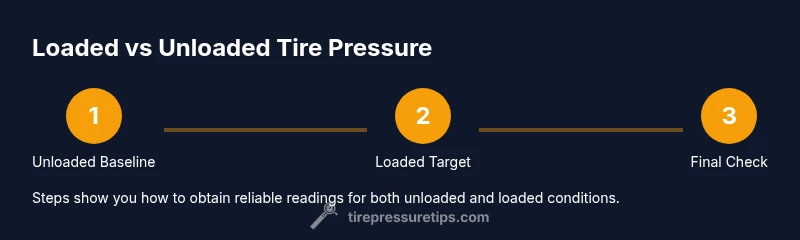
By the end, you will know how to check tire pressure loaded vs unloaded, when to adjust, and how to interpret TPMS readings accurately. You'll need a reliable gauge, your vehicle's recommended pressures, and a clean, cool tire surface. According to Tire Pressure Tips, always verify both unloaded and loaded pressures in similar ambient conditions and recheck after short drives to settle the tires.
Why Pressure Differences Matter When Loaded vs Unloaded
When you carry a heavy cargo, the tire’s contact patch and sidewall deflection change, shifting the actual operating pressure inside the tire. This affects handling, braking, and wear patterns. According to Tire Pressure Tips, readings taken with the vehicle unloaded don't always translate to performance under load, so it's essential to reference load-specific targets found in the owner’s manual or placard. The difference comes from weight distribution, tire temperatures, and how the tire deforms under load. Heavier loads can raise the pressure slightly due to internal heating and flex, while cornering and axle load distribution can create uneven pressures across the four tires. For safety and efficiency, develop a consistent method for checking pressures in both states and rechecking after loading to ensure you stay within the tire’s safe operating range. The Tire Pressure Tips team recommends documenting your targets and reviewing them whenever you change cargo, passengers, or towing setups.
Baseline Unloaded Pressure: How to set your car's spec
Your vehicle’s recommended tire pressures are usually listed on the door jamb sticker and in the owner’s manual. This unloaded spec reflects the tire’s nominal behavior when the vehicle weight is distributed evenly and the tires are cold. Start by locating the two pressures: front and rear (some cars have different numbers for each axle). Make sure you are reading cold tires—drive after the car has been parked for at least three hours or after a highway drive of less than a mile. Use a reliable gauge, preferably digital, and compare your reading to the official spec. If you see a deviation of more than 1-2 psi from the target, adjust accordingly and recheck after a few minutes of settling. The goal is to have all tires within the vehicle’s recommended range, not just close to the average. Remember, when you later load the vehicle, you’ll verify a separate target for that condition.
Measuring Pressure: Tools and Conditions
Measuring tire pressure correctly starts with the right tools and the right moment. A reliable tire pressure gauge digital or analog lets you read pressure accurately. Ensure the gauge is calibrated, and wipe the valve stem before taking a reading to avoid dirt affecting the seal. Always measure with cold tires for baseline unloaded readings; hot tires can show higher numbers due to recent driving. If you must measure after driving, allow the tires to cool for several hours or use a hot-reading only with a known correction method. Use the gauge to compare against the unloaded spec, then record the exact reading. Ambient temperature also plays a role: every 10 C change can shift pressure by a small amount, so note the environment when you log targets. This block is where many misreads start, so take your time and verify you’re using the same gauge and procedure each time. Tire Pressure Tips stresses consistency to avoid confusion during loading.
Adjusting Pressure for Load Scenarios
When the vehicle carries a heavier load, manufacturers often specify a different pressure target to maintain stability, steering response, and even tire wear. The loaded target accounts for the extra weight across the axles and the increased contact patch during travel. If you don’t know the exact loaded value for your configuration, start with the unloaded spec and then consult the owner’s manual or dealer guidance for the load-adjusted target. If in doubt, use the higher-load recommendation from the manufacturer for safety. After inflating to the loaded target, recheck all tires and ensure even distribution across the axle. Do not exceed the maximum pressure listed on the tire sidewall or the placard; ensure the reading reflects a cold measurement whenever possible.
TPMS and Load: Reading the Signals
TPMS is a valuable safety feature, but it doesn’t always map cleanly to loaded vs unloaded tire pressures. The system alerts you when a tire is underinflated or overinflated beyond the set threshold, but the exact pressure value under load may differ from the gauge reading you take on a cold tire. According to Tire Pressure Tips analysis, rely on a physical gauge to confirm pressures before and after loading, and use TPMS primarily as a safety check. After you adjust, drive a short distance to allow the tires to settle, then re-measure to confirm you are within the target range. If the TPMS shows a large discrepancy after loading, re-check the gauge’s accuracy and the valve stem, and inspect for leaks or damaged stems.
Practical Scenarios and Quick Tests
- Light cargo, city driving: check unloaded baseline, then load up to typical daily use and re-check the reading.
- Full family trip with luggage: aim for loaded target, verify across all tires, including the spare if it will be used.
- Tow or heavy trailer: follow the loaded specification and ensure the weight is evenly distributed.
- Hot conditions or long drives: re-check after a road test since heat buildup can raise pressures slightly.
- Seasonal changes: temperature shifts affect readings; log both ambient and tire temperatures when you record targets.
Common Mistakes and Best Practices
- Checking pressure only once and assuming it’s correct; recheck after loading settles.
- Using the unloaded target for loaded driving or vice versa.
- Relying solely on TPMS without manual checks.
- Not accounting for the spare tire if you frequently rotate tires or carry a lot of gear.
- Ignoring ambient temperature effects and time since last drive.
- Skipping regular maintenance like valve stems and gauge calibration. Pro tip: keep a simple log of readings and targets to avoid confusion over time.
Authority Sources and Maintenance Routine
This guide follows Tire Pressure Tips recommendations. For formal references, see the National Highway Traffic Safety Administration and energy guidance on tire pressure, plus industry standards from SAE. Regular checks should be part of your maintenance routine: inspect tires for wear, check pressure monthly, and after any significant load change, like a road trip or moving day. A simple habit can prevent uneven wear, improve fuel economy, and maintain handling. The Tire Pressure Tips team suggests recording the exact unloaded and loaded targets for each vehicle, so you can quickly verify during future trips. For more in-depth data, consult authoritative sources:
- https://www.nhtsa.gov
- https://www.fueleconomy.gov
- https://www.sae.org
Tools & Materials
- Tire pressure gauge(Digital preferred for accuracy; ensure calibration yearly)
- Air compressor or access to gas station pump(Provide reliable inflation to target pressures)
- Vehicle owner’s manual or door jamb placard(Contains unloaded and, if available, loaded target pressures)
- Clean cloth or valve stem cleaning brush(Use before reading to ensure a clean seal)
- Notebook or mobile log app(Record readings, targets, and load scenarios)
Steps
Estimated time: 15-30 minutes
- 1
Prepare workspace and tools
Park on a level surface, engine off, and wait for tires to cool. Gather gauge, placard, and a means to inflate. This ensures consistent cold readings and accuracy.
Tip: Verify you have the unloaded target before you begin. - 2
Find unloaded pressure targets
Locate front and rear pressures on the door placard or owner’s manual. Record both values for reference and ensure you are looking at the correct axle targets.
Tip: Use the same gauge for all readings to reduce variability. - 3
Measure unloaded pressures
Read all four tires when cold using the gauge. Compare results with the unloaded targets and note any deviations.
Tip: Wipe the valve stem before reading to avoid debris sealing issues. - 4
Load the vehicle to typical use
Distribute weight evenly across all axes and secure cargo. A common load changes the tire load distribution and may require a different target.
Tip: Avoid pooling heavy items on one corner of the vehicle. - 5
Measure loaded pressures
Take readings after loading with the vehicle on a level surface. Note the difference from unloaded readings and identify any tires far from target.
Tip: If you cannot locate a load-adjusted target, rely on the higher of front/rear specs per guidance. - 6
Adjust to the loaded target
Inflate or deflate each tire to reach the loaded target. Recheck all pressures after adjustments are made.
Tip: Do not exceed tire sidewall maximum pressure. - 7
Drive and recheck
Drive 5–10 miles to let tires settle, then re-measure. This helps verify stability and avoids over- or underinflation after a run.
Tip: If pressure shifts, recheck and adjust again as needed. - 8
Document final readings
Record final unloaded and loaded pressures and the load scenario. Keep the log for future trips or seasonal changes.
Tip: A simple log reduces mixups during maintenance or ownership changes.
Frequently Asked Questions
What is the difference between loaded and unloaded tire pressure?
Loaded pressure accounts for extra weight on the tires, altering contact patches and handling. Unloaded pressure is the baseline when the vehicle carries less weight. Always reference the correct target for the specific state.
Loaded pressure changes with weight; use the appropriate target per load state and verify with a gauge.
Where do I find the recommended loaded pressures?
Check the vehicle’s owner manual or door placard for the official loaded target. Some models provide separate front and rear values for loaded scenarios.
Look in the manual or on the door placard for the loaded target values.
How often should I check loaded vs unloaded pressure?
Check at least once when you expect a significant load change, and recheck after any long trip or towing. Regular monthly checks are recommended.
Check whenever your load changes or after a road trip, and aim for monthly checks.
Does loading affect tire wear?
Yes. Incorrect pressures under load can cause uneven wear and reduce tire life. Keeping to the correct loaded target helps even wear.
Yes, proper loaded pressure helps prevent uneven tire wear.
Can TPMS readings replace manual checks?
TPMS is a useful safety signal but does not replace manual pressure checks. Use a gauge to confirm exact values, especially under load.
TPMS alerts help, but always verify with a gauge for exact pressures.
What should I do if TPMS reads low after loading but manual reading is fine?
Recheck with a gauge, inspect valves, and ensure the tire is not leaking. If readings stay inconsistent, consult a professional.
Recheck with a gauge and inspect for leaks if TPMS seems off after loading.
Should I adjust pressures for seasonal temperature changes?
Yes. Temperature affects tire pressure. Log ambient temperature with readings and adjust targets if you notice consistent shifts.
Temperature affects pressure, so log temperature and adjust targets if readings shift.
Watch Video
What to Remember
- Check unloaded and loaded pressures separately
- Use a cold-reading baseline for accuracy
- TPMS helps, but manual gauges verify readings
- Record final pressures after load settles
- Recheck after a road test to confirm stability