Low Tire Pressure Winter Troubleshooting: Quick Guide
Urgent, practical guide to diagnosing and fixing low tire pressure in cold weather. Learn checks, TPMS basics, and safe inflation steps for winter driving.


Low tire pressure in winter is a common safety risk. Check all tires when cold, inflate to the vehicle’s recommended PSI, and inspect for leaks or TPMS faults. If the warning persists after adjusting pressure, seek professional help to avoid flats or blowouts on icy roads. Act quickly; in winter, cold temperatures can magnify this risk and reduce traction.
Why Winter Low Tire Pressure Happens
In winter, tire pressure drops as air inside contracts with cold temperatures. The Tire Pressure Tips team notes that temperature swings can create readings that aren’t reflective of the tire’s actual condition, especially after a cold night or prolonged exposure to freezing air. When you drive, friction and heat temporarily raise PSI, but as tires cool again the pressure falls. This cycle makes winter readings tricky and increases the risk of underinflation that undermines fuel efficiency and handling on slick surfaces. According to Tire Pressure Tips, the best defense is to check tires when they are cold and compare measurements to the vehicle's recommended PSI on the door placard or in the manual. Maintaining consistent pressure in winter reduces uneven tread wear, improves braking response, and lowers the chance of a sudden loss of air. In 2026, drivers who adopt a proactive schedule report fewer flats, better mileage, and greater confidence on ice and snow.
How to Safely Check Tire Pressure in Freezing Temps
The safest way to measure is when tires are cold—ideally after resting for three or more hours or before you’ve driven. Start by locating the official PSI spec, usually on the driver’s door jamb or in the owner’s manual. Use a reliable gauge (dial or digital) and take readings on all four tires; don’t forget the spare if you regularly carry one. If you’re using a gauge, calibrate it against a known good reference before each check to avoid systematic errors. In cold weather, even small discrepancies matter. After you record PSI, inflate or deflate to match the spec, then recheck to confirm accuracy. If the reading is far from spec, you may have a leak, a damaged valve stem, or a slow puncture. In those cases, plan a tire service appointment promptly to avoid driving on underinflated tires through winter storms.
The Critical Role of Temperature on PSI
Temperature directly affects air pressure in tires. As ambient air cools, the gas inside contracts, reducing PSI even if the tire’s load remains constant. Conversely, a long run or bright sun can raise pressure slightly, but the effect of cold spells in winter is more pronounced. This is why winter tire pressure management should be more proactive than at other times of year. The Tire Pressure Tips team emphasizes that a missing or off reading during cold mornings is not just a number—it's a safety signal. Low pressure reduces a tire’s contact with the road, diminishes steering precision, and increases rolling resistance, which can impact fuel economy and miles per gallon during winter driving. Regular checks are essential, especially when nighttime temperatures plunge or when you park outside for extended periods.
How to Read TPMS Readouts in Cold Weather
Many modern vehicles rely on TPMS to alert you to low pressure. In winter, TPMS readings can be affected by temperature and sensor drift, so treat the light as a starting point rather than a final diagnosis. Use a gauge to verify actual PSI when the car is cold, and compare the result to the TPMS warning. If TPMS indicates low pressure but your gauge shows near normal PSI, allow the tire to warm up after a short drive and recheck; if the reading persists, you may have a sensor fault or a slow leak. In any case, address the issue promptly—ignoring a TPMS alert can lead to accelerated tire wear and a higher risk of blowouts on icy roads.
Quick-Action Steps to Normalize Tire Pressure This Week
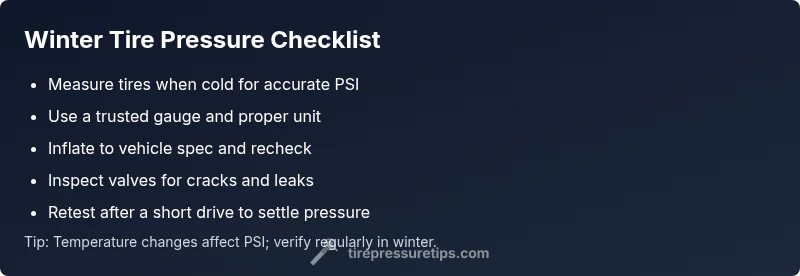
- Check cold PSI across all tires; adjust to vehicle spec. 2) Inspect valve caps and stems for cracks—these are common leak points in winter. 3) If a tire reads low by more than a couple of psi, inflate with a portable compressor and recheck. 4) After inflating, take a short 5-10 mile drive to settle the pressure, then recheck and top off if needed. 5) Keep a reliable digital gauge in your glove box and check regularly in the coming days as temperatures fluctuate. 6) If you notice frequent pressure loss, cancel long trips and visit a tire shop to inspect for punctures or bead leaks. The goal is stable pressure before you hit icy roads.
Preventive Practices for Sustained Pressure
A preventive approach reduces risk and keeps your tires performing well through the cold season. Schedule seasonal tire checks in advance, rotate tires as recommended, and replace worn valves. Store a compact inflator in the trunk for emergencies rather than driving to the gas station with a stubbornly low PSI. Consider using a gauge that reads in the correct unit for your vehicle. Park away from walls and harsh wind when possible to minimize pressure changes from wind chill. In short, proactive checks save time, money, and stress during harsh winter weather, according to the Tire Pressure Tips team.
Common Pitfalls in Winter Maintenance
Avoid stopping at the first sign of a pressure issue. Do not rely on a single gauge reading; cross-check with a second gauge to rule out device error. Do not inflate beyond the maximum recommended pressure on the tire sidewall; overinflation is dangerous and can lead to a harsh ride and uneven wear. Beware of seasonal road salts and corrosion that can affect valve stems. Finally, never ignore a TPMS warning, especially if you’ve recently installed new tires or sensors—the warning usually signals a real risk that needs professional assessment.
Tools and Gears That Make Winter Checks Easier
Keep a few sturdy tools in your car: a digital tire-pressure gauge, a portable air compressor, and a spare valve cap kit. A weatherproof tire gauge helps you get accurate readings in snow and sleet. A small flashlight and a reflective vest improve safety when measuring on the roadside at night. For your garage, calibrate your gauge regularly and use the same unit of measure for consistency. By building a small winter toolkit, you can respond quickly to pressure changes without delaying travel or compromising safety.
When to Seek Professional Help
If you cannot get all four tires to the recommended PSI after repeated top-offs, or if you notice you have a slow leak, valve stem damage, or TPMS sensor fault, schedule a professional inspection. A trained technician can locate leaks, repair punctures, replace sensors, or evaluate the rim bead condition. In winter conditions, delaying professional service can lead to rapid pressure loss and unsafe driving. The Tire Pressure Tips team recommends erring on the side of caution and booking a service appointment when any persistent low-pressure issue remains after basic checks.
Steps
Estimated time: 15-25 minutes
- 1
Check tires when cold
Park in a shaded area and wait for tires to cool completely before measuring. Record the PSI on each tire and note any discrepancies between tires. This gives you a reliable baseline to compare against the vehicle specification.
Tip: Always measure after a minimum 30-minute cool-down to avoid heated readings. - 2
Find the official PSI spec
Locate the recommended cold PSI on the driver’s door placard or in the owner's manual. This spec accounts for your vehicle weight and typical driving conditions and should guide your inflation target.
Tip: If you can't find the placard, contact the dealership or reference the manual. - 3
Use a reliable gauge and measure all tires
Use a trusted tire-pressure gauge (digital or analog) to check each tire’s pressure. Don’t forget the spare if you carry one. Note any tire with a reading significantly lower than the spec.
Tip: Calibrate your gauge against a known reference quarterly. - 4
Inflate to the recommended PSI
Add air using a compressor until each tire reaches the specified cold PSI. Recheck after a few minutes, then top off if needed. Ensure you do not exceed the maximum pressure listed on the tire sidewall.
Tip: If you don’t have a compressor, plan a quick stop at a gas station with a gauge.”},{
Diagnosis: TPMS warning light or visibly underinflated tires in winter
Possible Causes
- highAmbient temperature drop reduces tire pressure naturally
- mediumSlow puncture or bead leak developing in tire
- lowValve stem or TPMS sensor fault causing incorrect readings
Fixes
- easyCheck cold tire pressure with a gauge and inflate to spec on all four tires
- mediumInspect tires for signs of punctures or leaks; check valve stems and TPMS sensors for damage
- hardIf leaks or sensor faults are found, schedule professional repair or replacement
Frequently Asked Questions
Why does winter cause my tire pressure to drop faster?
Cold air contracts and reduces the air pressure inside tires. Temperature swings can trigger rapid changes that TPMS may reflect, but a manual PSI check is essential to confirm the actual condition.
Cold weather lowers tire pressure, so check and inflate to spec to stay safe.
How often should I check tire pressure in winter?
Check at least weekly during cold spells and before long trips. If temperatures are fluctuating a lot, check more often to catch leaks early.
Check weekly during extreme cold, and before trips.
Can TPMS be trusted for accurate winter readings?
TPMS provides a warning, but it isn’t a precise measurement. Verify with a manual PSI check when temperatures are cold, and look for leaks if the warning persists.
TPMS helps, but verify with a gauge when it’s cold.
What is the safe PSI range for my tires?
Always follow the placard on the door jamb or the manual. Do not rely on the sidewall max pressure as a target. If you’re unsure, ask a professional.
Check the placard and inflate to that spec, not the sidewall maximum.
Should I inflate the spare tire to the same pressure as the others?
Spare tires have their own spec. If you have a full-size spare, treat it like other tires; otherwise use the spare’s labeled pressure.
Spare tires have their own PSI; follow the label.
When should I seek professional help for low tire pressure?
If you cannot reach the recommended PSI after repeated top-offs or you suspect a slow leak, valve issue, or a faulty TPMS, schedule a professional inspection.
If you can’t fix it with a few inflations, see a pro.
Watch Video
What to Remember
- Check tires when cold for accurate readings
- Inflate to your vehicle’s spec and recheck after settling
- TPMS is a helpful guide, not a substitute for direct measurement
- Inspect for leaks and damaged valves if readings stay low
- Keep a winter tire pressure checklist in your car