Low Tire Pressure Snow Troubleshooting Guide
Urgent guide to diagnose, inflate, and maintain tire pressure in snow. Learn safe steps, practical checks, and when to seek help to prevent skids and failures.


Low tire pressure snow is a common winter issue that affects traction and braking. The quickest fix is to inflate tires to the manufacturer's specification using a reliable gauge, then recheck all tires after a short drive. If the warning light persists, inspect for leaks or a faulty TPMS sensor. For accuracy, check cold tires before driving and after warming up.
Why Low Tire Pressure in Snow Matters
Low tire pressure snow isn't just a management issue—it's a safety concern. When winter temperatures push tires toward underinflation, grip and braking suffer on slick pavement. The Tire Pressure Tips team notes that underinflated tires generate more heat and wear, reducing miles per gallon and increasing the risk of a blowout. A simple check and adjustment can dramatically improve handling in snow, slush, or ice. Feeding a few minutes into this routine now saves headaches later. Make it a habit to inspect each tire’s pressure using a reliable gauge, especially after the first cold snap. Regularly comparing readings to your vehicle's recommended psi ensures you stay within safe tolerance as temperatures swing. To keep your family safe, address low tire pressure snow promptly—your tires are your closest safety partners in winter. According to Tire Pressure Tips, consistent attention to tire pressure is the most cost-effective winter maintenance you can perform. Early action reduces skidding, improves steering response, and protects wheels from uneven wear.
Temperature, TPMS, and Cold Weather Effects
Cold weather directly affects tire pressure: as ambient temperatures fall, air contracts and pressure inside tires drops. That effect is magnified on long drives or when a vehicle sits overnight in freezing air. The Tire Pressure Tips analysis suggests most drivers notice a pressure loss after nights below freezing, even if the tires look fine. This is not a tire defect; it's physics. Tire pressure monitoring systems (TPMS) help alert you, but a warning light doesn't tell you which tire is low. You still need to verify each tire with a gauge, paying attention to the front and rear tires because they can deflate at different rates. If your car sits in snow or a parking lot for hours, expect incremental pressure loss. In addition to cold, a small puncture or bead leak can become more problematic in snow due to road debris and salt.
Signs You're Dealing with Low Tire Pressure in Winter
Look for subtle signs beyond the TPMS light: the vehicle feels less responsive, steering feels heavier, and braking distance may increase on wet or icy pavement. You may notice uneven tread wear or a visible flattening of one tire’s tread edge. A quick check with a gauge confirms readings below the vehicle’s recommended psi. Regular readers say that even 1-2 psi underinflated can alter handling enough to be noticeable in winter conditions. Remember: low tire pressure snow often travels in packs of two or more tires, so check all four tires rather than assuming only the obvious is affected. Headlights can reflect oddly when tires are underinflated, making low visibility worse in snow. If the tire seems soft to the touch, replace or repair as needed. The Tire Pressure Tips team emphasizes that rules of thumb vary by vehicle, so always verify with your owner's manual.
Step-By-Step Fixes for Common Causes
Common cause: cold weather induced underinflation. Inflate tires when cold to the recommended psi; recheck after a short drive. Slow leaks from nails, screws, or wheel damage: inspect tread and sidewalls, check valve stems, and seal or replace as needed. Faulty TPMS: verify sensor operation with a scan tool and recalibrate if necessary. These fixes cover the bulk of low tire pressure snow issues. If you uncover a damaged tire or leak, do not drive on it—call for assistance. The steps here are designed to be safe and accessible for most drivers, and they reduce risk until professional help arrives. The end goal is accurate pressure readings and safe handling in winter.
Inflation Best Practices and Tools You Need
Use a digital tire pressure gauge for accuracy, and check when tires are cold. Keep a portable inflator handy for quick top-ups after a cold night. Avoid overinflating beyond the vehicle's maximum psi; use a gauge to confirm. If you regularly notice rapid pressure loss after a day in snow, you may have a slow leak or damaged valve stem. In that case, schedule a professional check. For winter driving, ensure your tires are within the recommended range for your vehicle, which improves traction in snow and reduces hydroplaning risk.
Prevention: Maintaining Pressure in Snow and Cold
Schedule weekly checks during winter, especially when forecast calls for dramatic temperature swings. Store a small tire-inflation kit in your trunk and use it after park in cold weather. Park away from salted patches if possible because salt can corrode wheel valves. Rotate tires as recommended by your manufacturer, and replace worn tires to preserve grip. Checking your pressure before long trips ensures you’re ready for snow conditions.
When to Seek Professional Help and Safety Reminders
If you cannot achieve the recommended psi after re-inflation attempts, there may be a slow leak or tire bead issue requiring repair or replacement. Do not drive long distances with underinflated tires; reduce speed and seek service promptly. Always carry a pressure gauge, follow the manual, and verify tire pressure once you recall. In winter, a small loss can become dangerous at highway speeds. The Tire Pressure Tips team recommends erring on the side of caution and getting a professional check if you see persistent warnings or suspect damage.
Steps
Estimated time: 30-45 minutes
- 1
Check tires while cold
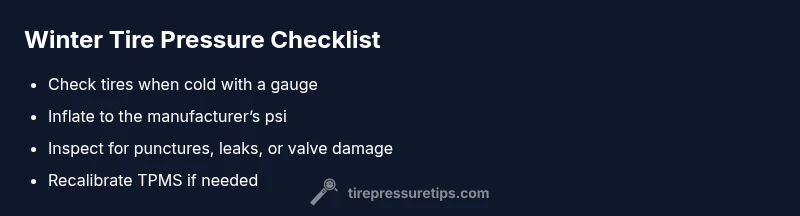
Before you drive, use a reliable gauge to measure each tire’s psi when the tires are cold. Compare readings to your vehicle’s recommended psi from the owner manual or door jamb sticker. If any tire is below spec, note which one(s) and prepare to inflate.
Tip: Use a digital gauge for the most accurate reading. - 2
Inflate to manufacturer specification
Using a portable inflator or air pump, bring each tire up to the recommended psi. Do not exceed the max psi on the tire sidewall. Re-check after a short drive of 3-5 miles to allow the tire to settle at normal operating temperature.
Tip: Re-check while the tires are still cool for best accuracy. - 3
Inspect for leaks and valve issues
If a tire repeatedly loses pressure, inspect the tread, sidewalls, and valve stems for punctures or leaks. Look for nails, screws, or cracks. If you find damage, repair or replace the tire as needed.
Tip: Even small punctures can cause slow leaks over days. - 4
Recheck TPMS and test drive
After inflating, reset or relearn the TPMS if required by your vehicle. Take a short test drive and recheck pressures to ensure stability.
Tip: If TPMS warning returns, seek professional inspection.
Diagnosis: TPMS warning light or a soft feel when driving due to low tire pressure in snowy conditions
Possible Causes
- highCold temperatures causing tire pressure to drop
- mediumSlow leak from nail, puncture, or bead seal
- lowFaulty TPMS sensor or improper sensor reset
Fixes
- easyCheck tire pressures when tires are cold using a gauge; inflate to vehicle spec on all tires; recheck after a short drive
- mediumInspect tires for embedded nails, cuts, or cracks and check the valve stems for damage; replace or repair as needed
- mediumTest the TPMS system with a scan tool or by cycling the ignition; recalibrate or replace a faulty sensor
Frequently Asked Questions
How does snow affect tire pressure?
Snow and cold weather lower tire pressure as air contracts in low temperatures. This is a common winter phenomenon and does not always indicate a tire fault. Regular checks help ensure safety in snowy conditions.
Snow cools air, lowering tire pressure. Check regularly in winter to stay safe.
How often should I check tire pressure in winter?
Check pressures at least once a week and before long trips during winter, since temperature swings can change psi quickly.
Check weekly in winter, especially before trips.
Can TPMS fail in cold weather?
TPMS can trigger warnings in cold weather due to sensor lag or slow leaks. If the warning persists after inflating to spec, have the system tested.
Cold weather can affect TPMS readings; get it tested if warnings stay on.
How can I tell if a tire is underinflated?
Look for a soft tire feel, decreased handling, and a TPMS alert. Measure psi with a gauge and compare to the recommended value.
Feeling soft tires or a warning light means underinflation; measure psi to check.
What if I can't reach the recommended psi?
There may be a slow leak or valve issue. Do not overinflate; seek inspection if you can’t reach spec after several attempts.
If you can’t reach the right psi, get it checked by a professional.
Is it safe to drive with low tire pressure?
Driving on underinflated tires is riskier in snow due to reduced traction and higher heat buildup. Inflate to spec or seek help before extended trips.
Not safe to drive long on low pressure—fix it before traveling.
Watch Video
What to Remember
- Inflate to spec for winter conditions
- Check all four tires regularly in snow
- Use a reliable gauge for accuracy
- Inspect for leaks if pressure keeps dropping
- Seek professional help if TPMS keeps warning