Winter Tire Pressure Low: Troubleshooting and Safe Driving
Learn practical steps to diagnose and fix winter tire pressure low, with a focus on cold-weather checks, TPMS considerations, and prevention tips for safer winter driving.


Low winter tire pressure is usually caused by cold weather causing air to shrink. Check all tires to the vehicle’s recommended cold-inflation pressure (CIP) with a reliable gauge, adjust tires on a level surface, and reset or clear TPMS warnings if needed. Recheck after a few miles of driving. If the alert persists, inspect for slow leaks or valve damage and consider TPMS sensor issues.
Why winter tire pressure matters in cold weather
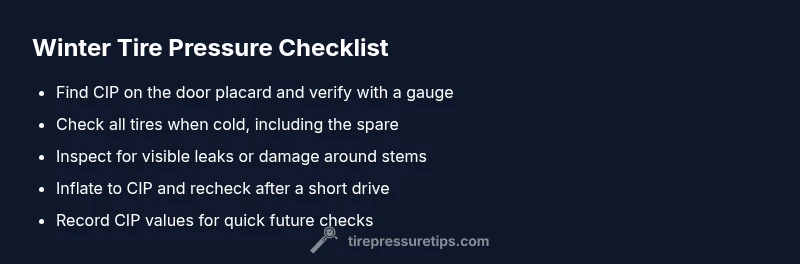
In winter, your tires face more than road salt and slick surfaces. The big hidden variable is air, which contracts when the ambient temperature drops. That means a tire that starts the day at a given pressure can fall noticeably as outdoor temperatures fall. According to Tire Pressure Tips, winter driving makes pressure loss a common, preventable risk. Maintaining correct tire pressure helps maximize grip, even wear, and fuel efficiency, and reduces the likelihood of tire failure on icy curves. Start by locating the CIP on the door jamb placard, then compare it to a reliable gauge reading taken on level ground with the tires cold. A small discrepancy can become dangerous once you hit the road. Keeping winter tire pressure within the recommended range is a simple, proactive measure that pays dividends in traction and safety all season long.
The Tire Pressure Tips team emphasizes that you should treat the CIP as a living target—seasonal changes can shift the ideal pressure. By keeping a routine, you reduce the chance of a sudden tire issue when temps swing from sunny days to cold nights. This is especially important for drivers who carry passengers, children, or equipment. In short, staying on target with winter tire pressure low risks isn’t just about a single gauge reading—it's about ongoing attention to tires as critical safety components of your vehicle.
Steps
Estimated time: 25-40 minutes
- 1
Find the CIP on the door placard
Park on level ground, wait for the tires to cool, and locate the recommended cold-inflation pressure on the driver’s door placard. This is your target. Cross-check with your owner's manual if needed.
Tip: Always measure tires when cold to avoid inflated readings from recent driving. - 2
Inspect tires for obvious issues
Before inflating, visually inspect for cracks, bulges, or embedded objects that could cause slow leaks. A tire with damage should be repaired by a professional.
Tip: A visually damaged tire can fail suddenly; safety first. - 3
Check each tire with a reliable gauge
Use a digital or pencil-type gauge to measure each tire’s pressure. Record the cold reading for reference. Compare with CIP and note any discrepancies.
Tip: Keep your gauge calibrated and avoid rounding the numbers. - 4
Inflate to CIP on level ground
If a tire reads below CIP, add air gradually until you reach the target on all tires. Don’t exceed the CIP for any tire.
Tip: Do not inflate beyond the maximum tire pressure printed on the sidewall. - 5
Recheck after a short drive
Drive 3-5 miles then recheck the tire pressures to ensure they settle at the correct CIP after heat buildup from driving.
Tip: Pressure can rise as tires heat up; recheck while cold if you can. - 6
Inspect TPMS status
If TPMS warnings persist after inflation, inspect the sensor, valve, and wheel area for leaks or corrosion. If needed, consult a professional.
Tip: TPMS can misread if sensors are damaged or batteries are weak.
Diagnosis: Tire pressure readings drop after cold nights or start of winter driving
Possible Causes
- highAmbient temperature drop contracts air inside tires
- mediumSlow leaks from valve stems, punctures, or aging tires
- lowTPMS sensor issues or battery drain in cold weather
Fixes
- easyVerify CIP on the door placard, then inflate each tire to that cold-inflation value using a reliable gauge (do this when tires are cold; avoid readings after driving).
- mediumIf a tire cannot reach CIP after multiple attempts, inspect for slow leaks, damaged valve stems, or bead seating issues.
- easyReset or recalibrate TPMS if readings seem inconsistent, and consider a TPMS sensor check if warnings persist after inflation.
Frequently Asked Questions
Why does winter tire pressure drop more in the morning?
Cold temperatures cause air to contract, lowering tire pressure overnight or in the morning. In winter, this effect happens more often, so morning checks are essential.
Cold nights make tire air contract, so check pressures in the morning before driving.
Is it safe to drive with slightly low tire pressure?
Driving with underinflated tires can reduce grip and increase wear. If pressure is noticeably below CIP, inflate before continuing your trip.
Don’t drive far on underinflated tires; inflate to the recommended level first.
Should I inflate to the maximum PSI on the tire sidewall?
No. Always use the CIP from the door placard, not the maximum sidewall rating. Overinflation can reduce traction and cause uneven wear.
Stick to the vehicle’s CIP, not the maximum printed on the tire.
How often should TPMS be checked in winter?
Test TPMS status during regular checks and after any tire service. Cold weather can affect battery performance and sensor readings.
Check TPMS readings along with tire pressures, especially after long trips or tire service.
Can cold weather permanently damage tires from low pressure?
Chronic underinflation can cause excessive heat buildup and wear, potentially damaging the tire and wheel assembly over time. Always restore CIP promptly.
Low pressure in cold weather can wear tires faster; fix it to protect your tires long-term.
Watch Video
What to Remember
- Check CIP on level ground when cold.
- Inflate to CIP and recheck after driving.
- Address TPMS warnings promptly.
- Regular winter checks prevent unsafe driving.
- Keep a record of your correct pressures for quick future checks.