Air Pressure Is Too High: Troubleshooting Guide for Tires
Learn how to handle air pressure that is too high in your tires. This guide explains dangers, quick checks, TPMS cues, and safe steps to restore proper PSI and prevent uneven wear.


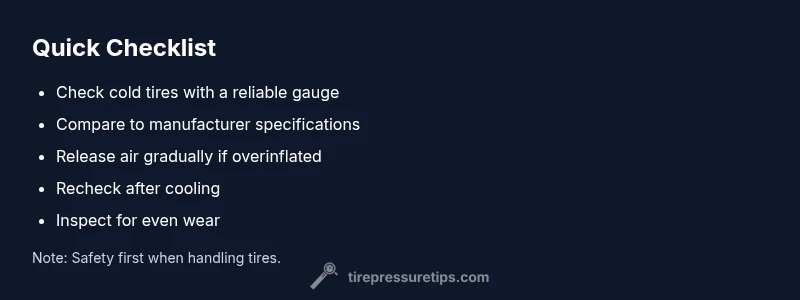
Air pressure is too high can cause uneven tire wear, harsher rides, and reduced grip. Start by checking all tires when cold with a reliable gauge, then release air in small increments to reach the vehicle’s recommended PSI. Recheck, balance, and monitor TPMS alerts as you road test. If TPMS readings remain inconsistent, seek professional help.
Understanding air pressure is too high and why it matters
When the tire is inflated beyond the vehicle manufacturer's recommended level, air pressure is too high for safe operation. According to Tire Pressure Tips, overinflation changes how the tire contacts the road, making the ride harsher and increasing the risk of uneven wear and a blowout under sharp impacts. In practice, you may notice a stiffer ride, more vibration, and reduced ability to absorb road irregularities. While it might seem that a firmer tire improves steering responsiveness, the truth is that the tire's contact patch becomes smaller, which can reduce grip in wet or slippery conditions. This state also places extra stress on the tire's sidewalls and rim. In many modern cars, the TPMS will alert you if pressure is significantly above spec, but small overinflation can go unnoticed until wear patterns appear. This section will teach you the practical checks to confirm whether air pressure is too high and what to do next.
How overinflation affects wear, handling, and safety
Overinflated tires wear more quickly in the center of the tread, which shortens tire life and can alter steering response. The harsh ride can mask problems with road grip, increasing the risk of loss of control on wet or uneven surfaces. Handling becomes twitchy, especially at highway speeds or during sudden maneuvers. Safety systems like ABS and traction control rely on consistent tire behavior, and extreme overinflation can interfere with those systems’ effectiveness. The Tire Pressure Tips team emphasizes that consistent, manufacturer-recommended pressure supports even wear, predictable handling, and reliable TPMS signaling. If you’ve recently added air with an air compressor or used a gauge that reads inaccurately, recheck with a calibrated gauge and confirm all tires, including the spare, are within spec for optimal safety and performance.
Signs you may have too-high air pressure and quick at-a-glance checks
- A noticeably stiffer ride and more road feel through the steering wheel
- Center tread wear on each tire rather than even wear across the surface
- TPMS alert or dashboard warning when readings are above spec
- Visible bulges or a tire that looks visibly stretched at the tread shoulders
- Shorter braking distances at higher speeds due to altered contact patch
If you notice any of these, take a moment to verify with a gauge and compare against the vehicle’s recommended pressure.
Causes of air pressure being too high
The most common cause is inflating tires with an inaccurate gauge or using an overly aggressive air compressor. Temperature shifts can briefly raise readings, but sustained overinflation is usually user-related. Mechanical issues, such as a faulty pressure sensor or a miscalibrated TPMS, can also report incorrectly. Weather changes and tire aging contribute too, but consistent signs point to actual overinflation rather than a temporary fluctuation. The Tire Pressure Tips guidance stresses checking cold tires against the spec, and avoiding the temptation to overfill for a perceived performance gain.
Safe ways to reduce air pressure at home
Begin with a calm, methodical approach. Park on a flat, shaded surface and wait for tires to cool if you’ve just driven. Use a reliable tire gauge and release air in small increments, then recheck to ensure you’re within the manufacturer’s spec on all tires. Don’t forget the spare; underinflation in the spare is a common oversight. After adjusting, drive a short distance and recheck the pressures to ensure stability and even wear.
Verifying correct pressure after adjustment
The final step is verification. Recheck cold tires with the same gauge you used initially, then drive normally for a few miles and recheck again if possible. Ensure even pressures across all four corners and confirm the spare is also at the correct level. If you can’t align readings with the spec or if a gauge reads erratically, use a different gauge to rule out tool error. Consistency is the key to safe handling and longevity.
Prevention tips and routine maintenance to avoid overinflation
- Check tire pressure monthly and before long trips, always using a reliable gauge
- Use the vehicle’s door jamb placard as the baseline, not dashboard estimates
- Inspect tires for wear and bulges that may indicate improper inflation or damage
- Calibrate TPMS sensors as needed and replace faulty components promptly
- Replace worn tires promptly to maintain safe pressure behavior and handling
Steps
Estimated time: 60-90 minutes
- 1
Park safely and check in a cool state
Park on a flat, shaded surface and turn off the engine. Let tires cool for at least 15 minutes before checking pressure to ensure an accurate reading.
Tip: Use the same gauge for consistency. - 2
Find the correct PSI spec
Consult the door jamb placard or the owner’s manual to locate the manufacturer’s recommended PSI for each tire. Do not rely on dashboard readings alone.
Tip: If in doubt, check all tires to the same spec. - 3
Check tires with a reliable gauge
Measure each tire’s current pressure and compare with the specified value. Use slow, even squeezes on the gauge plunger for accuracy.
Tip: Replace a worn gauge that reads inconsistently. - 4
Release air if overinflated
If a tire reads higher than the spec, release air gradually while checking the pressure frequently to avoid underinflation.
Tip: Do not release air too quickly; small increments are safer. - 5
Recheck after cooling
Recheck all tires after a short drive to verify that the pressures remain within spec as the tires settle.
Tip: If pressure rises again, consider a possible leak or sensor error. - 6
Inspect for leaks or damage
Look for nailholes, cuts, or sidewall bulges that could indicate a leak or structural issue requiring attention.
Tip: Replace tires showing visible damage sooner rather than later. - 7
Road test and confirm
Take a short drive and assess handling, braking, and comfort. Recheck pressure after a few miles to ensure consistency.
Tip: Always follow up with a professional if handling feels off.
Diagnosis: TPMS warning or tire feels overly firm and stiff ride
Possible Causes
- highRecent overinflation from a quick top-up or inaccurate gauge
- mediumTemperature changes or heat buildup during driving
- lowFaulty compressor or air tool inflating beyond safe levels
Fixes
- easyCheck all tires with a reliable gauge when cold and compare to spec; release air if above spec
- easyRecheck pressure after cooling, re-inflate to spec if needed, and ensure even inflation on all tires
- mediumIf TPMS readings remain inconsistent, consult a tire professional for TPMS calibration or valve repair
Frequently Asked Questions
What happens when air pressure is too high in tires?
Overinflation causes center tread wear, a harsher ride, and reduced grip. It can also stress sidewalls and increase the risk of a blowout on sharp impact. Always revert to the manufacturer’s recommended PSI for all tires.
Overinflated tires wear quicker in the center, ride rougher, and can lose grip. Reset to the recommended PSI on all tires for safe handling.
How can I tell if my TPMS is giving a false reading?
TPMS readings can be affected by sensor calibration, temperature, or wiring issues. If readings don’t match your gauge or vary between tires, have a technician verify the sensors and batteries.
If the TPMS seems off, compare with a manual gauge and consider professional sensor calibration.
Is it safe to release air if I’m unsure about the exact spec?
Yes, release air in small increments and recheck each time. If you’re unsure, perform the procedure under safe, stationary conditions or seek professional help.
Yes, do it in small steps and recheck; if unsure, consult a tire professional.
How often should I check tire pressure?
Check tires monthly and before long trips, especially during temperature shifts. Regular checks help catch overinflation before it causes wear or safety issues.
Check your tires monthly and before long trips to catch any overinflation early.
When should I seek professional help?
If you notice persistent readings that don’t match gauge checks, if you see bulges, sidewall damage, or recurring TPMS warnings, consult a tire technician for sensor calibration or tire replacement.
If readings don’t match or you see damage, get a tire pro to inspect.
Can temperature changes cause high readings?
Yes, temperatures can affect readings. Always measure when tires are cold and consider temperature history when interpreting results.
Temperature can affect readings, so measure when tires are cold and compare to spec.
What to Remember
- Check tires when cold with a reliable gauge
- Follow the vehicle manufacturer’s PSI specification
- Recheck after cooling and road testing
- Inspect for wear or damage that signals misinflation
- Keep TPMS sensors calibrated and functional