Is Air Pressure Bad? A Practical Tire Pressure Troubleshooting Guide
Discover why air pressure matters for tires, how to check it, fix underinflation or overinflation, and how to maintain safe, efficient driving. Practical steps, tips, and troubleshooting from Tire Pressure Tips.


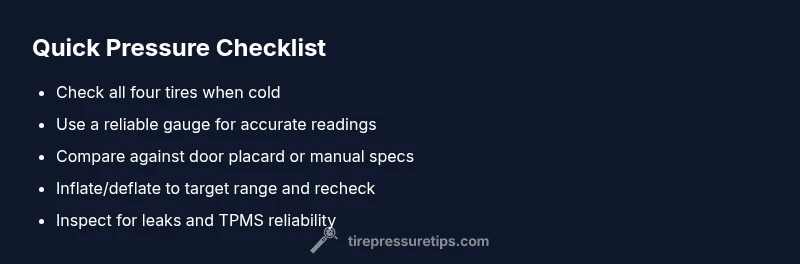
Step 1: Check each tire with a reliable gauge when cold. Step 2: Compare readings to the vehicle’s recommended pressure on the door jamb label or manual. Step 3: Inflate or deflate to the spec, then recheck. If TPMS warns or handling feels off, seek professional help.
Is air pressure bad for tires?
Is air pressure bad for tires? The short answer is nuanced: when tires run significantly above or below the manufacturer’s recommended range, safety, handling, and efficiency suffer. According to Tire Pressure Tips, keeping all tires within the target range isn’t about chasing a number; it’s about consistent grip, predictable steering, and even wear. The exact pressure to target is shown on the door jamb sticker and in the owner's manual. Temperature shifts, load variations, and driving style can push tires away from the ideal range, so regular checks are essential for any driver.
Understanding the basics helps you spot the difference between a minor, temporary fluctuation and a persistent pressure problem. If you’re unsure what your vehicle’s spec is, start with the owner’s manual and the door placard, then set up a routine to check pressure with a reliable gauge on a regular basis.
The safety and performance impact of improper tire pressure
Tires that are too low or too high in pressure don’t just feel “off.” They influence several critical safety and performance factors. Underinflated tires increase rolling resistance and heat build-up, which can accelerate wear on the outer edges and raise the risk of a sidewall issue in wet or rough conditions. Overinflated tires reduce the contact patch with the road, which can worsen traction on slippery surfaces and lead to harsher ride quality with uneven wear. In all cases, fuel efficiency can suffer and braking response may feel less confident. Regular checks help you stay within the optimal range, a principle emphasized by the Tire Pressure Tips team.
How to check and read tire pressures accurately
Start with a cold tire check, ideally before you’ve driven on them for the day. Use a calibrated tire gauge and compare the reading to the manufacturer’s spec on the door jamb label or owner’s manual. Make sure you’re measuring all four tires, as differences between tires can indicate a leak or a misread. If readings vary widely, inspect each tire for obvious issues like nails, cuts, or valve stem damage. After adjusting, recheck to confirm you’ve returned to the correct range. Keep a small gauge in your glovebox for convenience and consistency.
Diagnosing leaks and pressure loss sources
If you notice pressure dropping between checks, there are several common culprits to investigate first. Slow leaks from nails or screws, damaged valve stems, or bead leaks can all cause gradual losses. TPMS readings may drift if sensors are damaged or corroded, or if the wheel is leaking around the valve stem. Temperature swings also affect air pressure, rising in warmer weather and falling when it’s cold. To differentiate, perform a soapy-water test around the tire bead, stem, and valve; look for visible bubbles indicating a leak. Address obvious issues or schedule a professional inspection if the leak persists.
In all cases, don’t ignore a persistent loss of pressure. A repeated drop can indicate a puncture or a failing TPMS component that needs attention from a technician.
Step-by-step guide to fix underinflation or overinflation
- Find the recommended tire pressure for your vehicle and ensure you’re using the correct unit of measure.
- Check tires when cold with a reliable gauge and note readings for all four tires.
- Inflate or deflate each tire to the specified range, aiming for a uniform pressure across all tires when carrying similar loads.
- Recheck each tire after driving a short distance to confirm stability, especially in the first 10-15 minutes of a drive.
- If TPMS remains lit after inflation or if a tire refuses to hold pressure, inspect the valve stem and consider professional service.
- If you suspect a leak or TPMS fault, don’t drive long distances—seek a repair appointment promptly.
Prevention and long-term maintenance
Make tire pressure checks a recurring habit. Check at least monthly and before long trips, and always before/after seasonal temperature shifts. Use the same gauge for consistency, and keep spare tire pressure in mind if you have one. Calibrate and test TPMS sensors as needed, especially after rotating tires or replacing wheels. A small routine now saves money, reduces wear, and keeps you safer on the road. The Tire Pressure Tips approach emphasizes proactive maintenance to prevent surprises on the highway.
Steps
Estimated time: 45-60 minutes
- 1
Locate the recommended pressure
Find the exact pressure spec on the driver’s door placard or in the owner’s manual. Note whether the spec is for cold tires and if it varies by load or driving conditions.
Tip: Always start with the cold-tire measurement for accuracy. - 2
Check all tires with a cold gauge
Use a reliable gauge to measure each tire when the car hasn’t been driven for several hours. Record the readings for reference and to spot trends.
Tip: Keep a spare gauge in your glovebox. - 3
Inflate/deflate to spec
Adjust each tire to the recommended pressure, paying attention to vehicle load and conditions. Ensure all four tires are within the target range if you carry similar loads.
Tip: Avoid overfilling; adjust in small increments. - 4
Recheck after a short drive
Drive a short distance to allow the tires to warm and settle, then recheck to confirm stability. Note any significant drift in readings.
Tip: If readings drift widely, there may be a leak or sensor issue. - 5
Inspect for leaks
If a tire consistently falls below spec, inspect the tread area, bead, and valve stem for damage. Look for nails, screws, or cuts that could cause slow leaks.
Tip: A soap-water test can reveal hidden leaks. - 6
Seek professional help when needed
If the problem persists after adjustments, or TPMS remains active, schedule a repair with a tire technician or automotive shop.
Tip: Professional diagnosis can prevent unsafe driving conditions.
Diagnosis: Tires show low or high pressure with TPMS warning or noticeable changes in handling
Possible Causes
- highSlow puncture or small leak in tread, bead, or valve stem
- mediumTPMS sensor issue or calibration drift
- lowSeasonal temperature changes affecting pressure
Fixes
- easyInspect tires for punctures, nails, or valve stem damage; perform a soap-water leak test
- easyRepair or replace damaged valve stems or TPMS sensors if leak or drift is confirmed
- easyInflate to the correct specification and recheck after a short drive
- easyIf leaks persist or TPMS remains on after inflation, consult a tire or automotive professional
Frequently Asked Questions
What happens if tires are consistently underinflated?
Underinflated tires wear faster on the edges, run hotter, and can reduce fuel efficiency and braking performance. Regular checks help prevent unsafe conditions.
Underinflated tires wear out on the edges and can make your car harder to handle. Regular checks help prevent unsafe conditions.
Can weather alone change tire pressure?
Yes, temperature shifts affect air pressure, often lowering it in cold weather and raising it in warm weather. Check tires more often during seasonal changes.
Yes, temperature changes affect tire pressure. Check more often during seasonal shifts.
How often should I check tire pressure?
Check at least monthly and before long trips. Always measure when the tires are cold to get an accurate reading.
Check at least monthly and before long trips, when the tires are cold.
What does a TPMS warning mean?
A TPMS warning indicates one or more tires are out of the recommended range. Inspect and adjust pressure, then verify with another reading.
TPMS warns that a tire is outside the recommended range. Check pressure and adjust.
Is it okay to drive on slightly low tires temporarily?
It's not ideal. Drive cautiously and seek to fix the pressure promptly to avoid safety risks and increased wear.
Driving on low tires isn’t ideal. Fix the pressure as soon as possible.
Watch Video
What to Remember
- Keep tires within the recommended pressure range.
- Check pressure regularly, especially with temperature shifts.
- Address leaks, damaged valves, and sensor issues promptly.
- Use a reliable gauge and check tires when cold.
- Seek professional help if pressure issues persist.