Tire Pressure Uneven: Troubleshooting Guide
Urgent guide to diagnose and fix tire pressure uneven. Learn quick checks, TPMS tips, and how temperature and leaks affect readings, plus safety guidance and when to seek professional help in 2026.


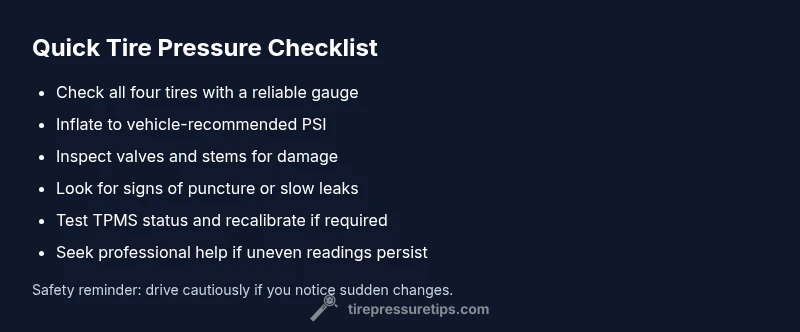
According to Tire Pressure Tips, tire pressure uneven is most often caused by underinflation or temperature changes that affect different tires differently. Start by checking all four tires with a reliable gauge, adjust each to the vehicle’s specified PSI, and inspect valve stems for damage. If the uneven pattern persists, monitor for slow punctures or a faulty TPMS sensor and seek professional help if needed.
Why tire pressure uneven matters
Tire pressure uneven isn't just a number on the gauge; it signals how your vehicle behaves on the road. When some tires carry more load or run cooler than others, grip and handling can suffer, tire wear accelerates unevenly, and fuel efficiency dips. For drivers, this means you may notice pulling, vibration, or a stumble in ride quality. According to Tire Pressure Tips, tire pressure uneven is a common warning sign that deserves prompt attention. Detecting and correcting it early can save you money on fuel, tires, and potential suspension repairs. In this guide, we'll break down why this happens, how to diagnose it, and what to do next with a practical, step-by-step approach. The aim is to give you confidence to handle most fixes yourself while knowing when to call a pro.
Steps
Estimated time: 45-60 minutes
- 1
Check tires when cold
Before inflating, verify that tires are cold and have not been driven recently to avoid heat-inflated readings. Use a high-quality gauge to compare across all four tires to the vehicle's spec.
Tip: Cool tires ensure accurate pressure readings. - 2
Compare to the spec
Record each tire's pressure and compare against the door jamb label or owner’s manual. Note which tires are high or low to identify patterns.
Tip: Use the same gauge for consistency. - 3
Inspect for leaks and damage
Look closely at valve stems, rims, and tires for signs of slow leaks or punctures. Listen for hissing sounds near the valve or tread.
Tip: A small crack can cause slow loss over time. - 4
Inflate to recommended PSI
Inflate each tire to the vehicle-recommended PSI and recheck after inflation. Do not exceed the label; overinflation can create a harsh ride.
Tip: Ensure air source is clean and stable. - 5
Recheck after a short drive
Drive a short distance to let the tires come up to temperature, then recheck the pressures to confirm stability.
Tip: Record any shifts to track patterns. - 6
Check TPMS and seek help if needed
If readings stay uneven after inflation and a reset, check TPMS and consult a professional for a thorough diagnosis.
Tip: Persistent issues may indicate a deeper problem.
Diagnosis: Tire pressure uneven readings across tires or within a single tire after inflation
Possible Causes
- highUnderinflation or overinflation in one tire
- mediumAmbient temperature changes affecting tire pressure differently across tires
- mediumSlow puncture or valve stem leak causing gradual loss
- lowFaulty TPMS sensor or miscalibration after service
Fixes
- easyReinflate all tires to the vehicle's recommended PSI using a reliable gauge
- easyInspect for leaks, punctures, and damaged valve stems; repair or replace as needed
- mediumCheck TPMS status and recalibrate or reset if readings are inconsistent
- hardSchedule professional inspection if the issue persists or if rims/alignment are suspect
Frequently Asked Questions
Why is my tire pressure uneven across the four tires?
Uneven pressure often indicates underinflation in one or more tires, a slow leak, or TPMS calibration issues. Temperature changes and load differences can also create variance. Start with a cold-tire check and compare against the vehicle spec.
Uneven tire pressure is usually caused by underinflation, leaks, or TPMS issues. Start by checking cold tires and inflating to the spec.
Can temperature changes cause tire pressure to vary between tires?
Yes, temperature changes affect air pressure; readings can vary if some tires are warmer than others after driving or in cold weather.
Yes, temperature changes affect tire pressure and can make readings differ.
What should I do if my TPMS is faulty?
If TPMS readings seem unreliable, recalibrate or reset the sensors; inspect sensors for damage; if the issue persists, have a professional diagnose.
If TPMS seems off, recalibrate or reset; if it still sounds wrong, see a pro.
Is it safe to drive with uneven tire pressure?
Driving with uneven tire pressure can affect handling and tire wear. If the difference is minor and tires are not underinflated, proceed with caution and fix promptly.
It can be risky; fix it soon.
How often should I check tire pressure?
Check at least monthly and before long trips, especially in temperature-changing seasons.
Check monthly.
Should I replace tires if uneven pressure persists after inflation?
If uneven readings persist after inflation and TPMS checks, have a professional inspect for leaks, damaged rims, or alignment issues; replacements may be needed if wear is uneven.
Persistent uneven pressure may require tire replacement.
Watch Video
What to Remember
- Inflate all tires to the vehicle spec.
- Identify leaks or TPMS faults quickly.
- Recheck after a short drive for stability.
- Calibrate TPMS when readings are unreliable.
- Consult a pro for persistent uneven readings.