Air Pressure Before Storm: A Practical Guide for Safer Driving
Learn how air pressure before storm changes with weather, how to measure accurately, and how to keep tires safe as storms approach. Practical TPMS tips, measurement timing, and a pre-storm checklist from Tire Pressure Tips.


Before a storm, check and adjust tire pressure to account for temperature changes and TPMS readings. This guide shows how weather affects air pressure, how to measure correctly, and how to maintain safe tire pressure during storm season. Follow a simple, step-by-step pre-storm checklist to protect your tires and wheels. Whether you drive in hot climates or cold fronts, pressure can shift. We'll explain why and give practical tips.
Why air pressure before storm matters
Weather can tip the scales on tire pressure before a storm even arrives. Temperature swings, especially when a cold front moves in or a heat surge follows rain, affect tire air—causing readings to drift on gauges and TPMS systems. Underinflated tires reduce grip and braking ability, while overinflation can make tires more susceptible to road irregularities. According to Tire Pressure Tips, taking a proactive approach to pressure ahead of a storm helps maintain safe handling when traction is needed most. This section lays the groundwork by linking climate, air pressure, and tire safety so you can face storm season with greater confidence.
Tire pressures aren’t static. They change with ambient temperatures, driving conditions, and even altitude fluctuations. A storm’s approach often brings rapid shifts in temperature and humidity. The key takeaway: check your tires when they’re cold, adjust to the vehicle’s recommended PSI, and recheck after a short drive in changing weather. This reduces the risk of misreadings that could leave you with underinflated tires right when you need stability most.
How weather and temperature affect tire pressure
Weather is a silent, constant pressure on your tires. Colder air contracts, lowering the air inside tires and reducing the indicated pressure on your gauge. Warmer days or sunlight can inflate the air volume and raise the PSI reading. Storm fronts amplify these effects because they bring sudden temperature drops or spikes, as well as changes in humidity that can subtly influence readings over time. Riders and drivers who rely on TPMS should remember that sensors reflect system pressure, but ambient temperature still drives true tire pressure. Regular checks with a calibrated gauge, especially after a significant temperature swing, can prevent unexpected underinflation or overinflation. The Tire Pressure Tips team notes that consistency matters: check in similar conditions, not only when a storm is looming. This helps you separate weather-driven changes from longer-term tire wear or slow leaks.
The science: air pressure, temperature, and TPMS
Air pressure in tires is governed by the basic gas behavior: as temperature changes, the air inside expands or contracts, affecting the pressure reading you see on a gauge or TPMS. Stormy weather tends to bring irregular temperature patterns, which can cause readings to drift between inspections. TPMS provides a real-time alert system, but it relies on static baseline pressures for your vehicle, which are published on the door jamb placard or owner’s manual. For consistency, users should compare current readings to the vehicle’s recommended PSI, taking into account the ambient temperature. Tire Pressure Tips emphasizes using the same gauge and measuring after the tires have cooled from a drive to avoid skewed readings, then adjusting to the recommended pressure as needed.
Pre-storm checklist: what to do right now
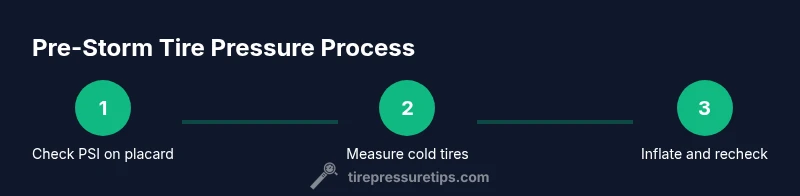
- Locate the recommended tire pressure for your vehicle on the door jamb placard or in the owner’s manual.
- Gather two tools: a calibrated digital tire pressure gauge and access to an air pump.
- Check all tires when they are cold (ideally before driving or after you’ve parked for several hours).
- Compare readings to the vehicle’s recommended PSI and adjust as necessary, keeping TPMS in mind.
- Inspect tires for cuts, bulges, or tread wear that could worsen during a storm.
- Recheck pressures after driving 3–5 miles to allow the tires to settle in (and recheck if the temperature continues to change).
Note: Storm preparation is not just about pressure; ensure your spare tire is ready and your emergency kit is stocked. These steps reduce the likelihood of a tire-related breakdown when you need traction most.
Measuring tire pressure accurately in cold weather
Cold-weather tire pressure is tricky because readings reflect ambient temperature. The best practice is to measure when tires are cold, then inflate to the recommended level and recheck after a brief drive if the temperature changes. Always use a reliable gauge and read in psi for consistency. If you notice persistent readings that drift regardless of a proper inflating effort, this may indicate a slow leak or a faulty TPMS sensor. In such cases, a professional inspection is warranted.
Using TPMS and gauges correctly
TPMS provides a warning when pressure drops, but it isn’t a replacement for regular gauge checks. Use a calibrated gauge to confirm TPMS alerts, especially in the cool-down period after a storm front passes. When inflating, start from the center of the recommended range and adjust gradually, checking the pressure again after a few minutes. If you routinely see readings far from the target, consider a full tire inspection for leaks or valve stem issues. The goal is stable, safe pressures across all four tires under changing weather.
Safety considerations: driving with storm conditions
Stormy roads demand reliable tires. Driving with inaccurately inflated tires can worsen hydroplaning risk and braking distance, while over-inflated tires may ride too stiffly and reduce traction on uneven pavement. Always plan routes based on weather forecasts, reduce speeds, and allow extra stopping distance when storm hazards are present. If a tire bubbles, bulges, or shows crisp tread wear, stop and inspect—don’t risk driving through a storm with compromised tires. Remember, slow and steady is safer when storms are nearby.
Practical scenarios and maintenance after storm
After a storm passes, temperature swings may stabilize, but road debris and potholes increase the chance of punctures or tire damage. Recheck pressures, inspect tires thoroughly, and schedule a professional tire service if you notice cracks, cuts, or bulges. Keep a log of your readings and any adjustments—this helps you build a personal baseline over time. The Tire Pressure Tips team recommends keeping a small gauge in your glove box and performing quick checks monthly, especially during storm season.
Tools & Materials
- Digital tire pressure gauge(Calibrated to read in psi; test against a known-good gauge if possible)
- Air compressor or access to an air pump(Prefer one with a built-in PSI gauge; ensure PSI range covers your vehicle’s spec)
- Vehicle owner’s manual or placard with recommended PSI(Location: door jamb or fuel hatch; use as primary target pressure)
- Tire inspection kit(Flashlight, mirror, and a visual inspection tool to spot sidewall damage)
- Chocks or wedges(Use when parking on incline to safely perform inflation checks)
Steps
Estimated time: 15-30 minutes
- 1
Find the target pressure
Locate your vehicle’s recommended PSI on the placard or owner’s manual. This value is the baseline for all adjustments before storm conditions.
Tip: If loading the vehicle heavily, consider increasing the baseline within the allowed range. - 2
Measure tires cold
Take readings when tires are cold, ideally before you’ve driven or after the car has sat for several hours. This ensures accuracy unaffected by recent heat from driving.
Tip: If you must measure after driving, wait at least 3 hours for tires to cool. - 3
Inflate to the recommended range
Adjust each tire to the manufacturer’s specified PSI, aiming for the middle of the recommended range for best handling during a storm.
Tip: Use gradual inflations and recheck after a few minutes to catch any minor gauge fluctuations. - 4
Recheck after settling
Drive 3–5 miles and re-check pressures. Temperature changes can shift readings; this step confirms stability.
Tip: Keep a small log of readings for future storm preps. - 5
Inspect tires for damage
Look for cuts, bulges, or tread wear that could worsen in storms. Address any damage before continuing to drive.
Tip: If damage is suspected, avoid driving long distances and seek service promptly. - 6
Document and plan
Record the pressures and any adjustments in a notebook or app. Plan to recheck after the storm in case conditions shift again.
Tip: Create a quick pre-storm maintenance checklist for future storms.
Frequently Asked Questions
What happens to tire pressure as a storm approaches?
As a storm approaches, ambient temperature changes can cause tire pressure to shift. Cold fronts tend to lower readings, while warmer spells can raise them. Use a gauge to confirm and adjust to the vehicle’s recommended PSI before driving in wet or windy conditions.
Storms can change tire pressure because temperature shifts affect the air inside tires. Check with a gauge and adjust to the recommended PSI before driving, especially in wet or windy weather.
Should I check tires before a storm if it’s raining?
Yes. Rain and humidity can affect traction and tire performance, so verify pressures when feasible in dry moments before the storm arrives. If not possible, schedule a quick check as soon as the weather clears.
Yes—check tires when you can, because rain can change conditions. If you can’t check now, do so as soon as the weather clears.
How does temperature affect tire pressure readings?
Temperature changes cause air inside tires to expand or contract, altering pressure readings. Check pressures in consistent conditions, ideally when tires are cold, and adjust to the recommended level.
Temperature changes expand or contract the air in tires, shifting readings. Check when cold and adjust to the recommended level.
Can TPMS readings be ignored before storm?
TPMS alerts are important safety tools but can mislead if readings are rushed. Always verify with a manual gauge against the vehicle’s recommended PSI before storm-driving.
TPMS alerts are helpful, but verify with a gauge against the recommended PSI before heading into a storm.
How often should I check tire pressure in storm season?
Check at least once a week during storm season and after any rapid temperature changes or wind events that could affect tire conditions.
Check weekly during storms and after big temperature swings.
Is it safe to drive with low tire pressure in a storm?
Driving with low pressure can reduce handling and increase heat buildup, which is risky in storms. Inflate to the recommended PSI and recheck once conditions stabilize.
No—low pressure hurts handling and heat buildup. Inflate to spec and recheck after conditions settle.
Watch Video
What to Remember
- Check pressures when cold, then adjust to spec.
- Expect readings to drift with ambient temperature changes.
- Use TPMS as a warning, not a sole measurement.
- Recheck after a short drive or temperature shift.